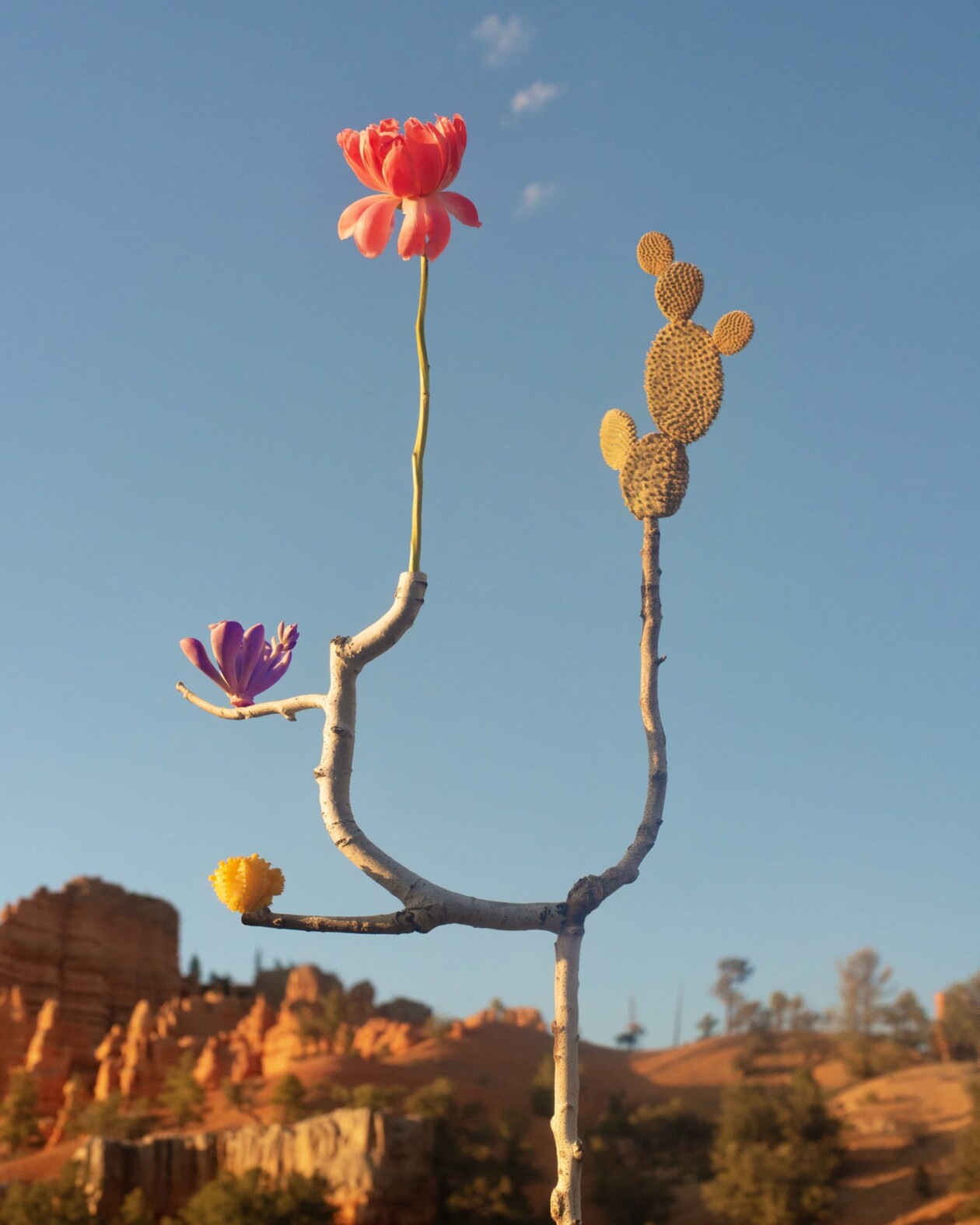
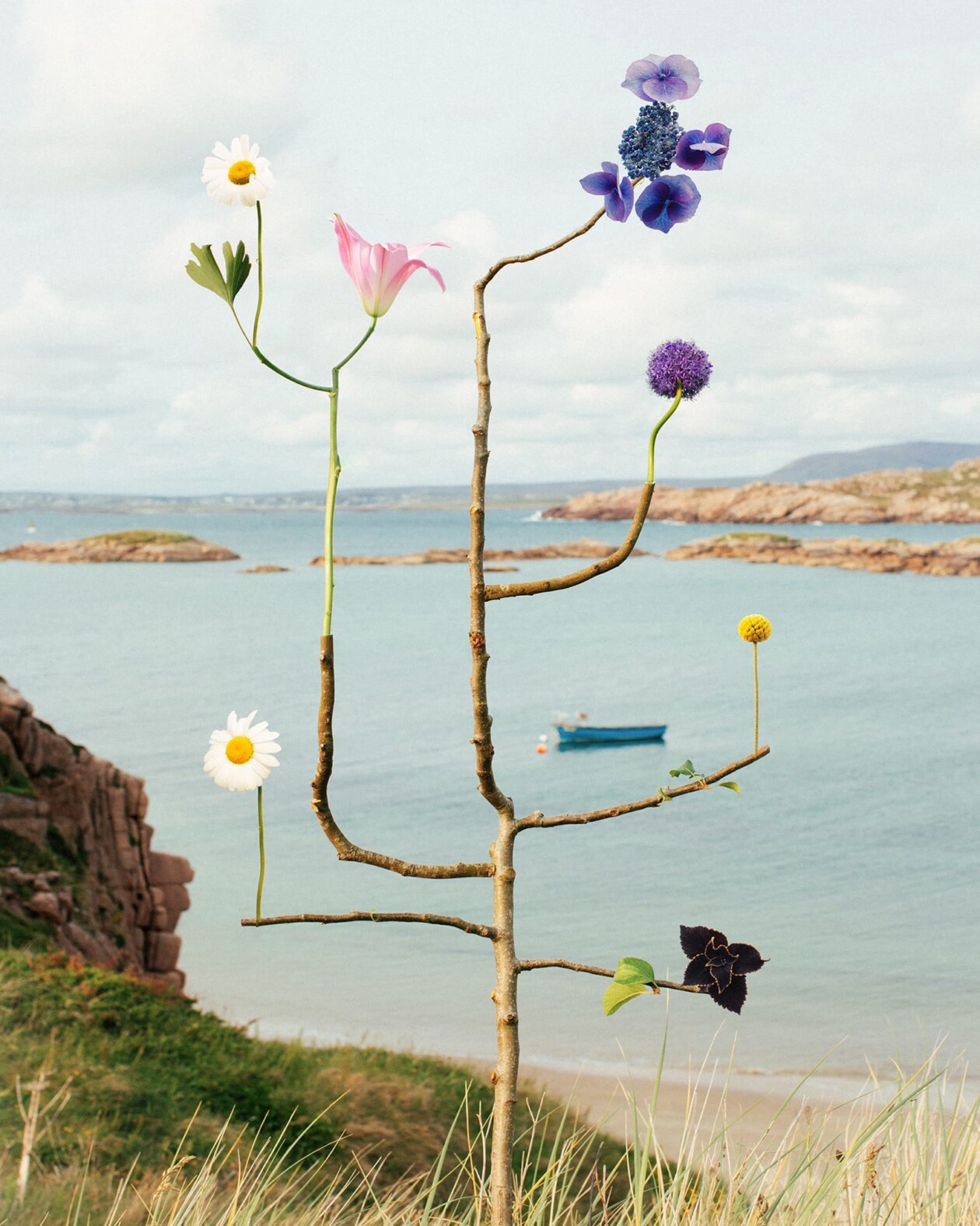
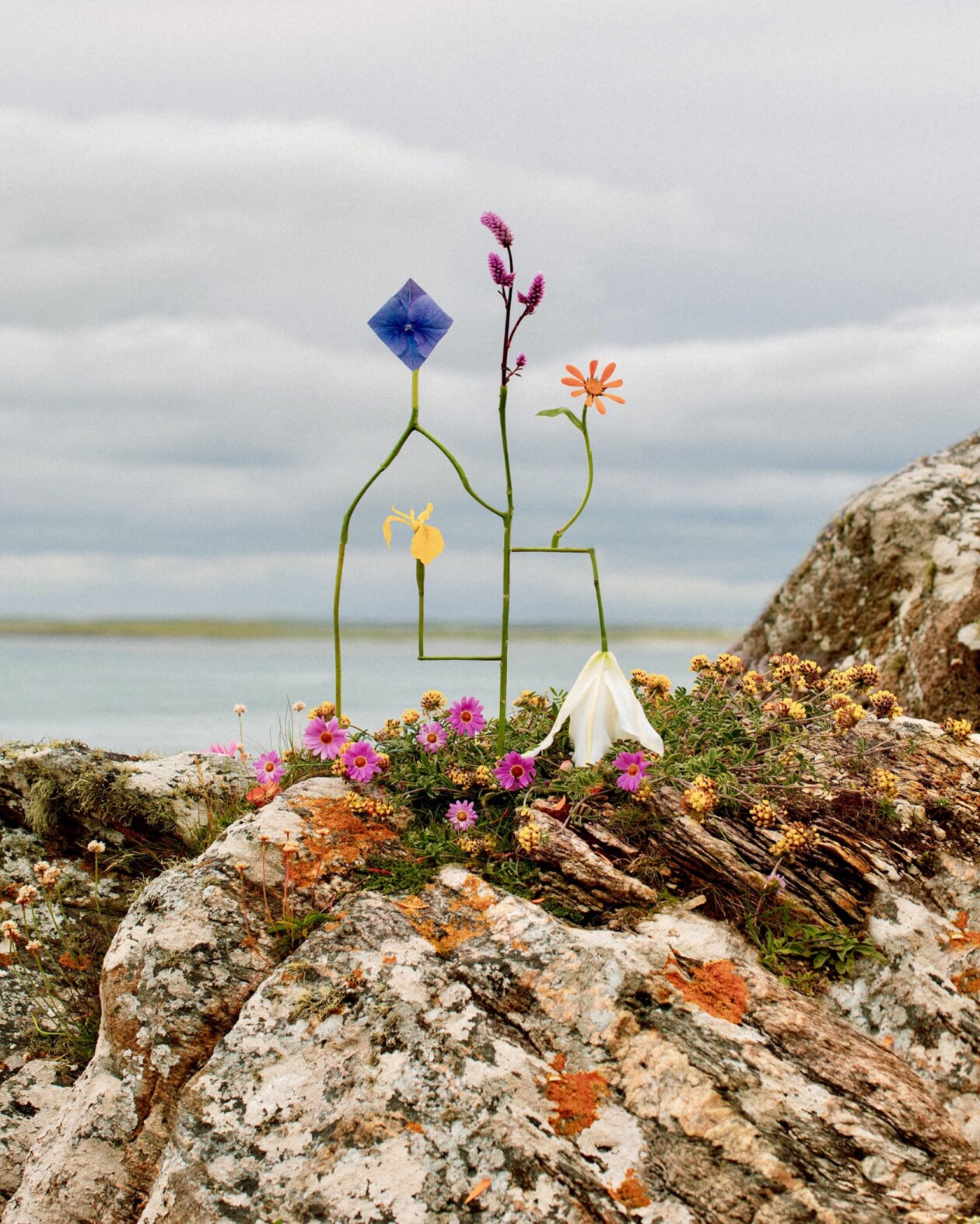
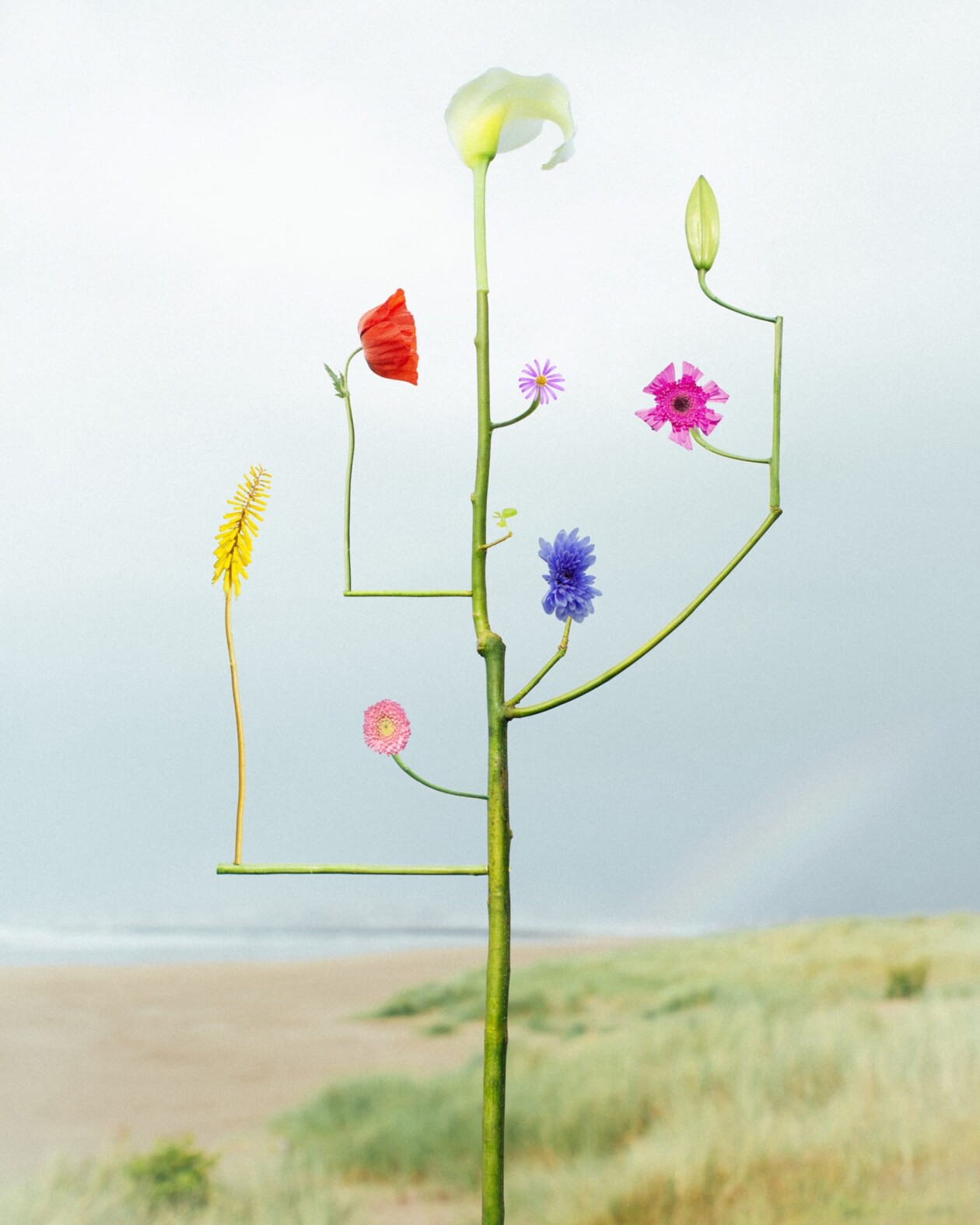
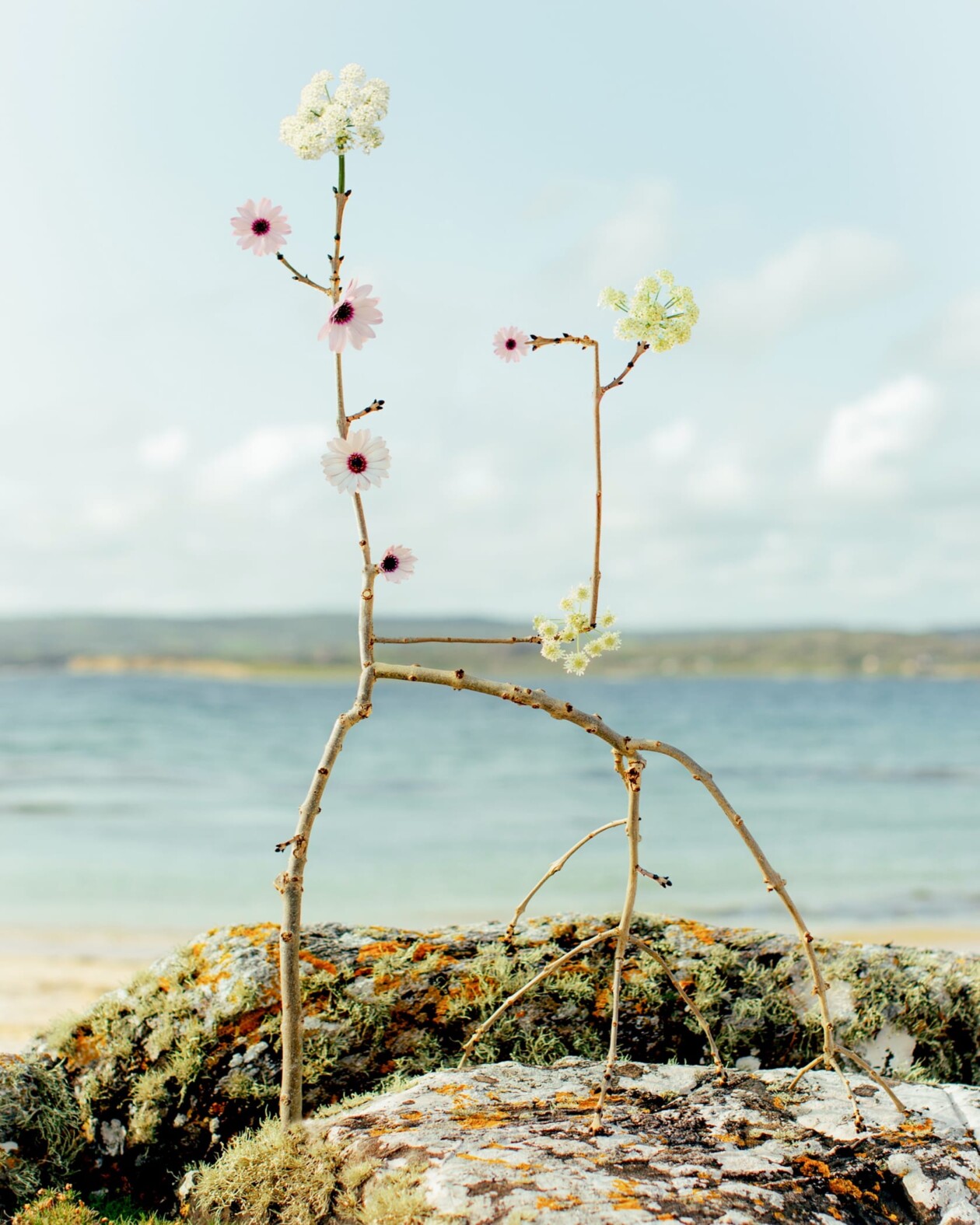
Jennifer Latour builds her botanical sculptures the way a special effects artist builds a creature: piece by piece, joint by joint, until something entirely new stands on its own. Latour is a self-taught artist based in Vancouver, whose practice moves between photography, sculpture, and material performance, and before turning to the camera, she spent nearly two decades working internationally in special effects makeup for film and television. Born in Seven Islands, Quebec, she moved to the UK in 2003 to pursue that trade before starting her photography practice in 2006. That background shows in every splice: her years in prosthetics sharpened a sensitivity to structure, gesture, and the expressive potential of handmade work, and it’s this precision, more than any digital trick, that gives her floral hybrids their strange, believable anatomy.
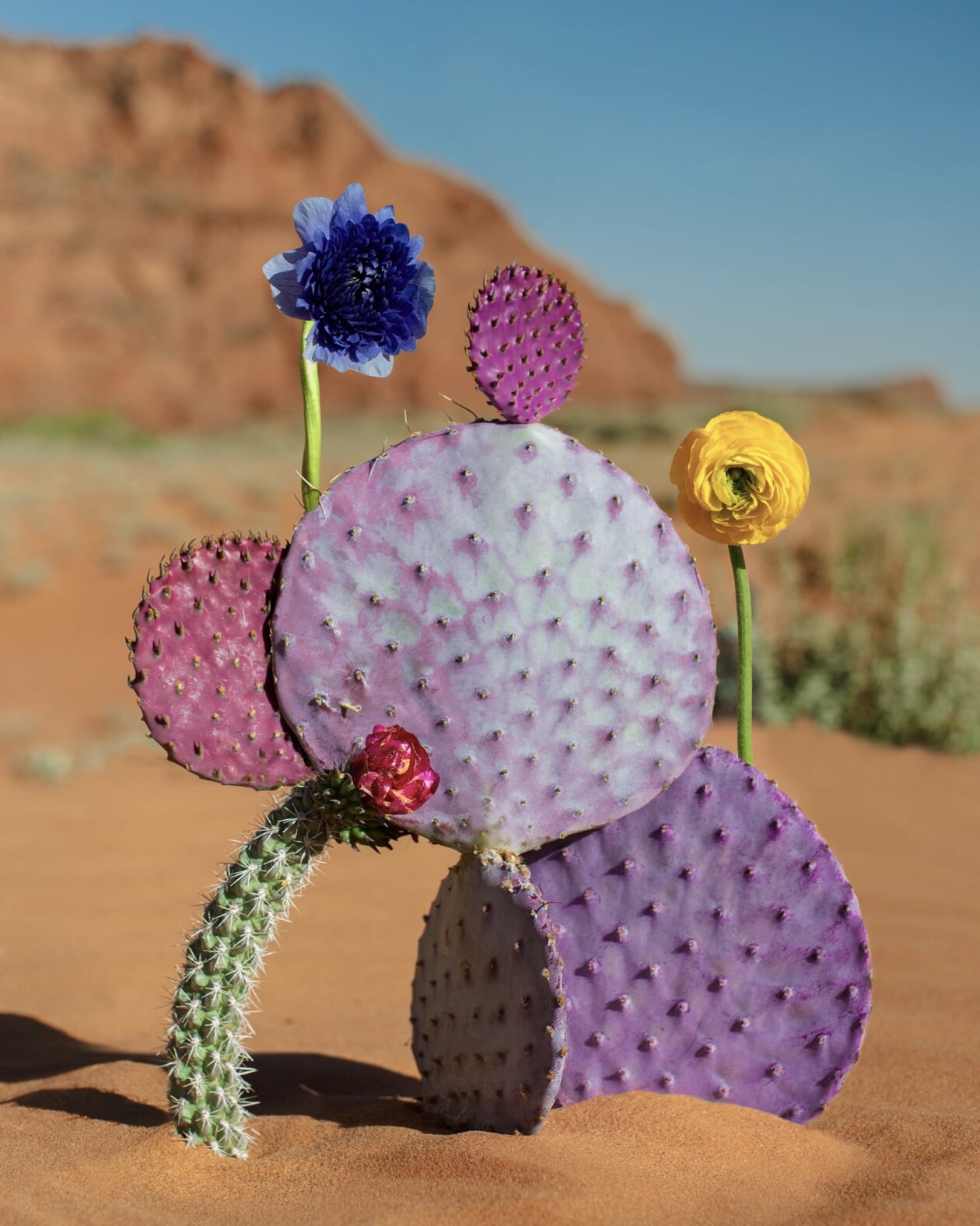
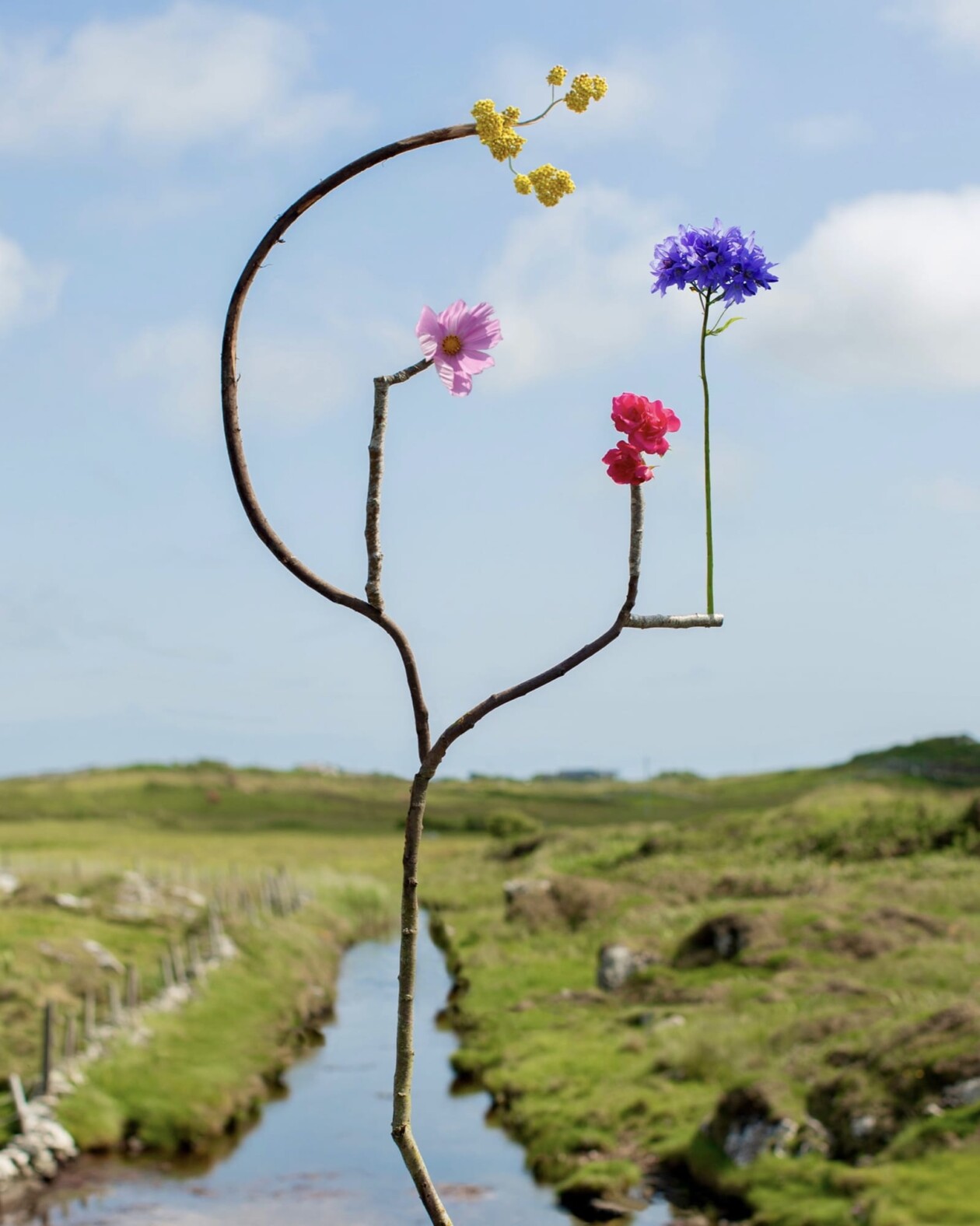
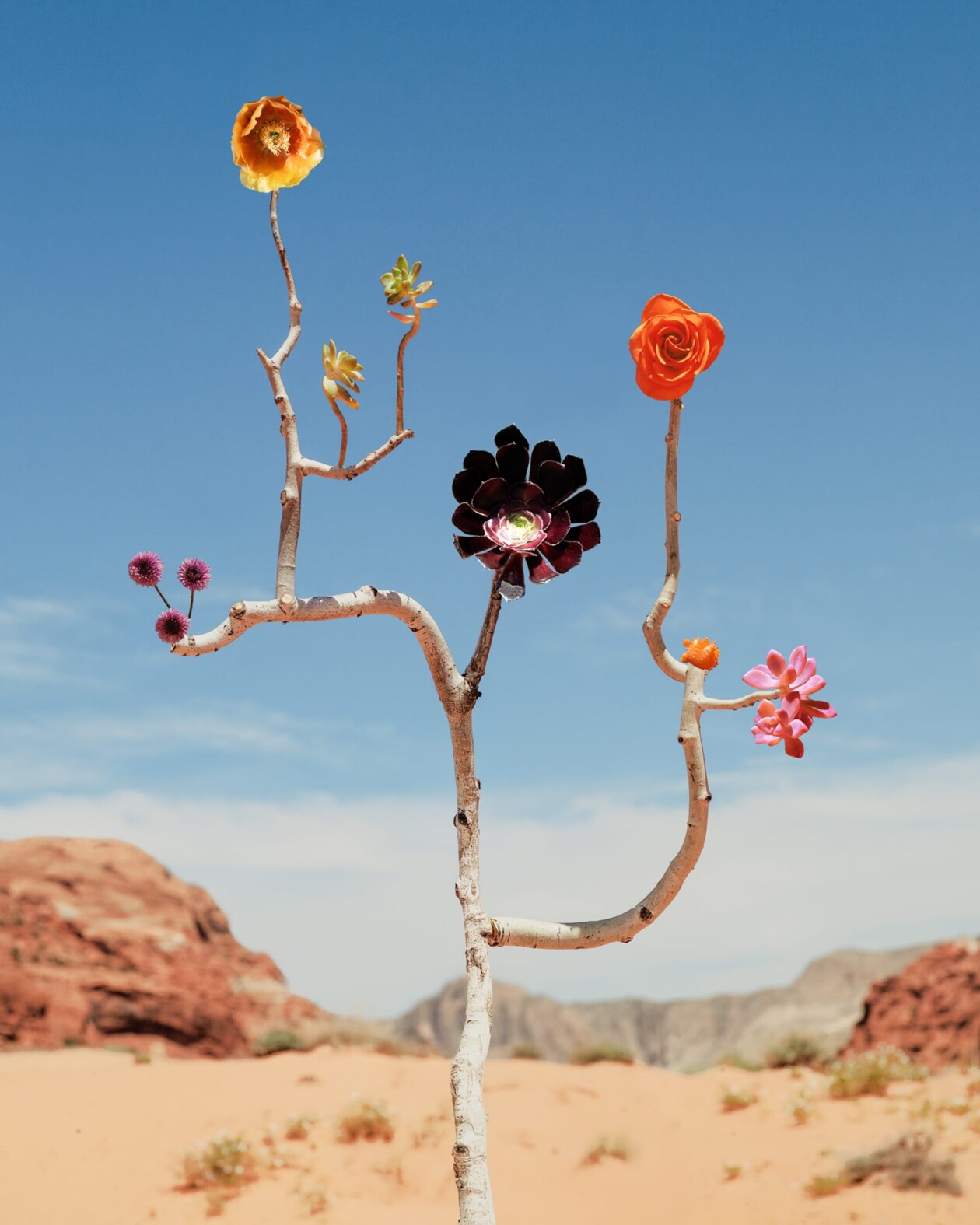
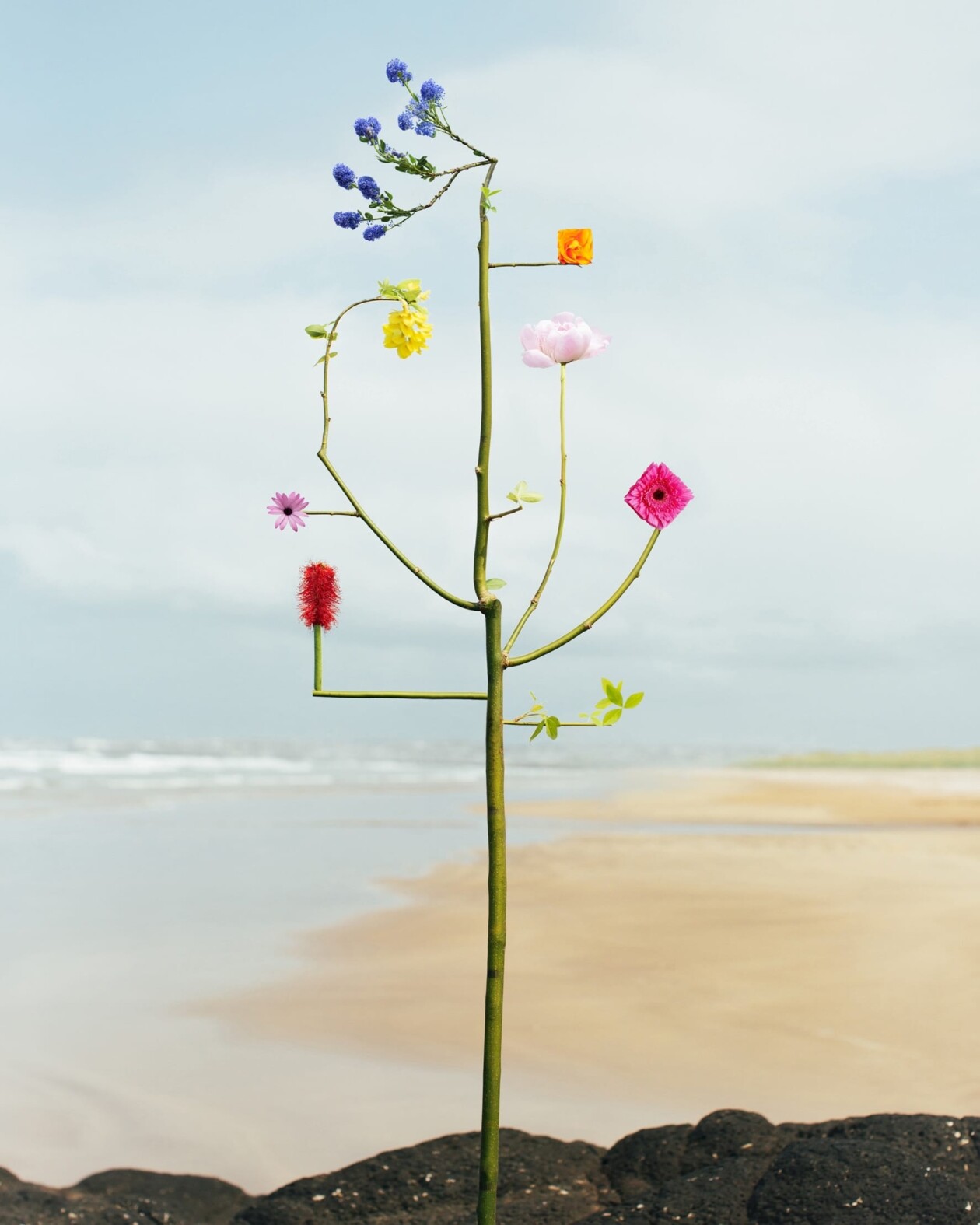
Her ongoing project began not in a studio but at home, during a period of enforced stillness. The Bound Species series took shape when Latour began piecing together objects found around her house into unconventional, ikebana-style compositions, joining stem to stem until single blooms or small clusters sprouted from branches like grafts from another world. She has described how the work almost always takes its own abstract path once color and shape are set in motion, a process closer to improvisation than planning. As restrictions lifted, she carried the sculptures outdoors, where wind became her greatest obstacle: each arrangement is built and photographed on location, unretouched, meaning a single gust can undo hours of careful balancing before the shutter ever clicks.
What holds the series together conceptually is less about invention than about kinship. Latour has framed the body of work as evocative of the interconnectedness found in nature, a reminder that all living things are bound simultaneously by both their similarities and their differences. Every piece behaves like an individual organism, carved and balanced with the patience of someone used to working against fragile materials and tight deadlines, and her insistence on constructing each form physically, rather than through digital manipulation, places her practice in dialogue with older traditions of botanical study while remaining entirely her own. With new locations already planned for the coming months, the series shows no sign of settling into a fixed form — each new specimen simply extends the family.
More info: Website, Instagram.