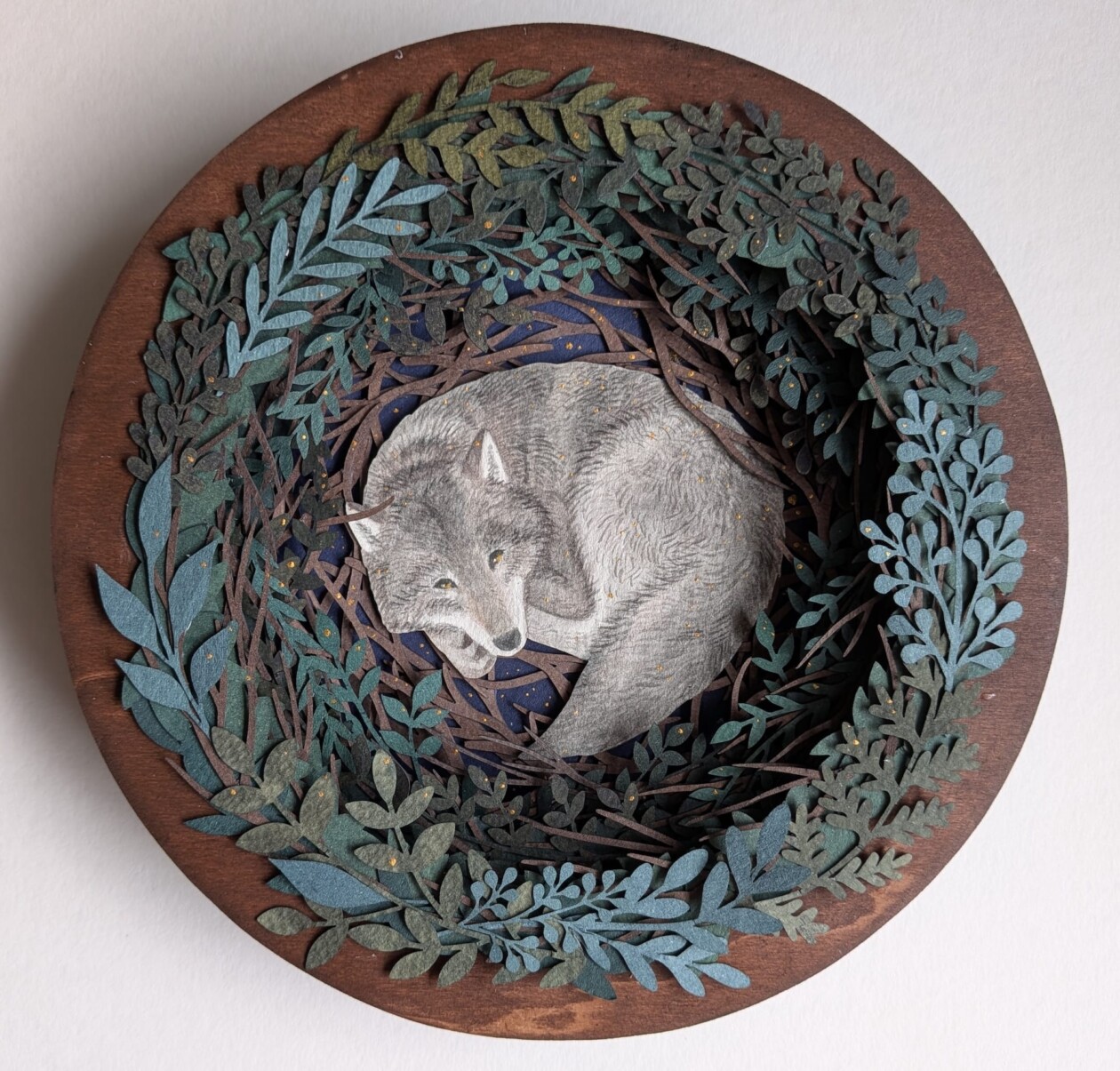
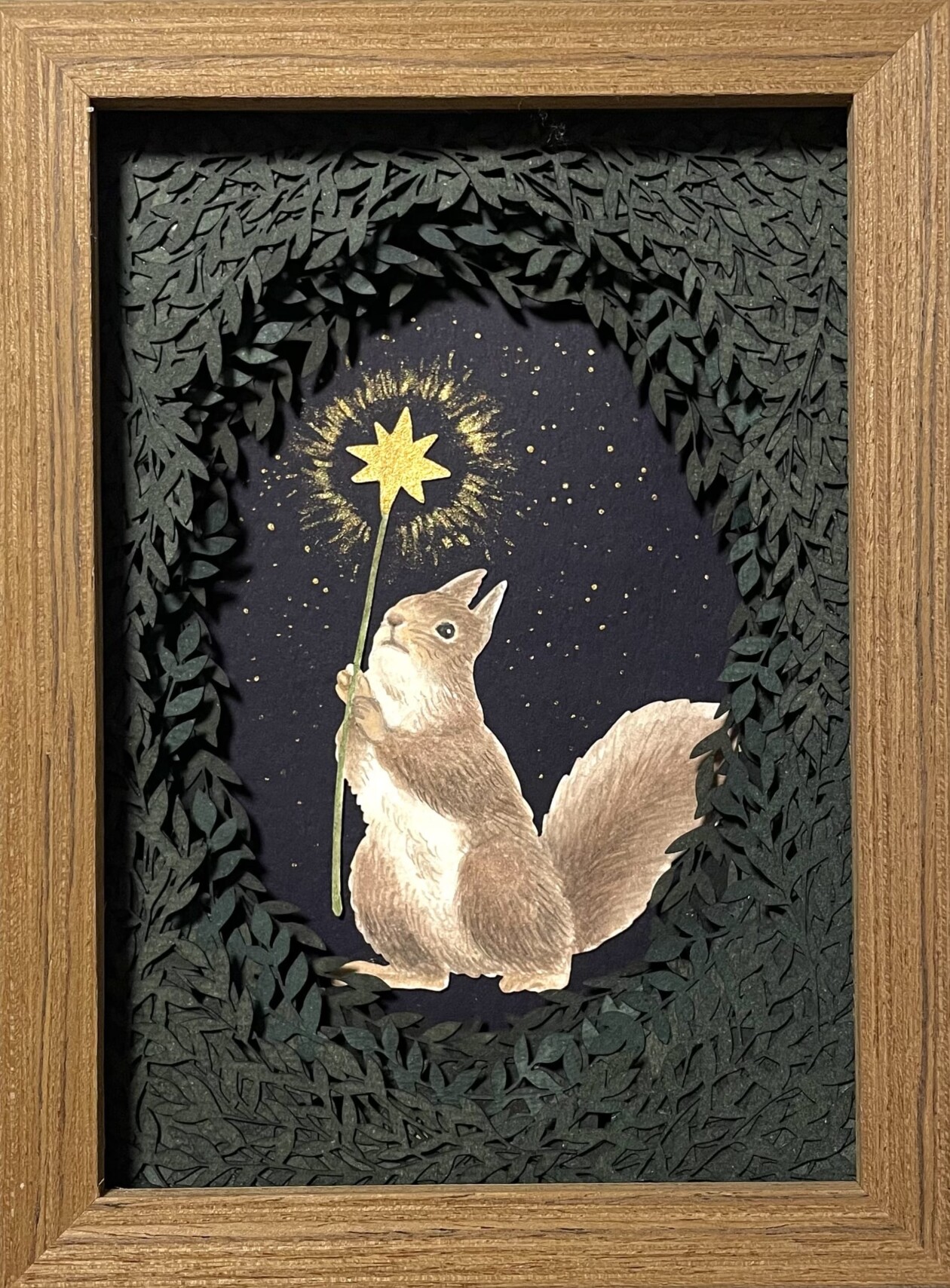
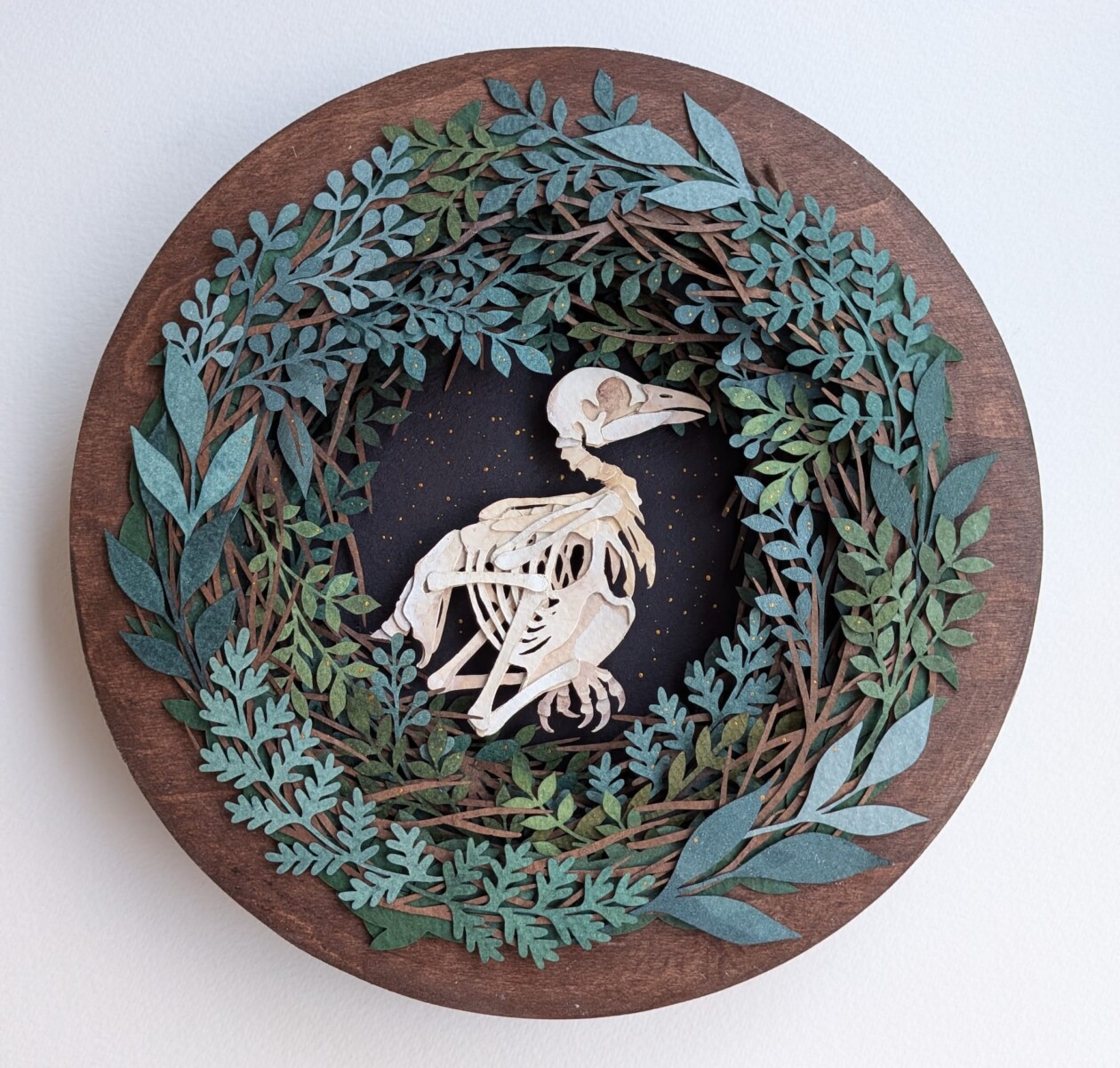
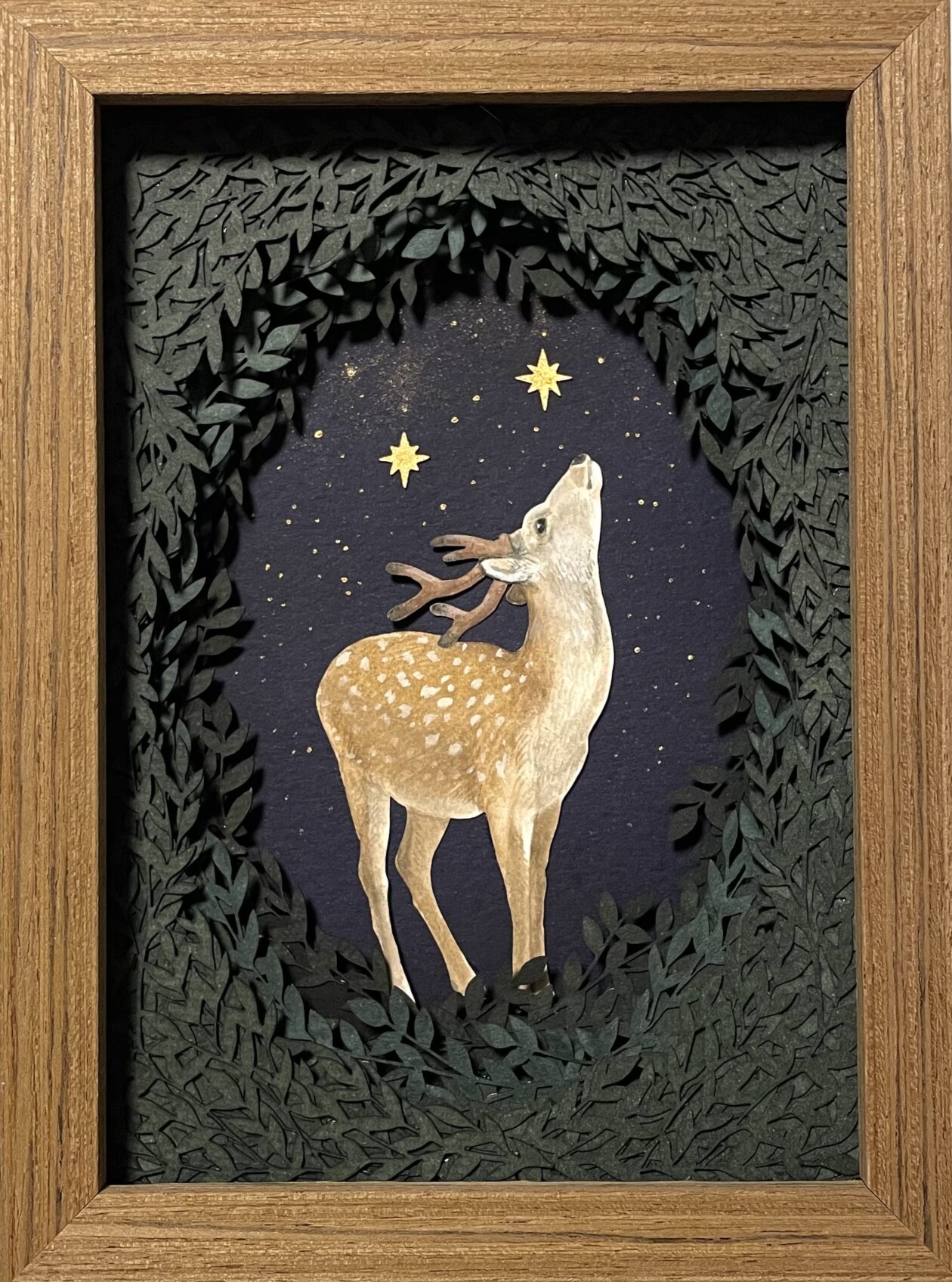
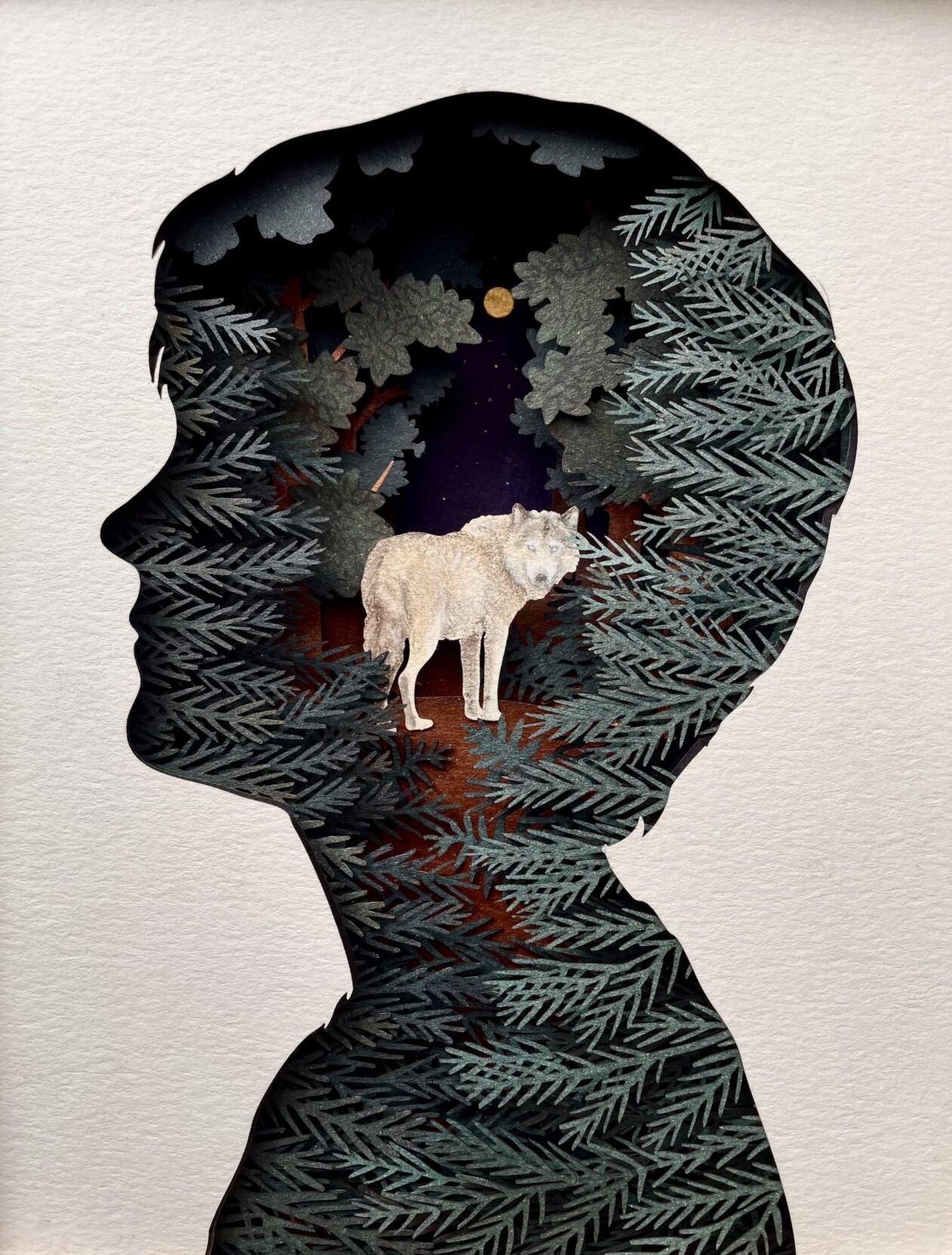
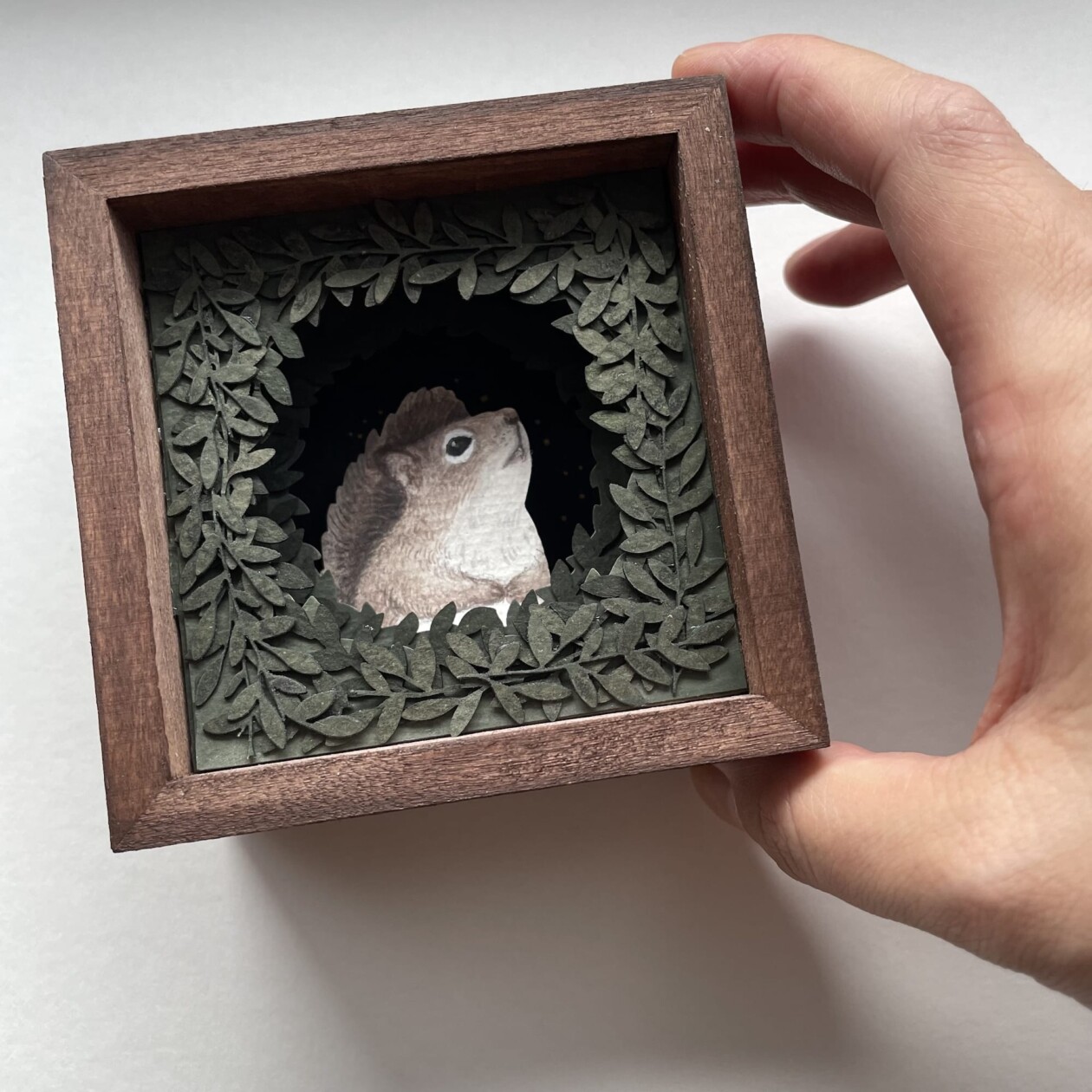
Kanako Abe transforms paper into layered environments where nature, folklore, and dream imagery coexist with remarkable precision. Working within the Japanese kirie tradition of paper cutting, the Seattle-based artist uses a knife to carve intricate forms while carefully controlling negative space and maintaining the structural connections between each element. Earlier in her practice, she also began hand-dyeing washi paper with materials such as indigo, rust, and forest-foraged substances, introducing organic variations of color and texture into an otherwise meticulously controlled process.
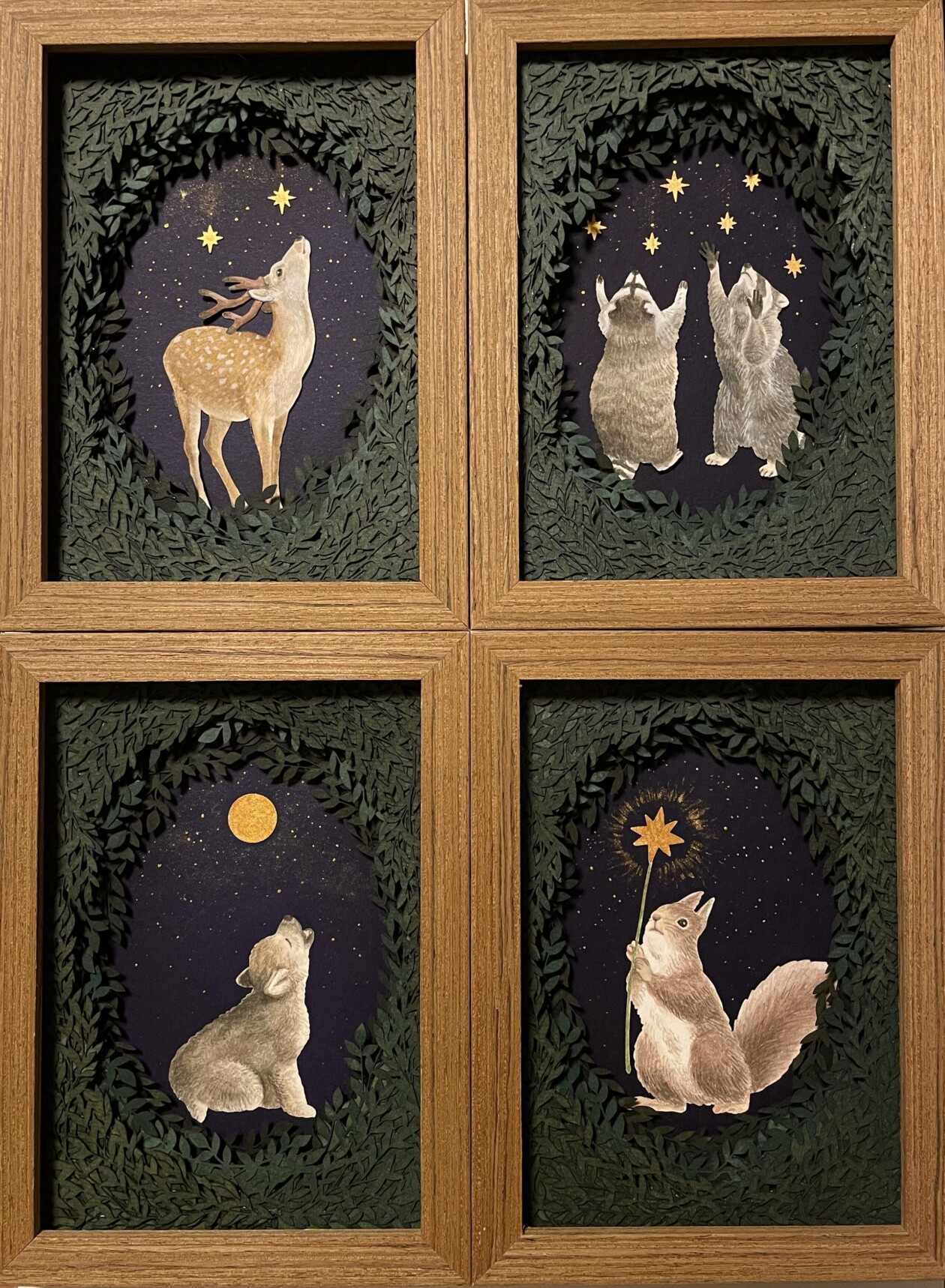
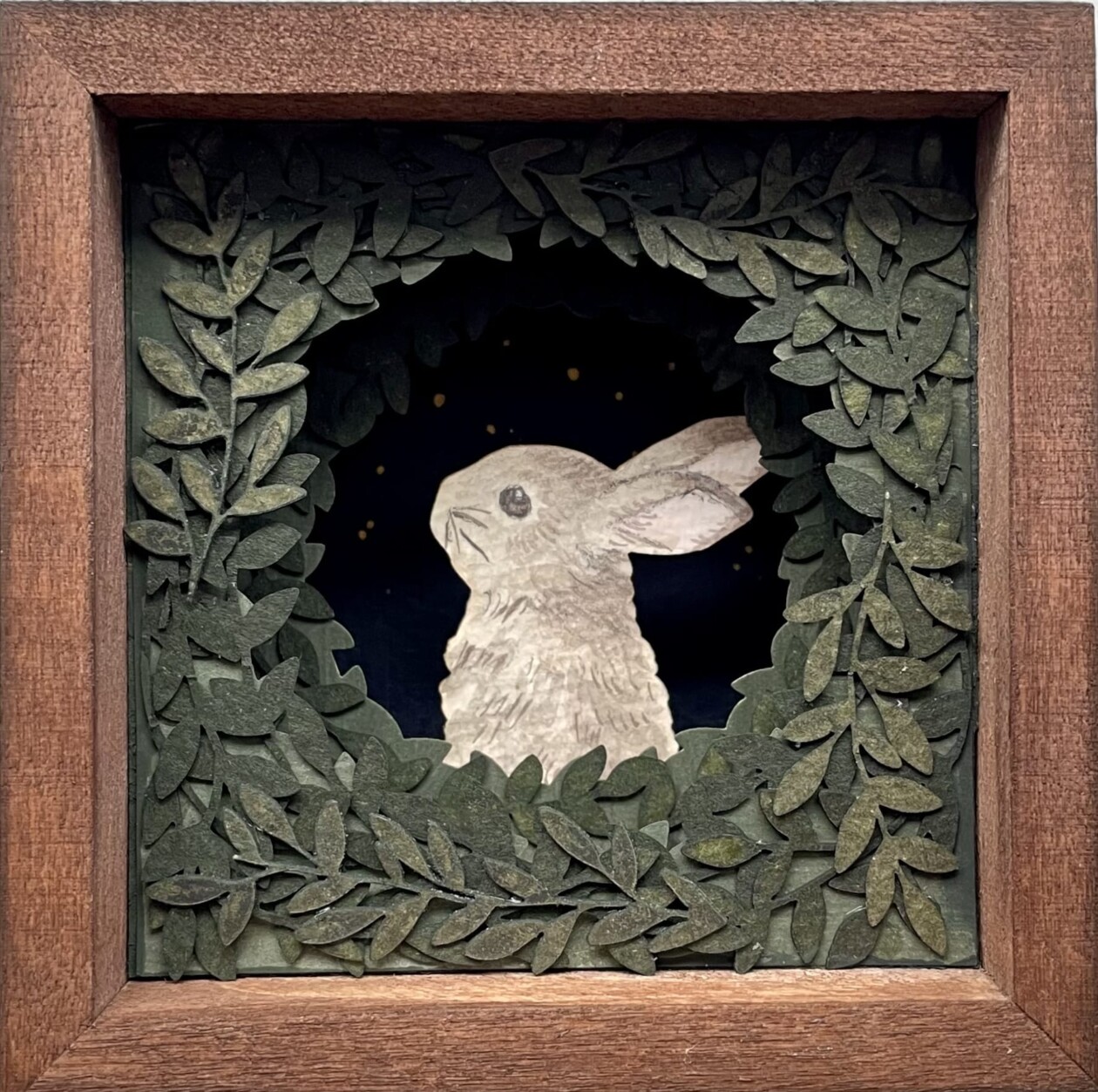
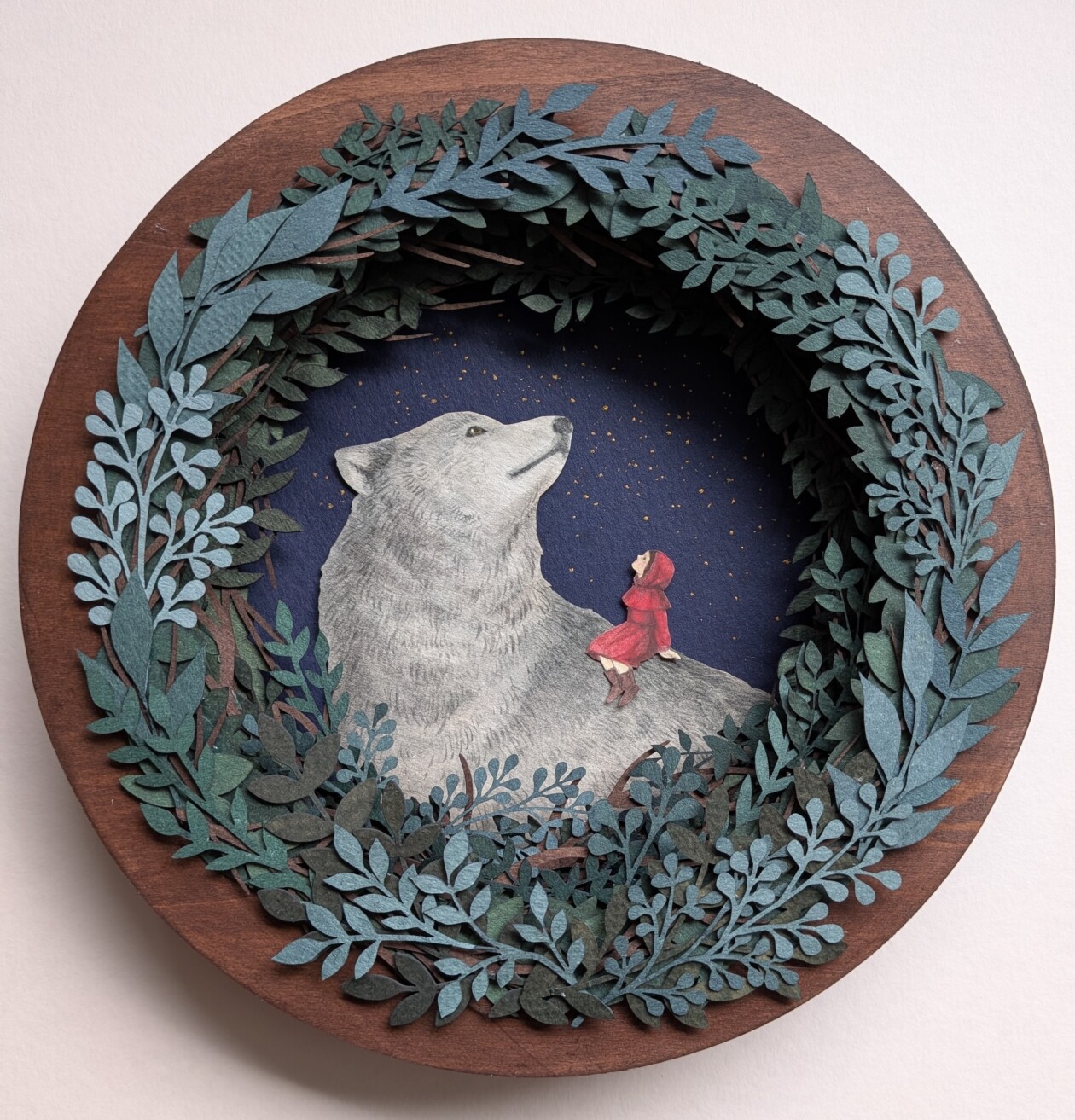
In her recent relief collages, Abe extends this precision into a more sculptural arrangement, building layers of cut paper into foliage-filled settings populated by woodland animals. The dimensional construction creates shadows and recessed spaces that give the compositions a tangible sense of depth, while circular and organic framing devices reinforce the connection between the figures and their surrounding environments. The imagery draws from childhood narratives, folk traditions, nature, and dreams, but Abe does not simply reproduce those references; instead, she constructs ambiguous worlds in which familiar forms acquire an otherworldly quality.
Abe’s approach also demonstrates how an extremely fragile material can support complex visual storytelling. Every incision contributes simultaneously to silhouette, composition, texture, and structural stability, making the cutting process inseparable from the final image. Her practice has recently expanded into illustration and publishing through a collaboration with novelist Caryl Lewis, bringing her paper-cutting language into a narrative centered on transformation and self-assertion. Across these different contexts, Abe maintains a balance between meticulous craftsmanship and the unpredictable qualities of handmade paper, allowing material, imagination, and narrative structure to operate together.
More info: Website, Instagram.