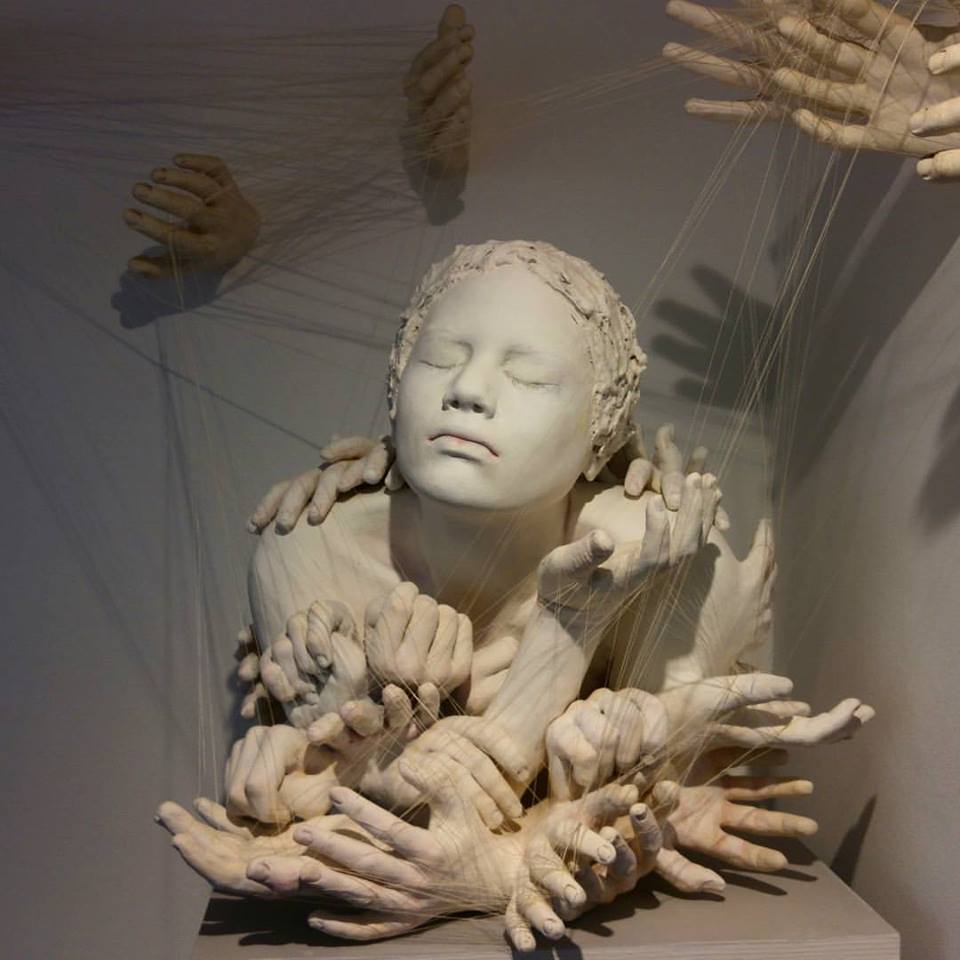
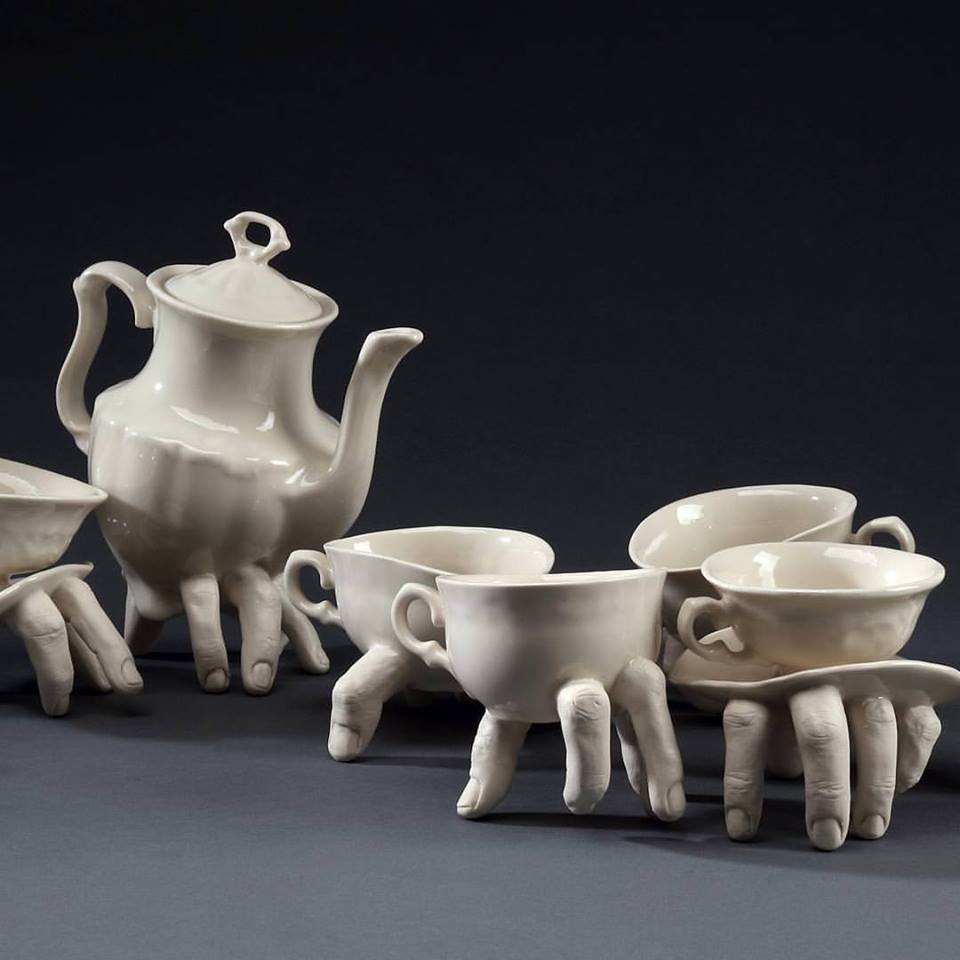
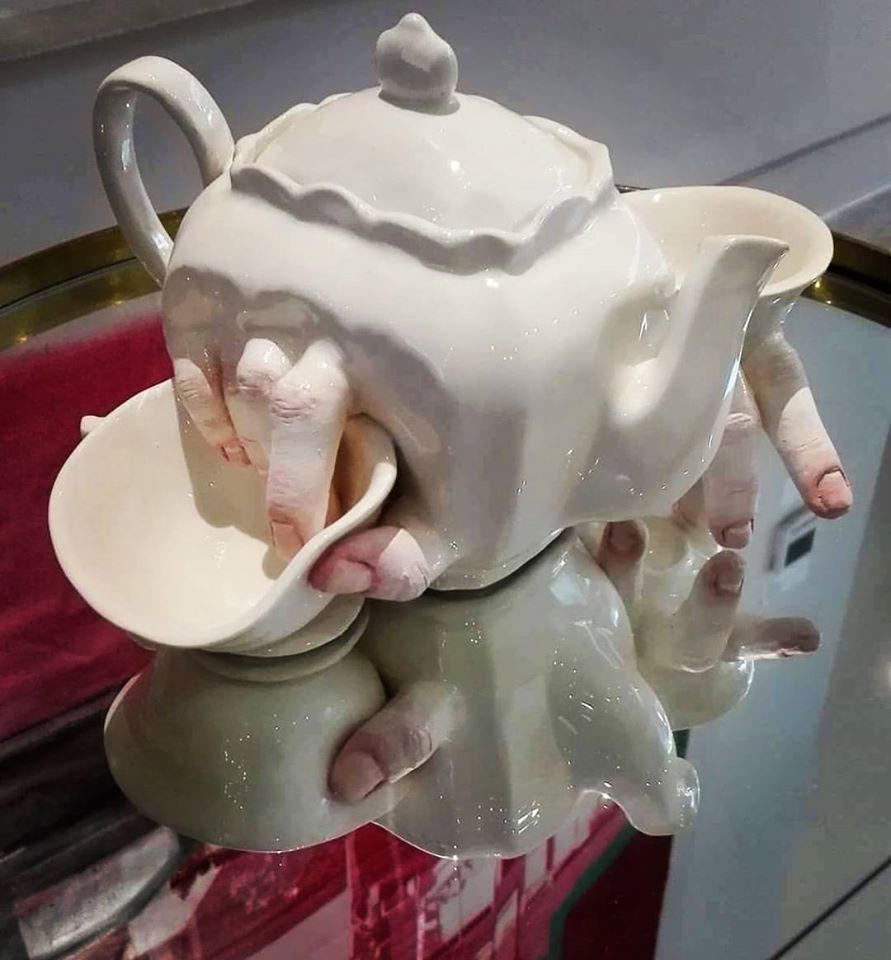
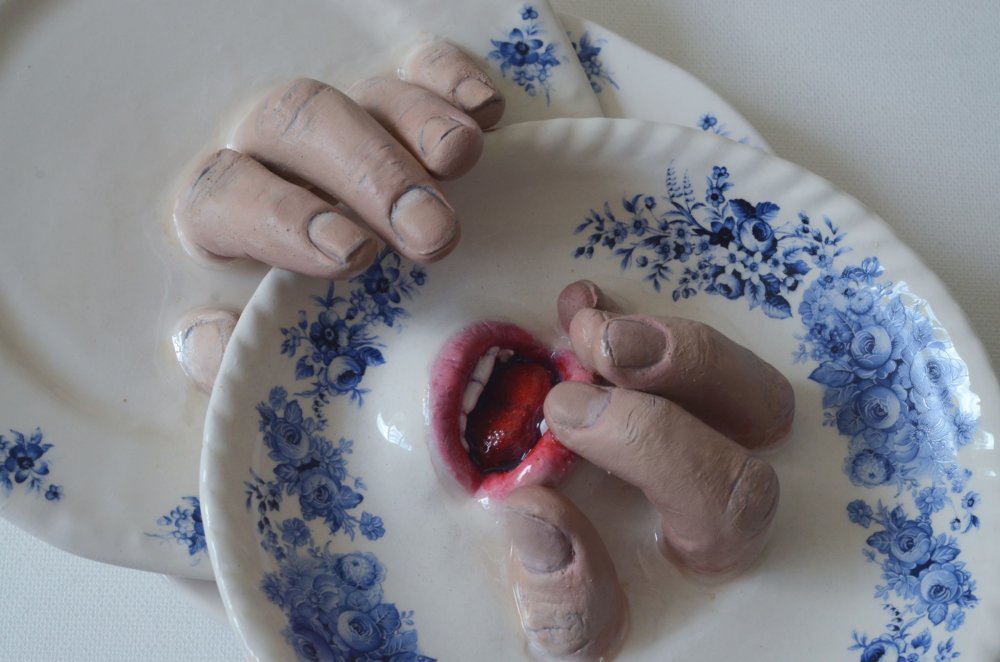
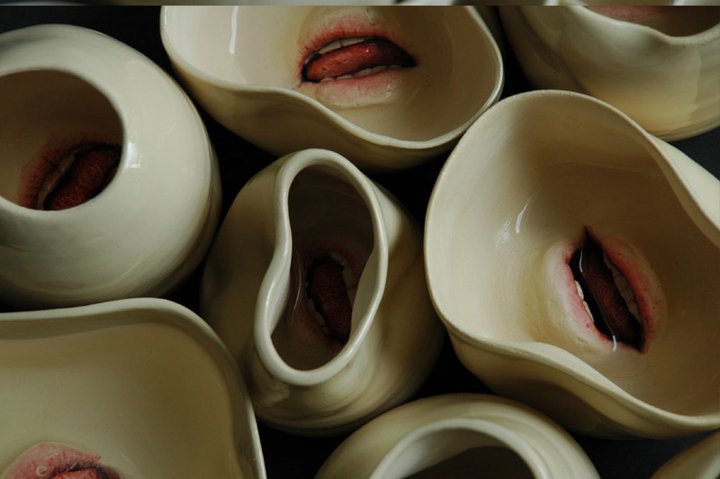
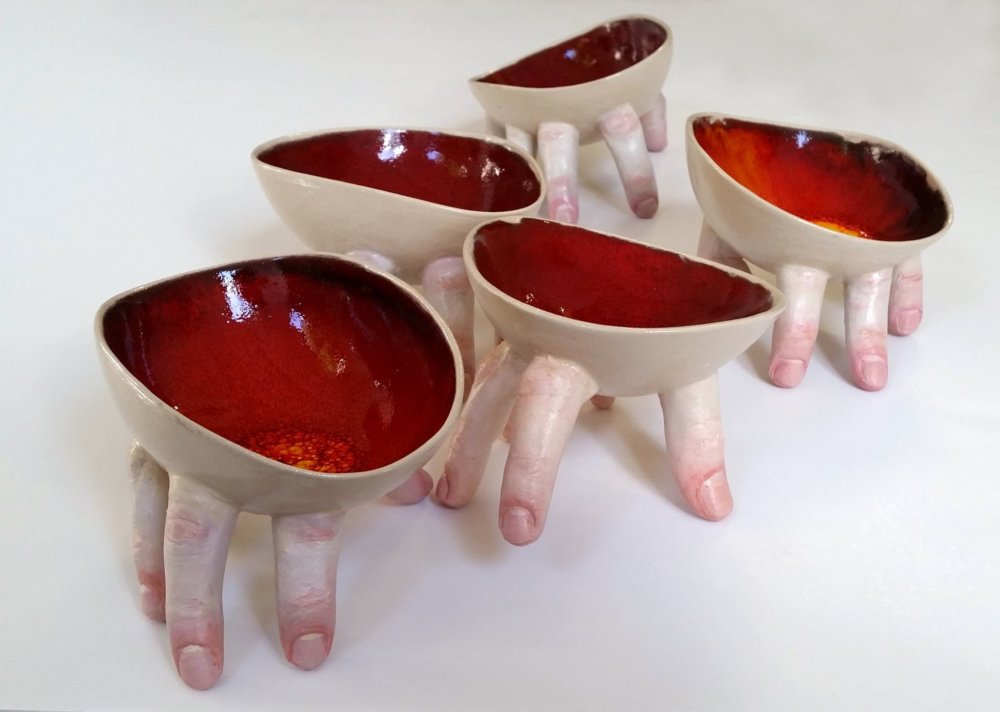
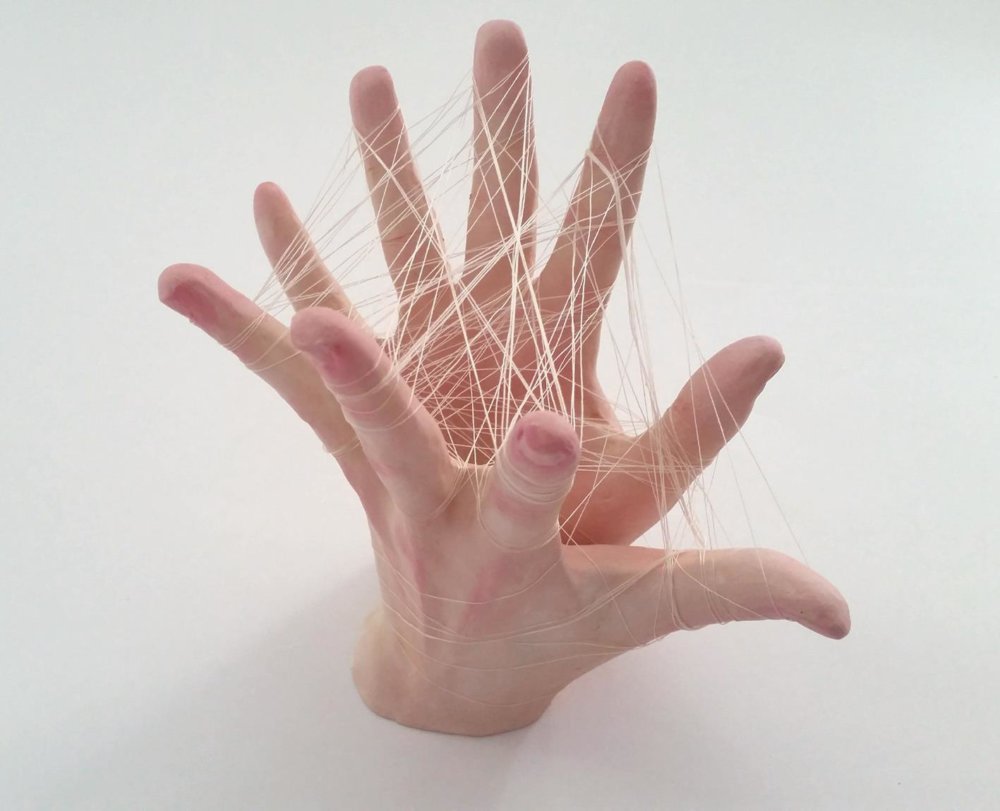
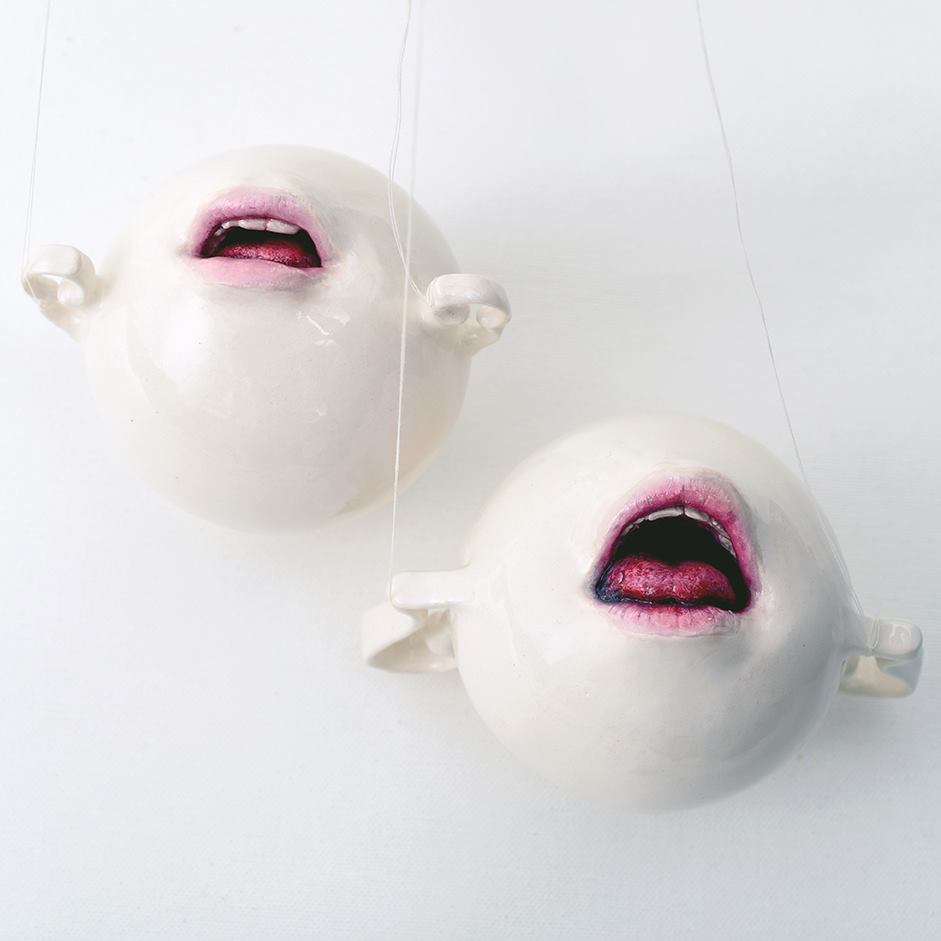
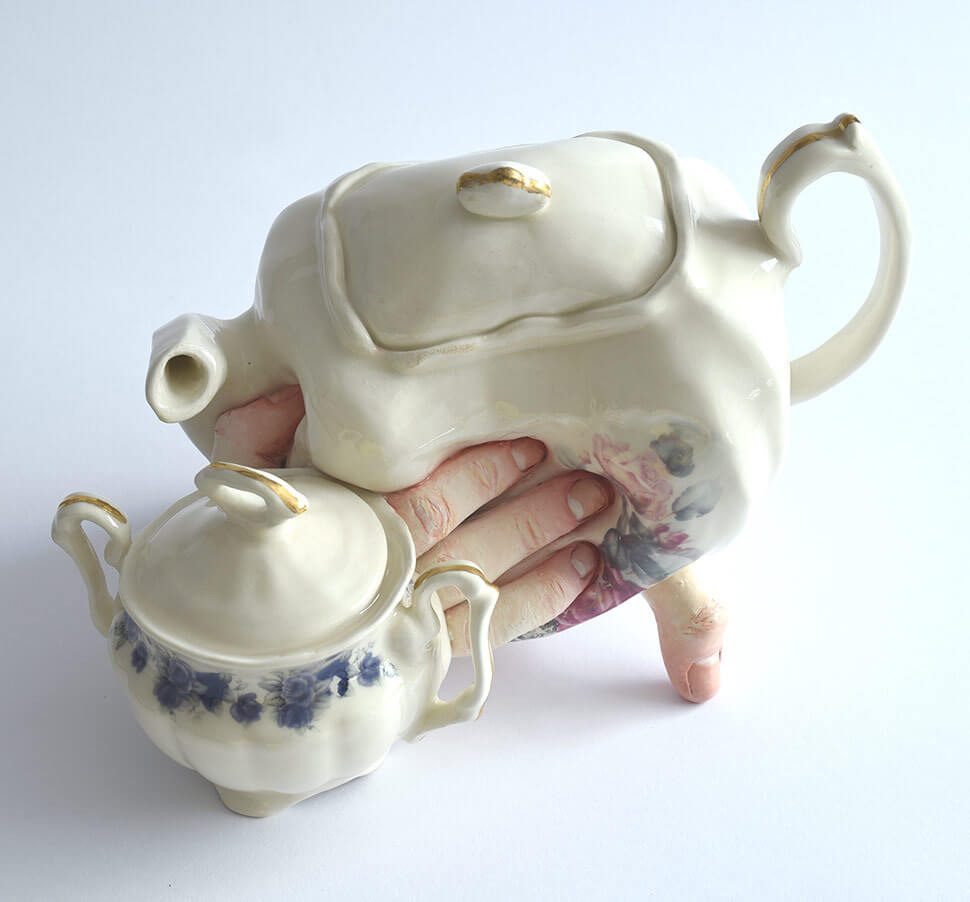
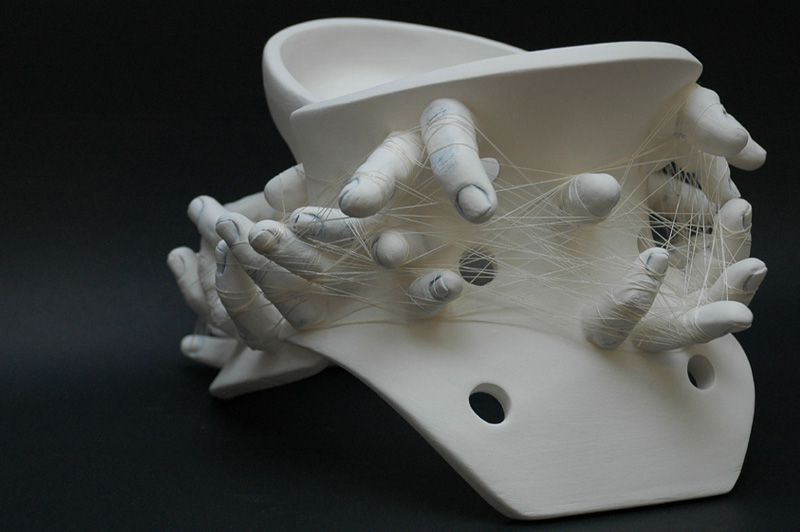
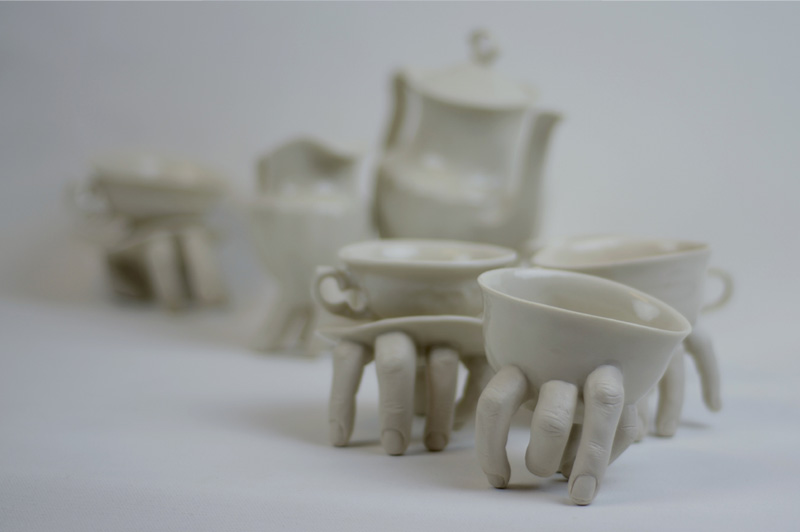
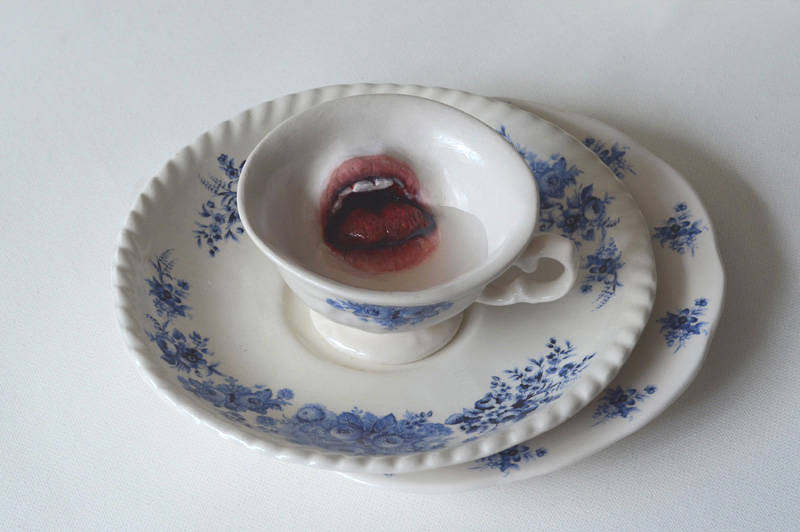
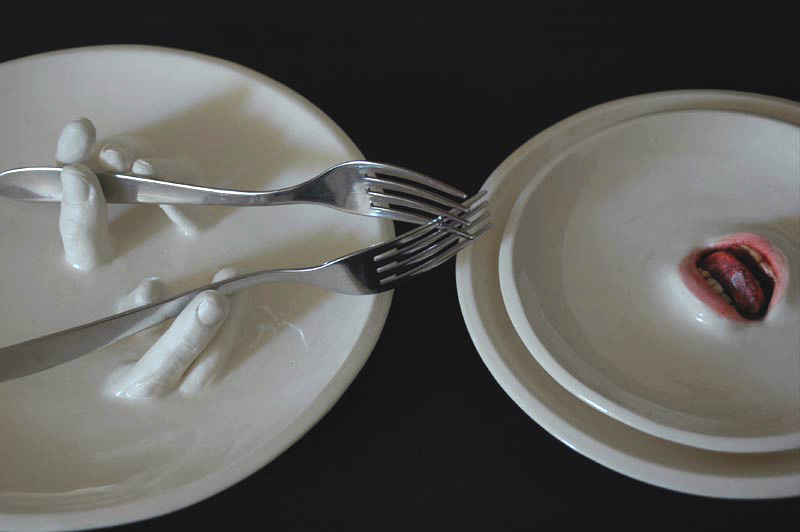
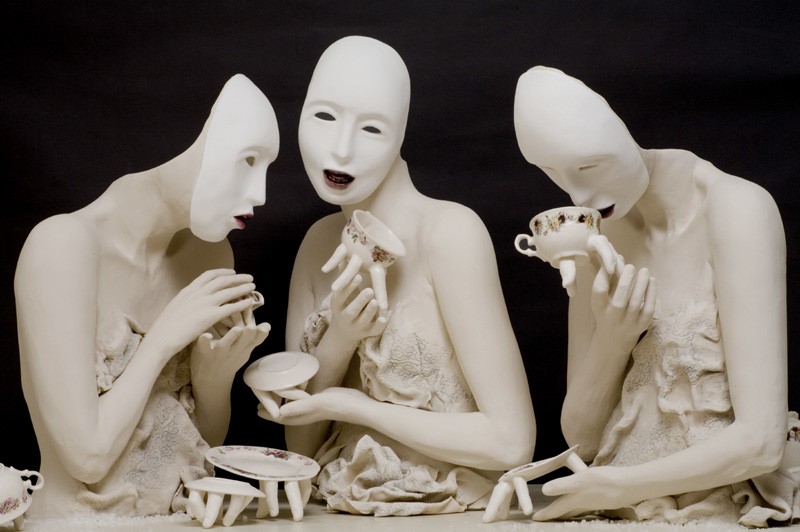
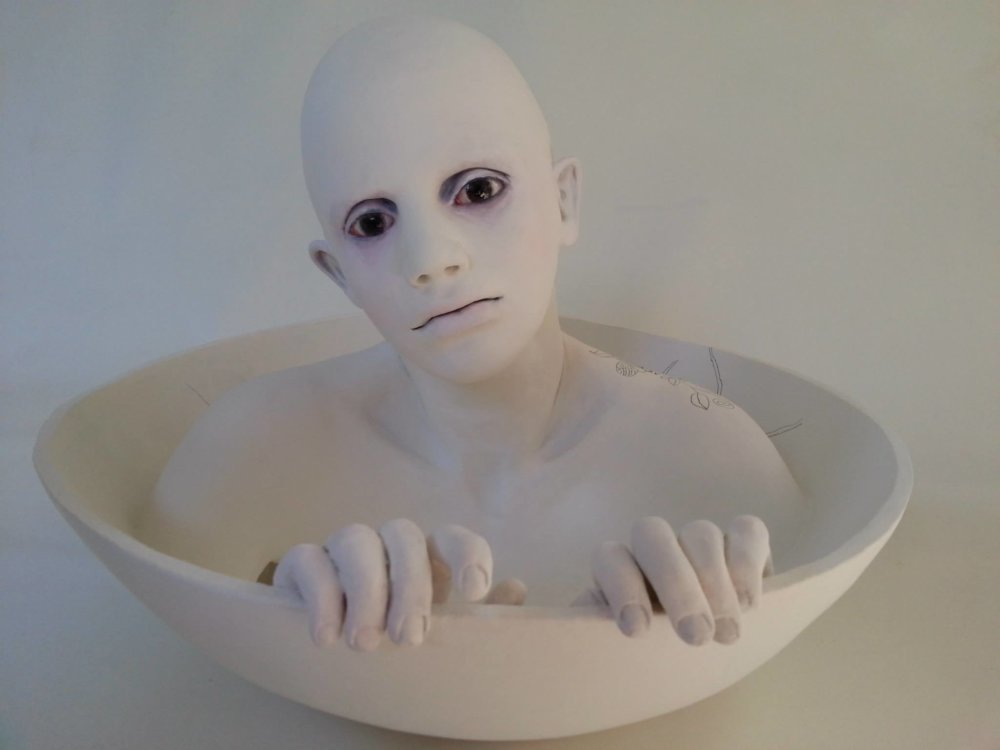
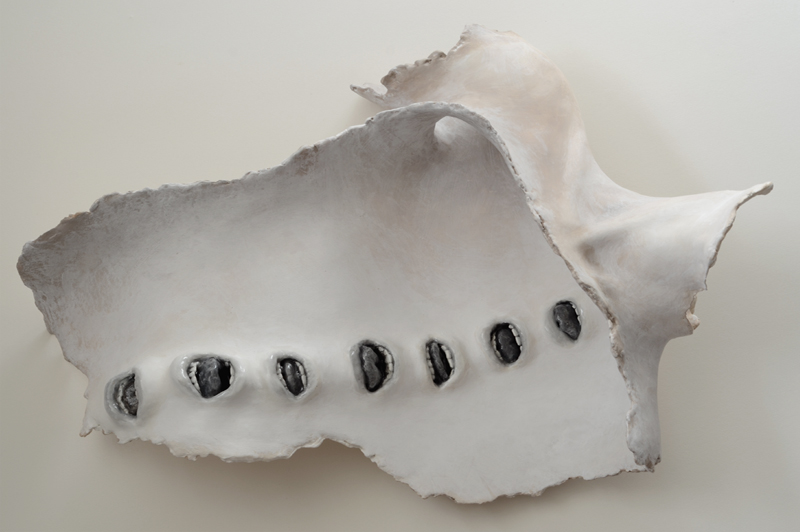
Israeli sculptor Ronit Baranga has built a deeply unsettling body of work by grafting human anatomy onto the most domestic of objects — plates, cups, and bowls that sprout fingers, open mouths, and fleshy protrusions as if caught mid-transformation. Working primarily in ceramic, Baranga exploits the material’s dual nature: its association with refinement and domesticity on one hand, and its capacity to render organic forms with unnerving precision on the other. The result is a body of work that occupies a charged liminal space, where tableware ceases to be passive and becomes something disturbingly alive.
What makes Baranga’s approach particularly potent is the deliberate choice of subject matter. Dinnerware carries centuries of cultural weight — rituals of nourishment, hospitality, and civility — and by embedding human flesh into these objects, she short-circuits the comfort those associations normally provide. A bowl rimmed with open mouths or a plate from which fingers curl outward transforms the familiar into the viscerally strange, forcing a confrontation with the body itself as something simultaneously intimate and foreign.
The conceptual tension driving her practice — between function and form, between the living and the inert — positions Baranga firmly within a tradition of biological surrealism, yet her execution feels distinctly her own. Her sculptures do not merely disturb for the sake of shock; they raise genuine questions about where the self ends and the object world begins, about hunger and consumption as both physical and psychological states. In collapsing the distance between human biology and manufactured utility, she produces work that is as philosophically rich as it is viscerally powerful.
More info: Website, Facebook, Instagram.