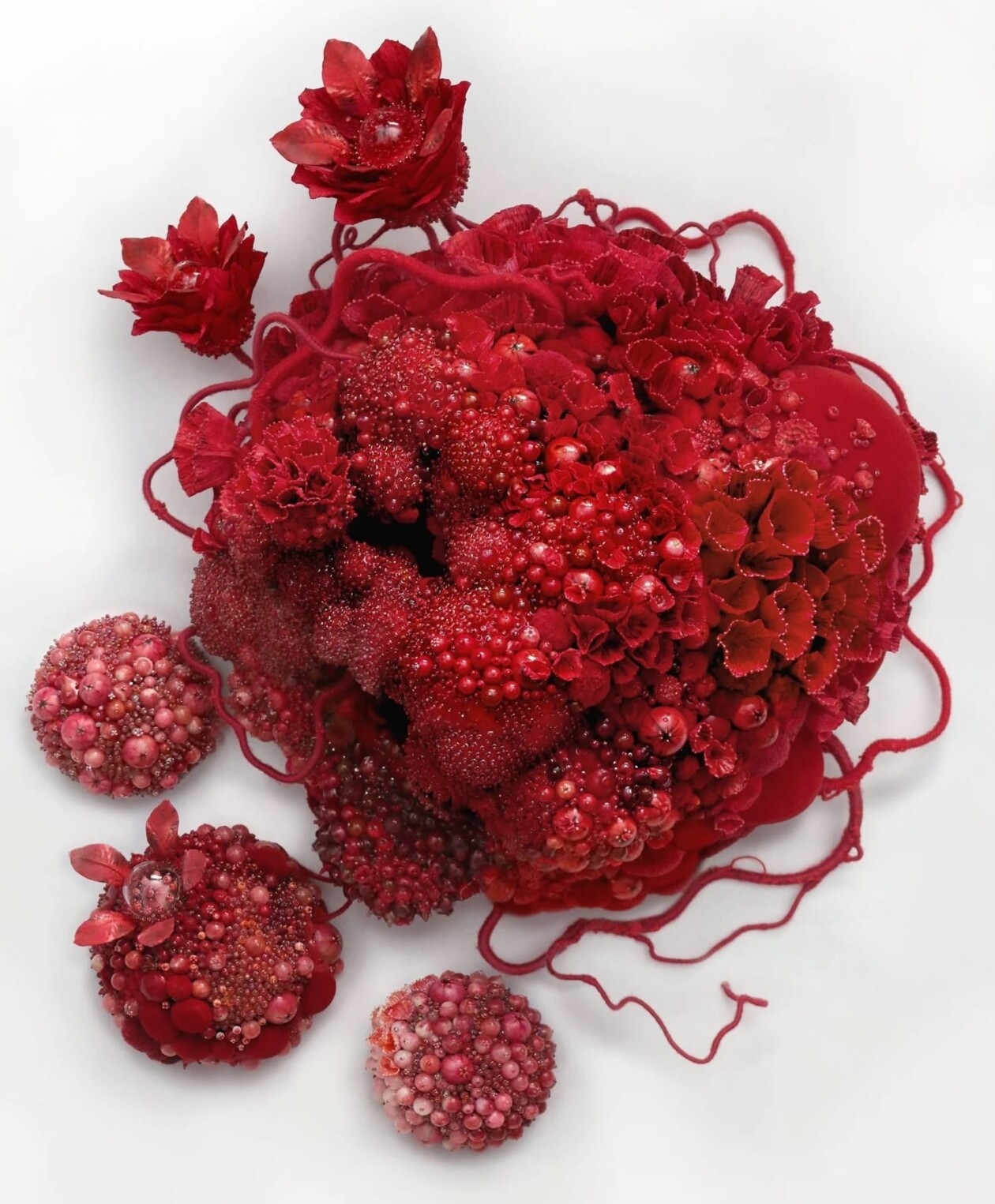
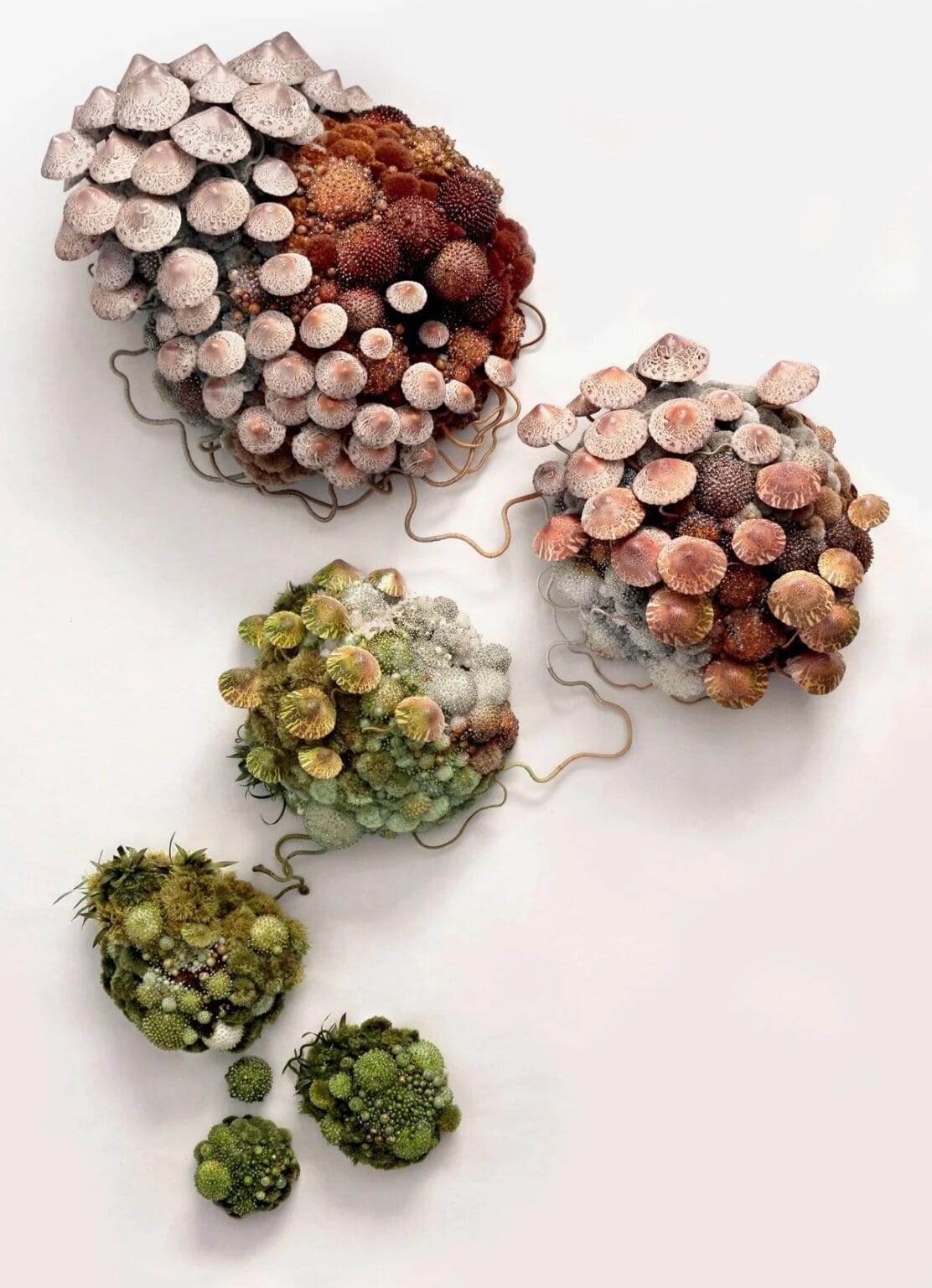
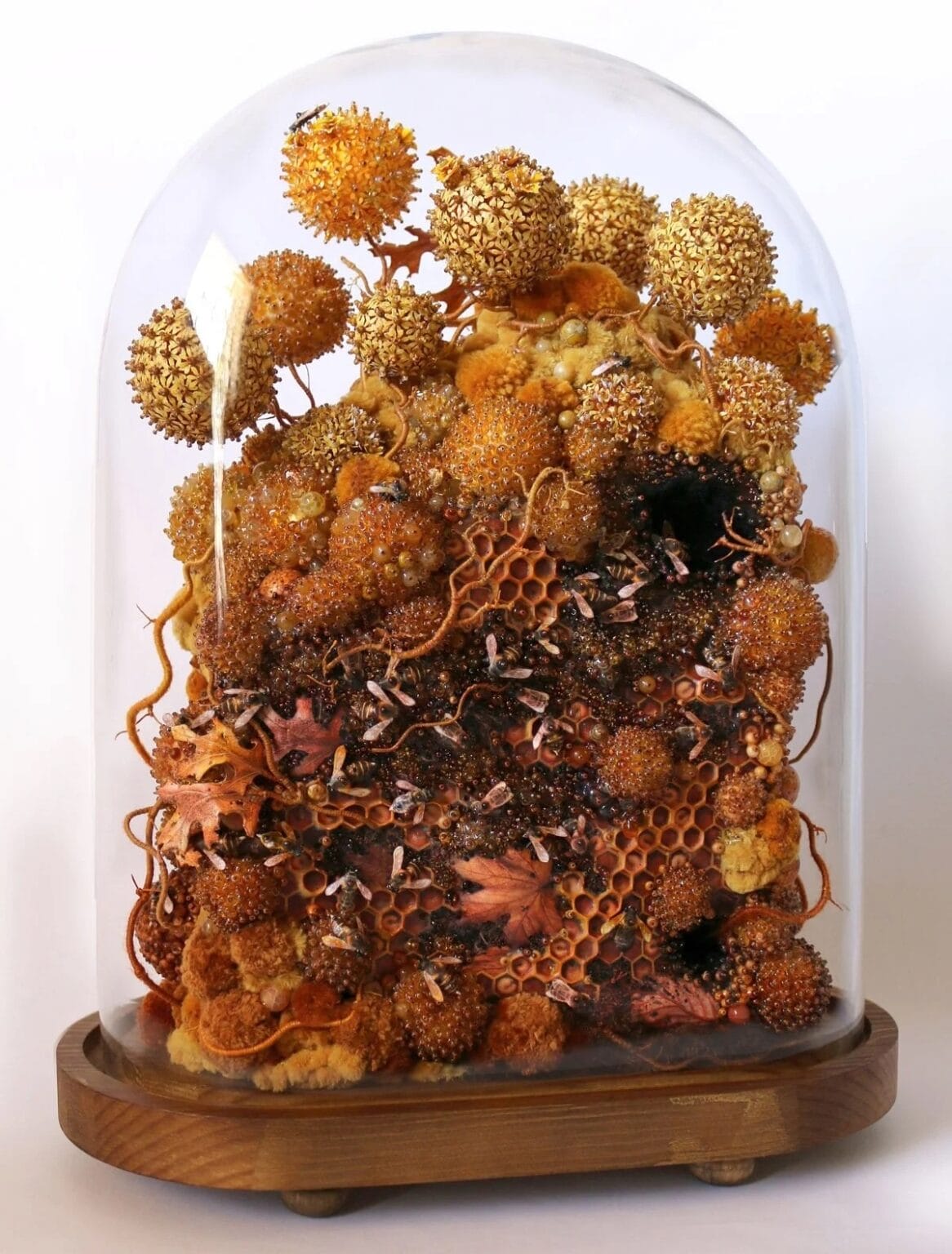
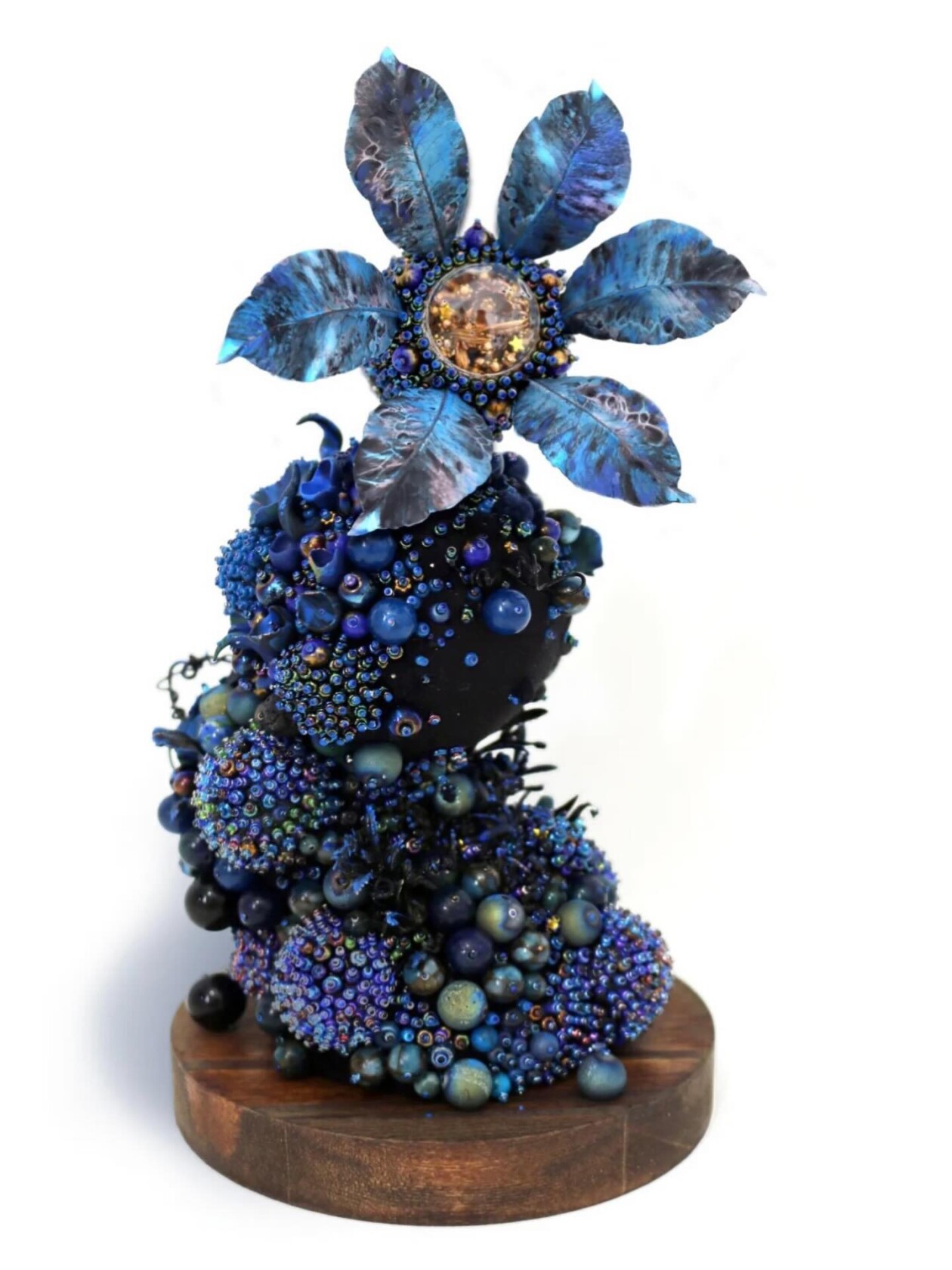
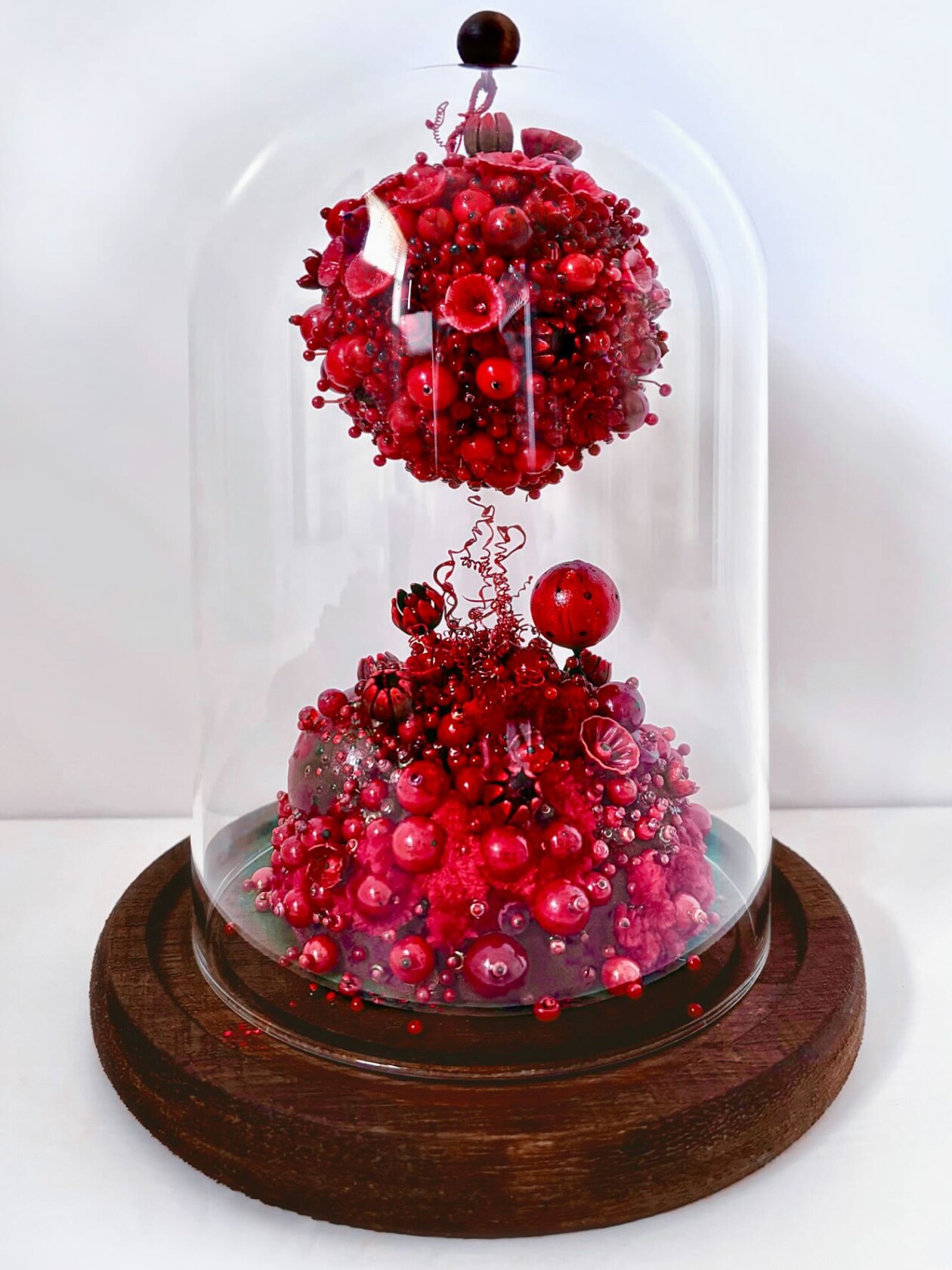
After spending more than two decades working digitally as a commercial textile designer, Amy Gross found herself craving something more tactile and immediate. She began creating beaded jewelry as a way to reconnect with handwork, and those beading techniques gradually evolved beyond adornment into three-dimensional canvases that told personal stories. Having studied painting at Cooper Union Institute in New York City where she earned her BFA, Gross later established her own children’s product and textile design company, Amy Designs, Inc. It wasn’t until her move to Florida in 1999 that she began to sew, inspired by what she describes as the “hysterical speed” of plant growth in the region. Through fiber, sewing, and embellishing — the merging and transforming of one material with another — she found a language to describe the natural world she was witnessing.
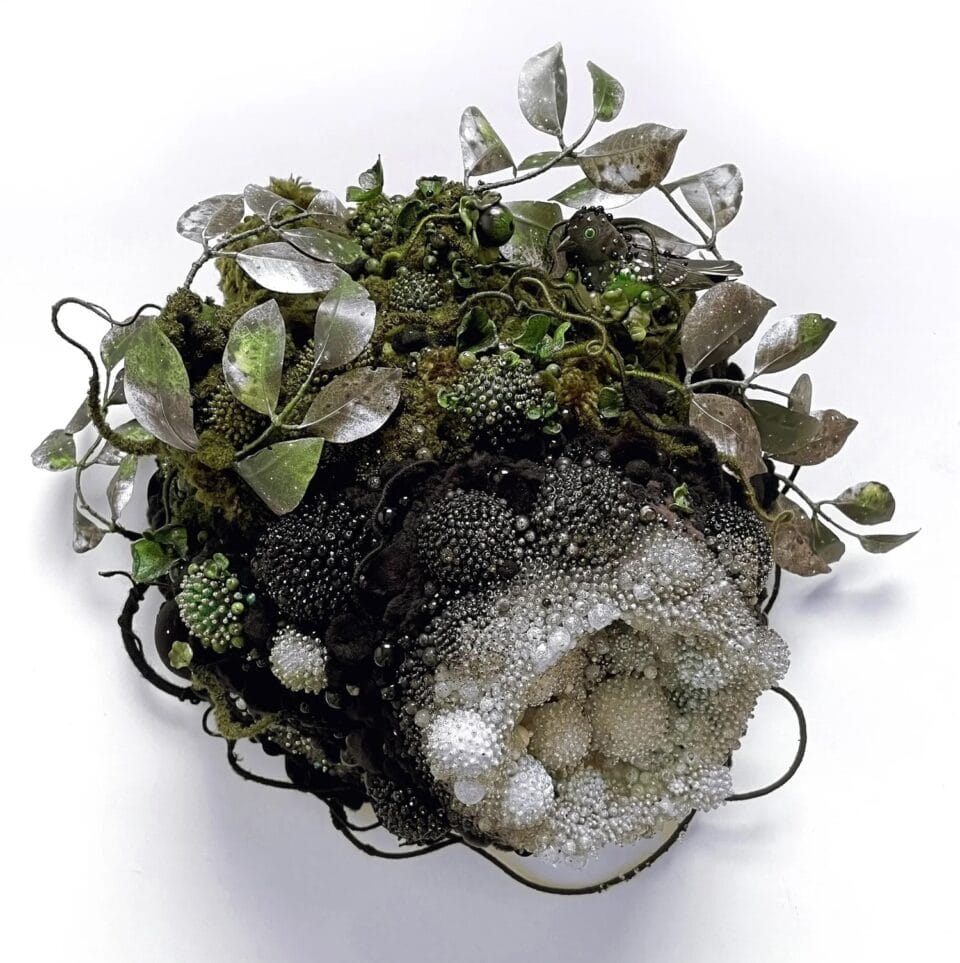
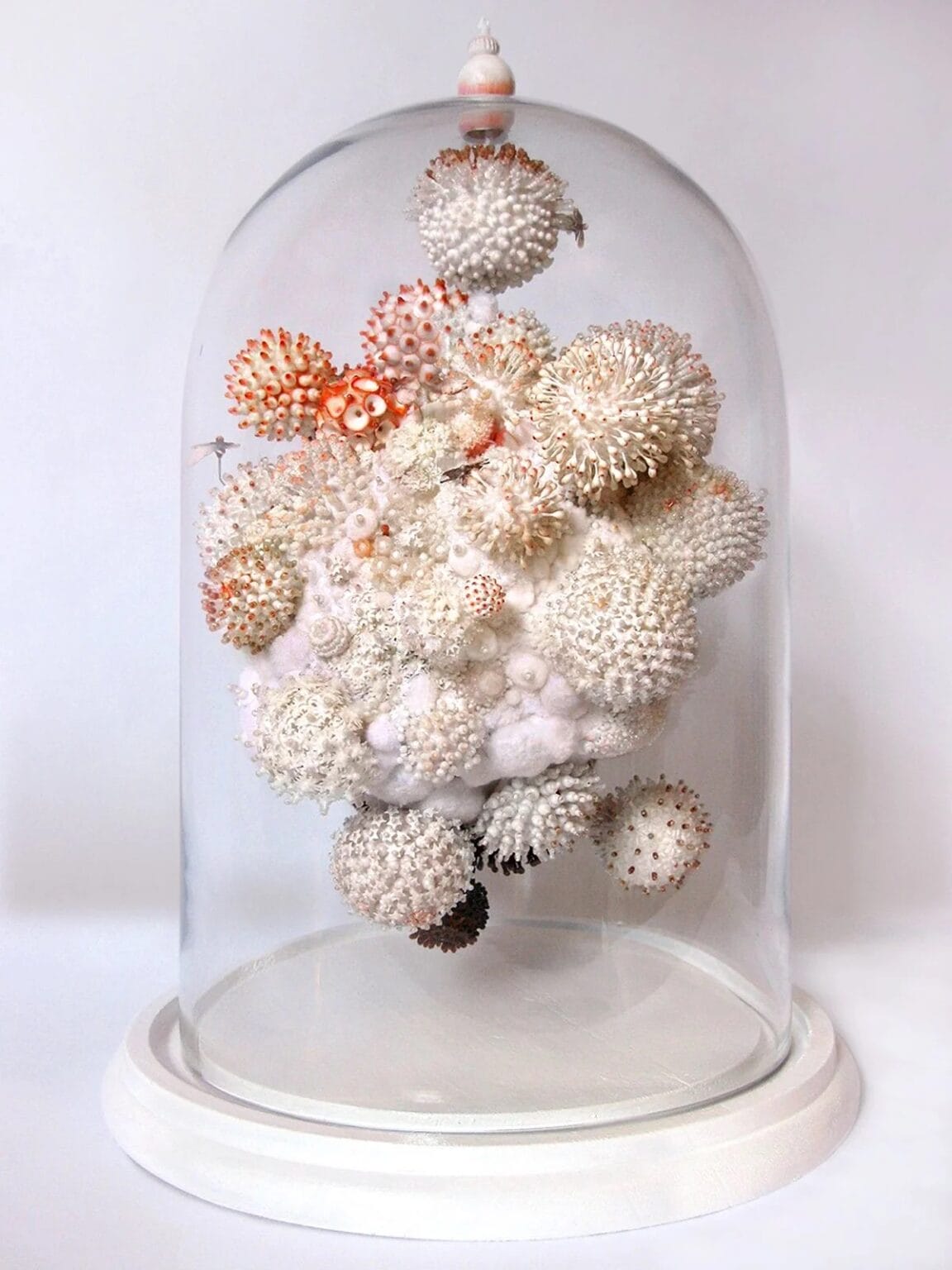
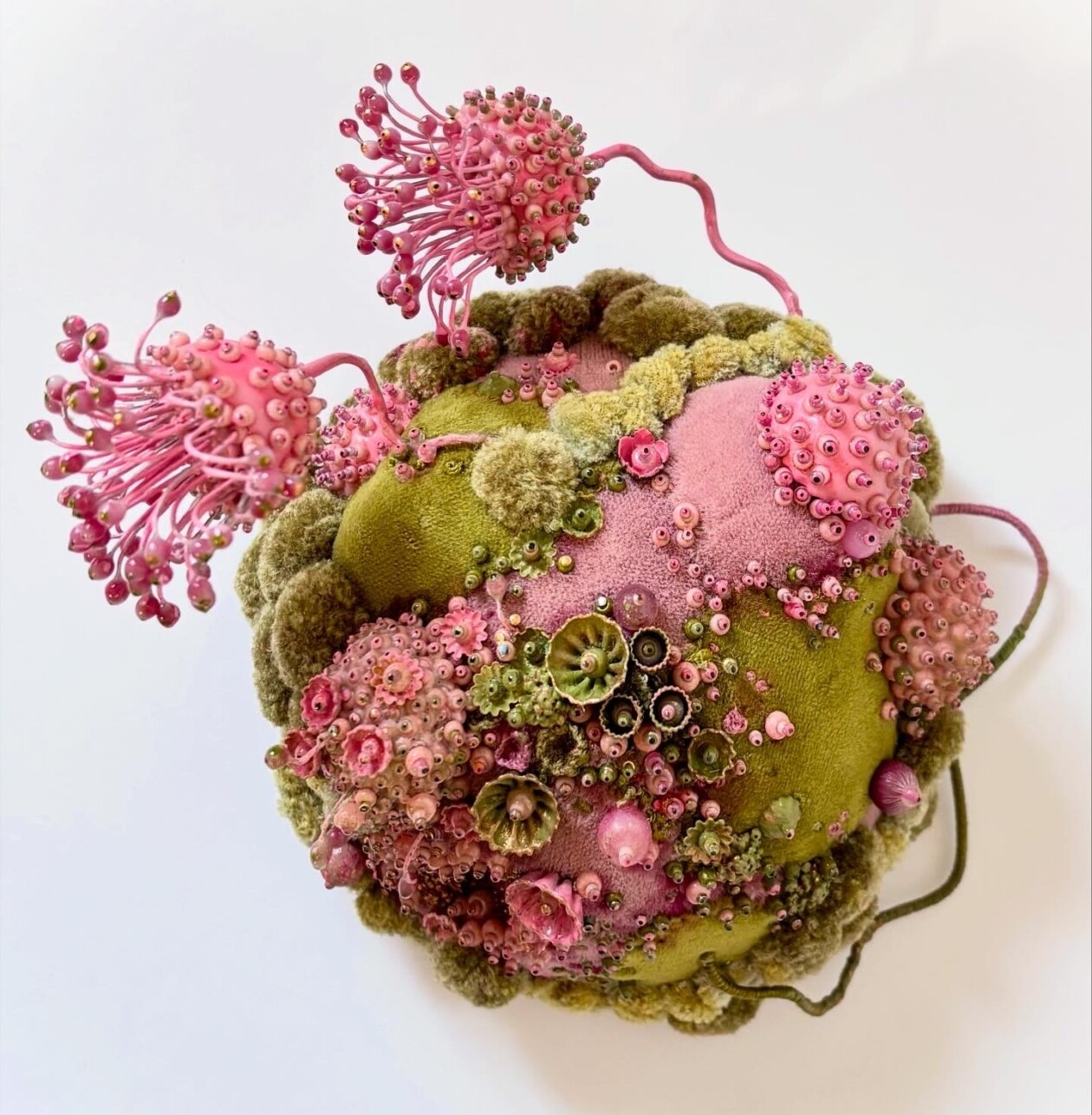
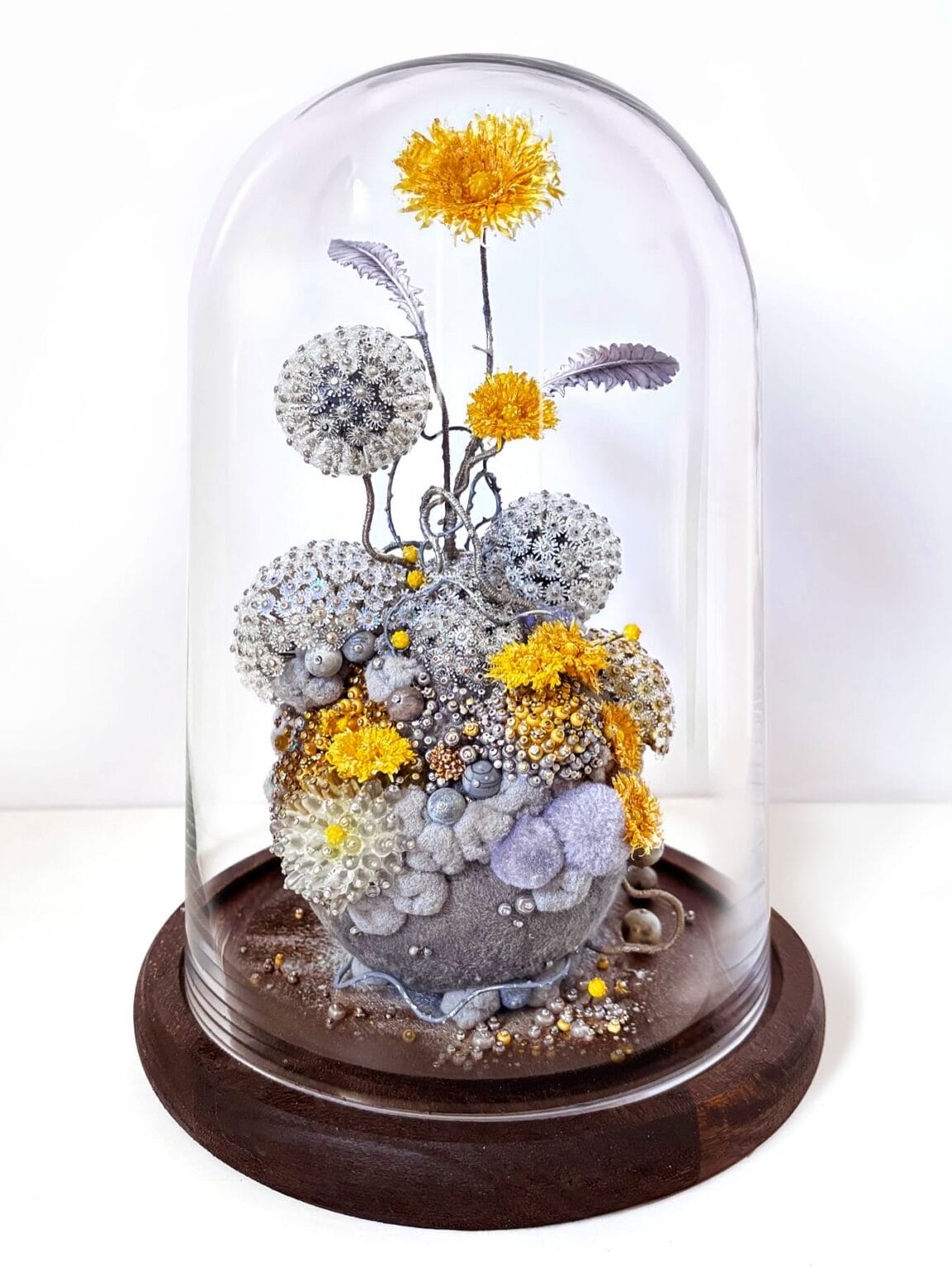
Her embroidered and beaded fiber sculptures merge the natural world with her own inner life, suggesting not only what can be seen but also what cannot: the early alterations of time and the first suggestions of disintegration. Paradoxically, these vivid accounts of the natural world use nothing from nature — she collaborates solely with manufacturing. Each piece is handmade from craft store supplies like yarn, beads, wire, and paper, mimicking living things that will not wither or die. She focuses on mushrooms, roots, leaves, blossoms, and tiny critters as a meditation on the planet’s smallest denizens, incorporating motifs evocative of elements typically invisible to the naked eye: spores, pollen, viruses, molecules, and cells. In her practice, scale is not about size but about what is most important — how we see, think, and remember. Each bead applied, and every stitch or knot counts as a breath, a moment lived, like leaving a trail in a life that rushes by very quickly.
Gross is fascinated by symbiosis, both mutualistic and parasitic, and how elements interact, connect, twist, and transform each other. Her elements cluster, tangle, hybridize, and multiply, adapting to the environments they are placed into, yet they remain the result of human intention — completely unnatural. She has always been attracted and frightened by things on the edge of spoiling or straining to support an excess of growth, creating pieces that surpass some of the constrictions her mind insists upon: her need to control excess, to categorize, label, and keep things safe. Her largest installations, with many pieces, usually take about six months to create, while smaller pieces generally range from two weeks to a month each. Currently, her work is on view in two shows at Momentum Gallery in Asheville, and in late 2027, it will be included in a group exhibition at the Fuller Craft Museum in Brockton, Massachusetts, with one sculpture featured in a forthcoming Phaidon book about fungi.
More info: Website, Instagram.