The Berlin- and Hannover-based duo Quintessenz — formed by Thomas Granseuer and Tomislav Topic — has built a distinctive practice rooted in the intersection of chromatics, spatial perception, and installation. Emerging from backgrounds in graffiti and graphic design, their work consistently treats color not as a structural force capable of reshaping how space is experienced. Their projects often occupy abandoned or historically charged sites, where architecture becomes an active framework rather than a passive container.
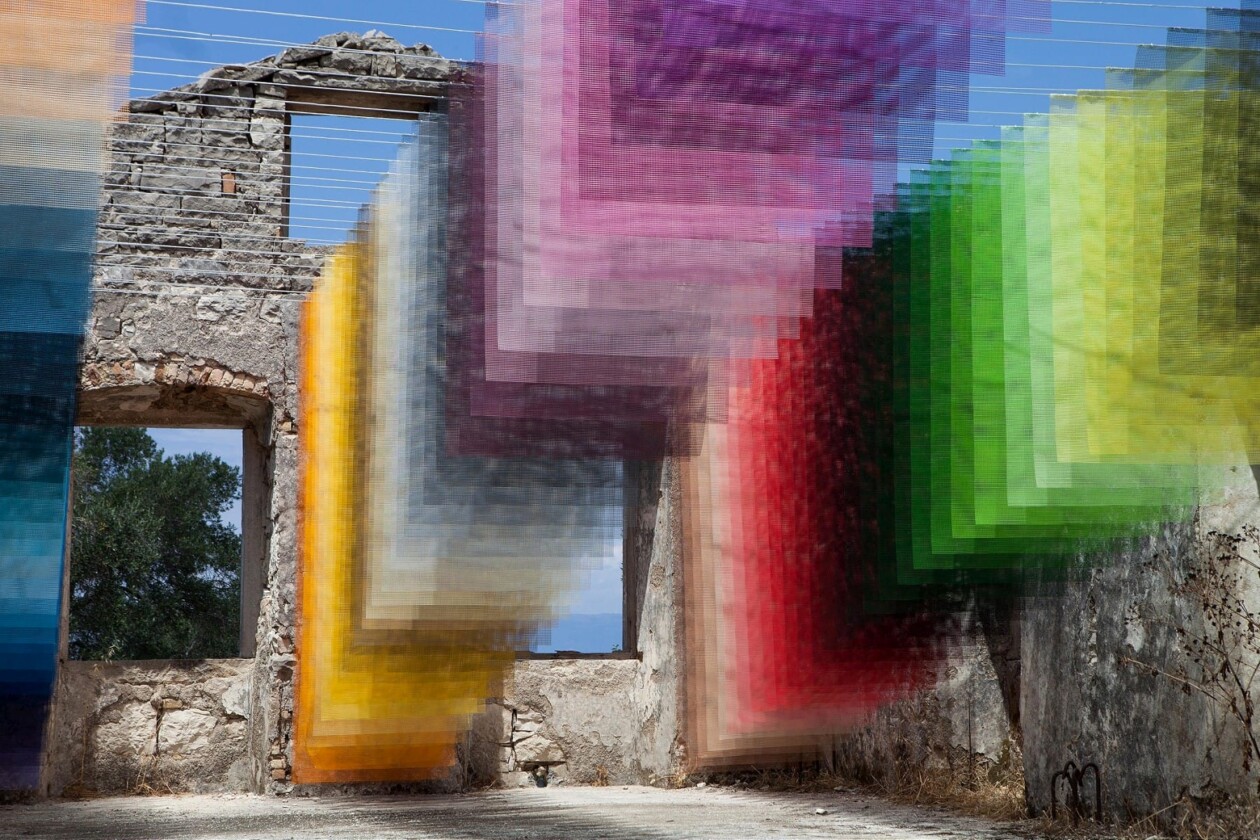
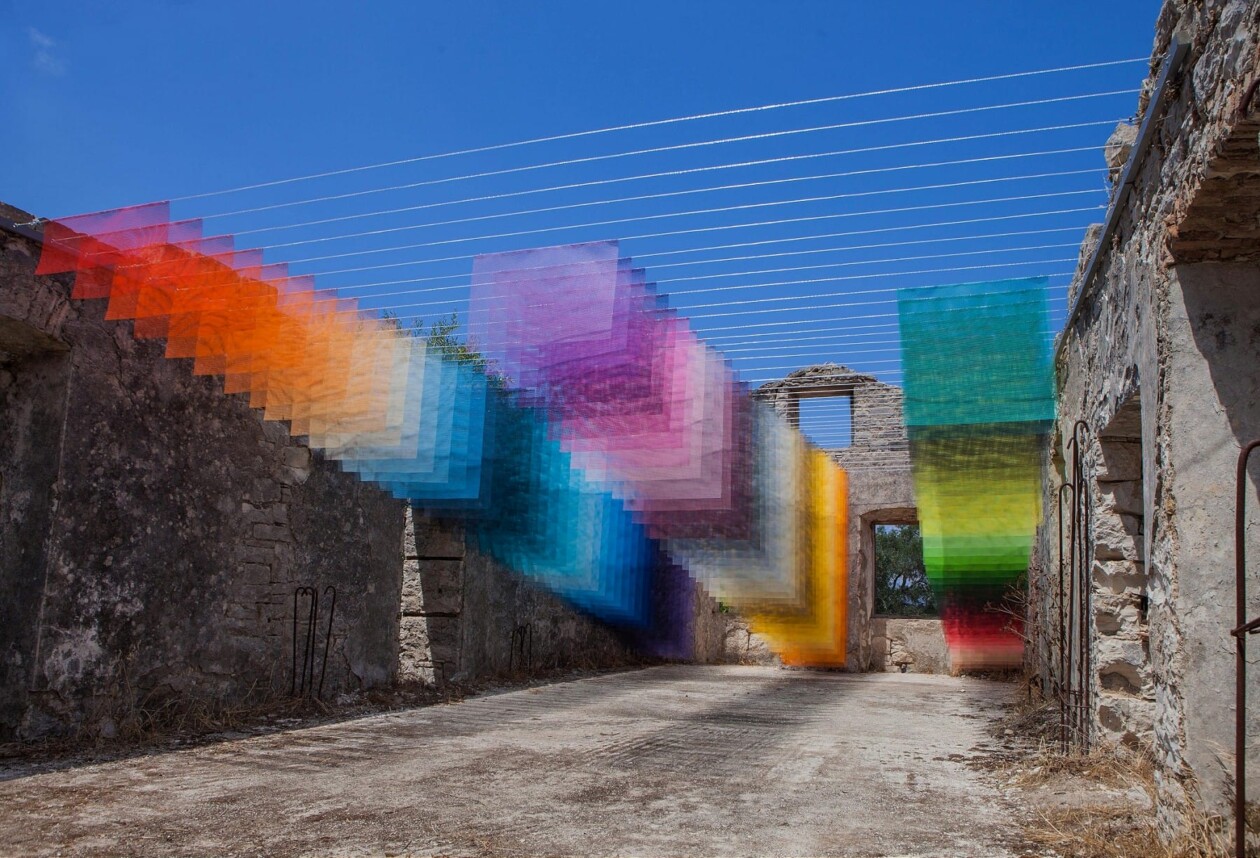
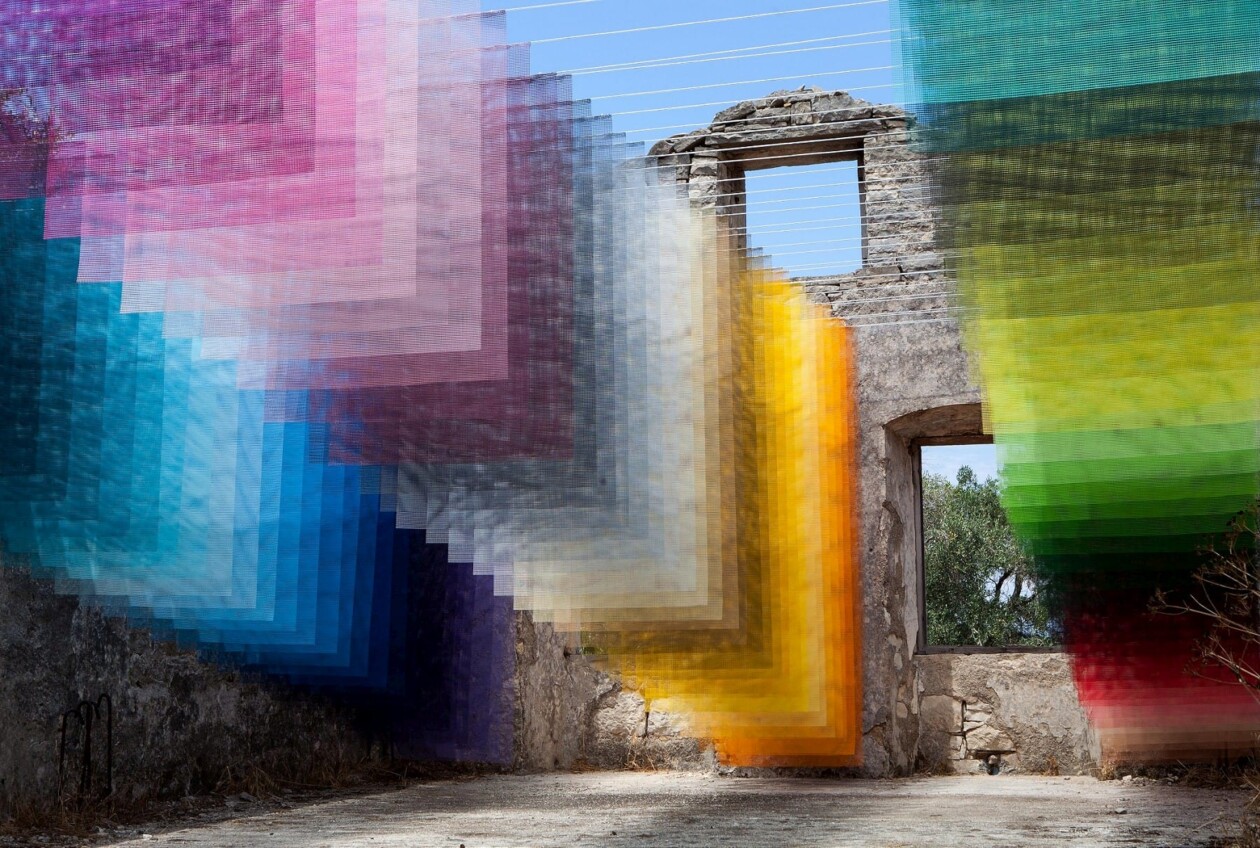
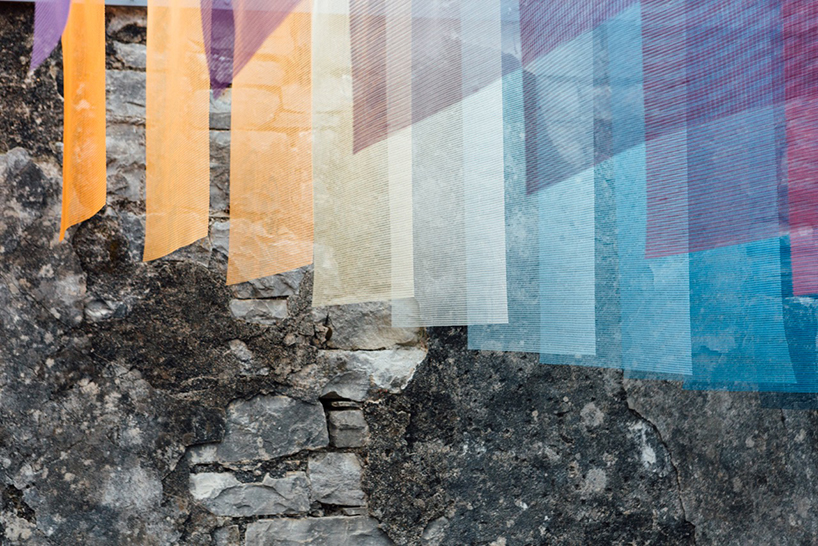
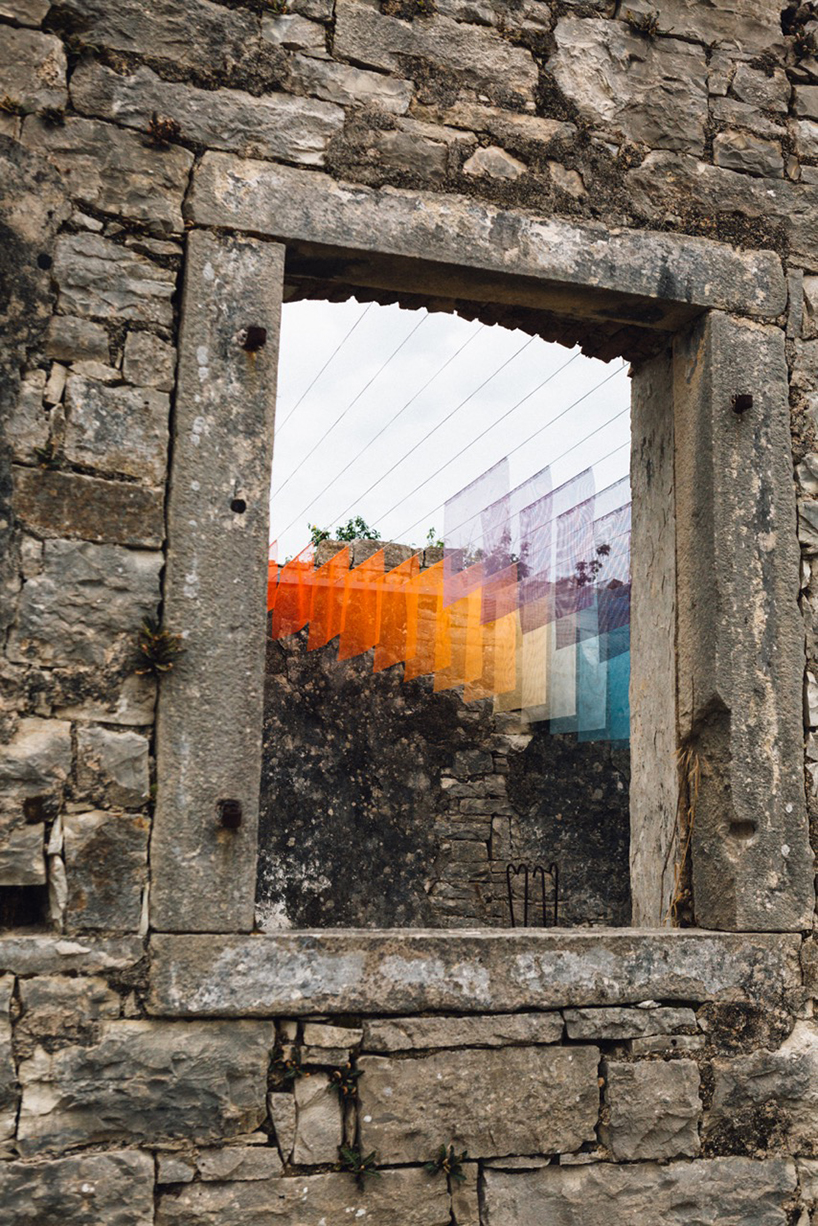
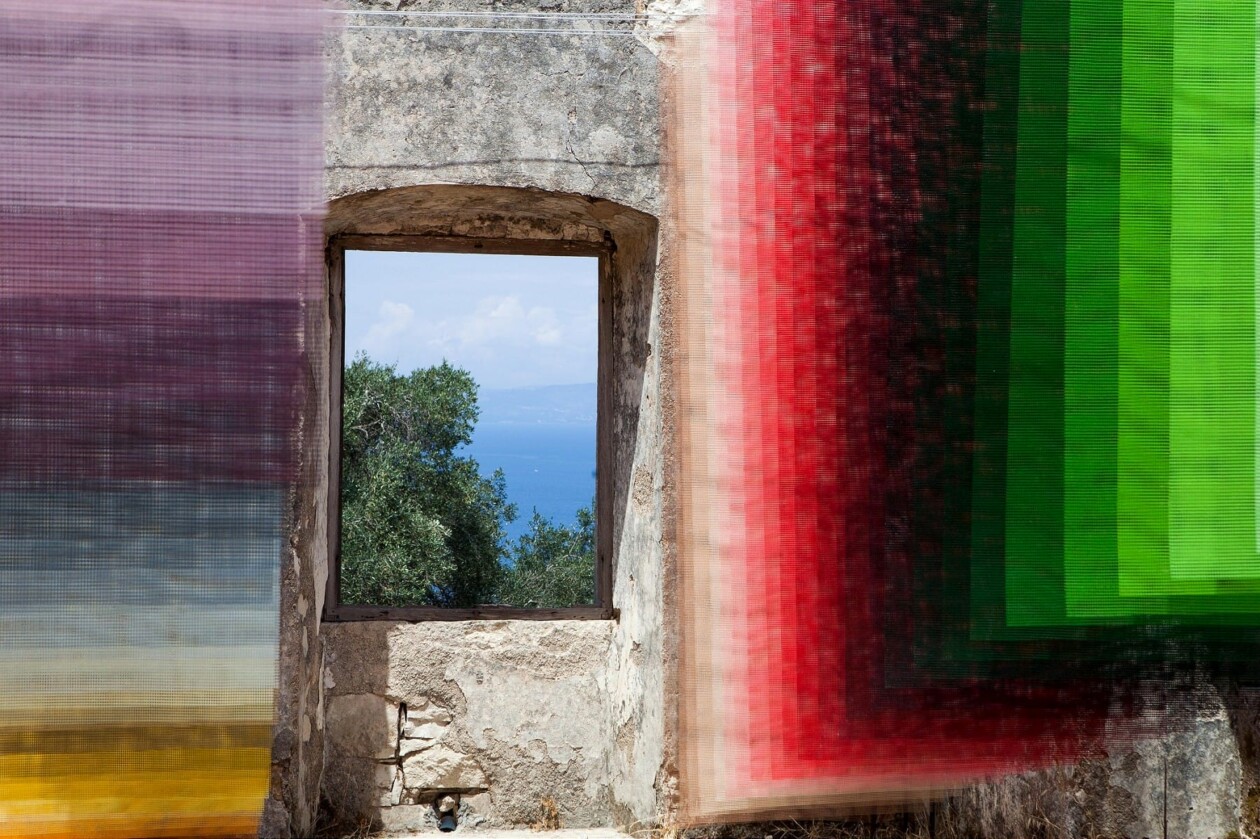
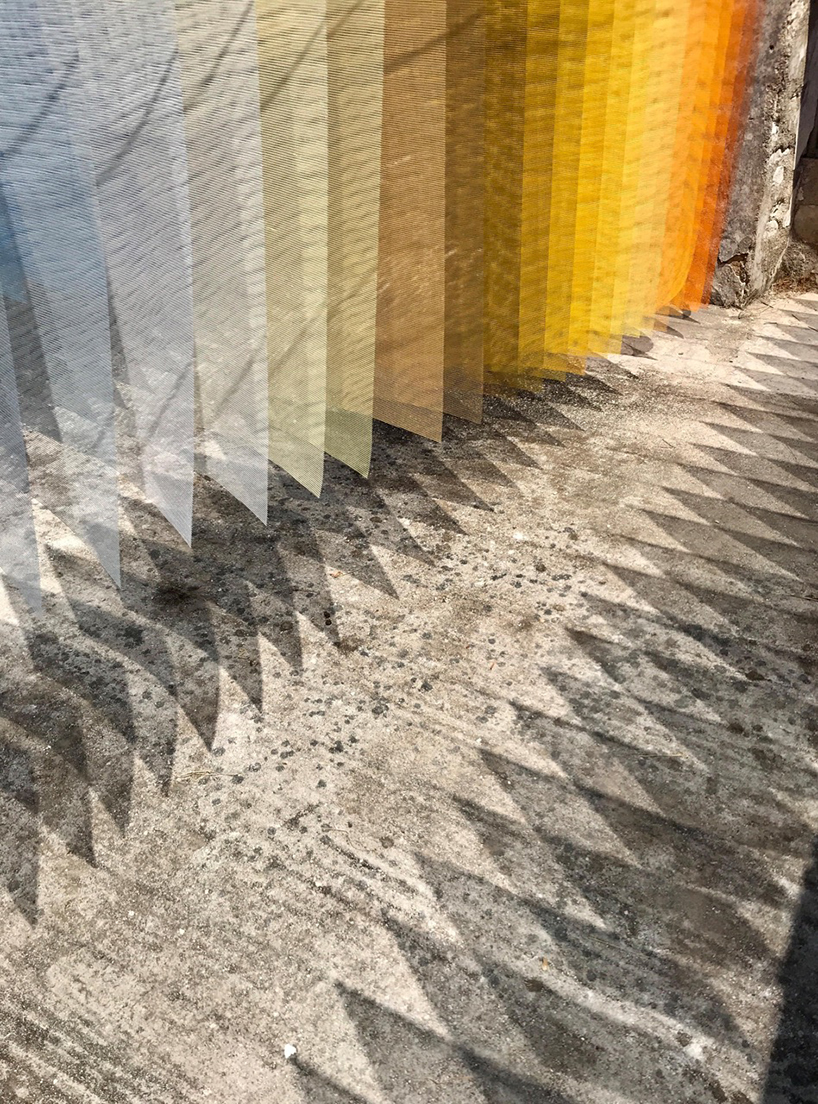
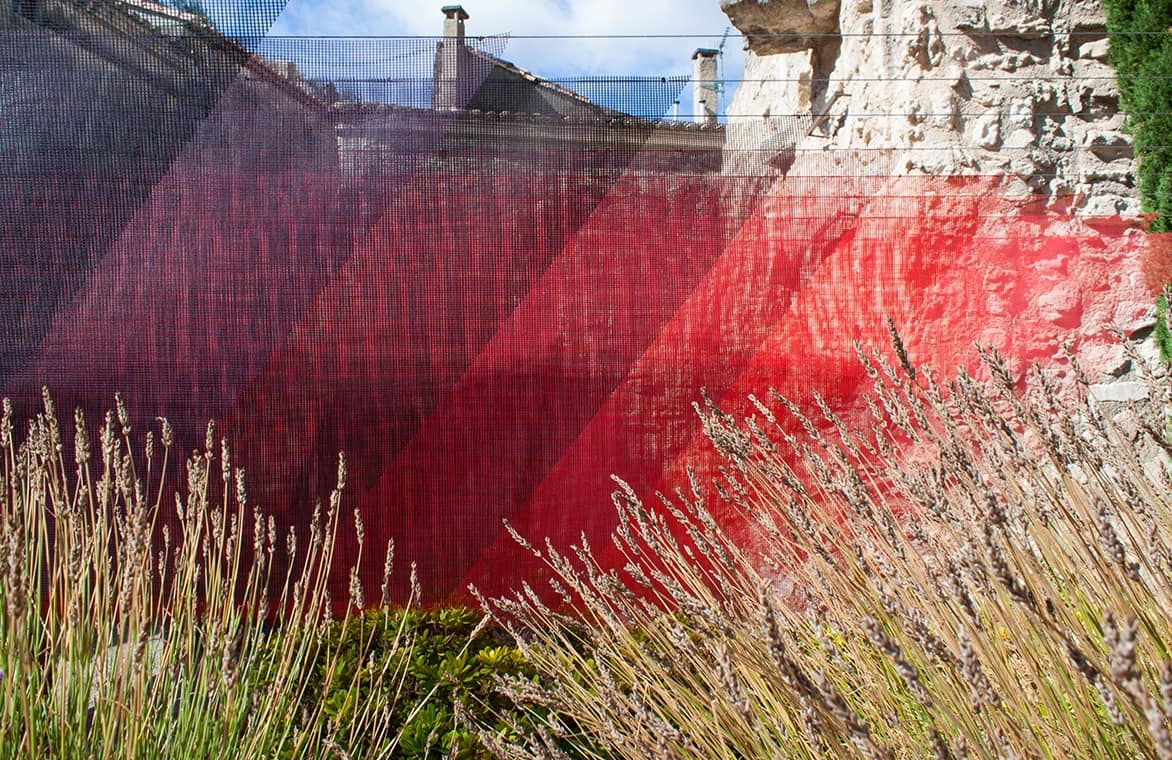
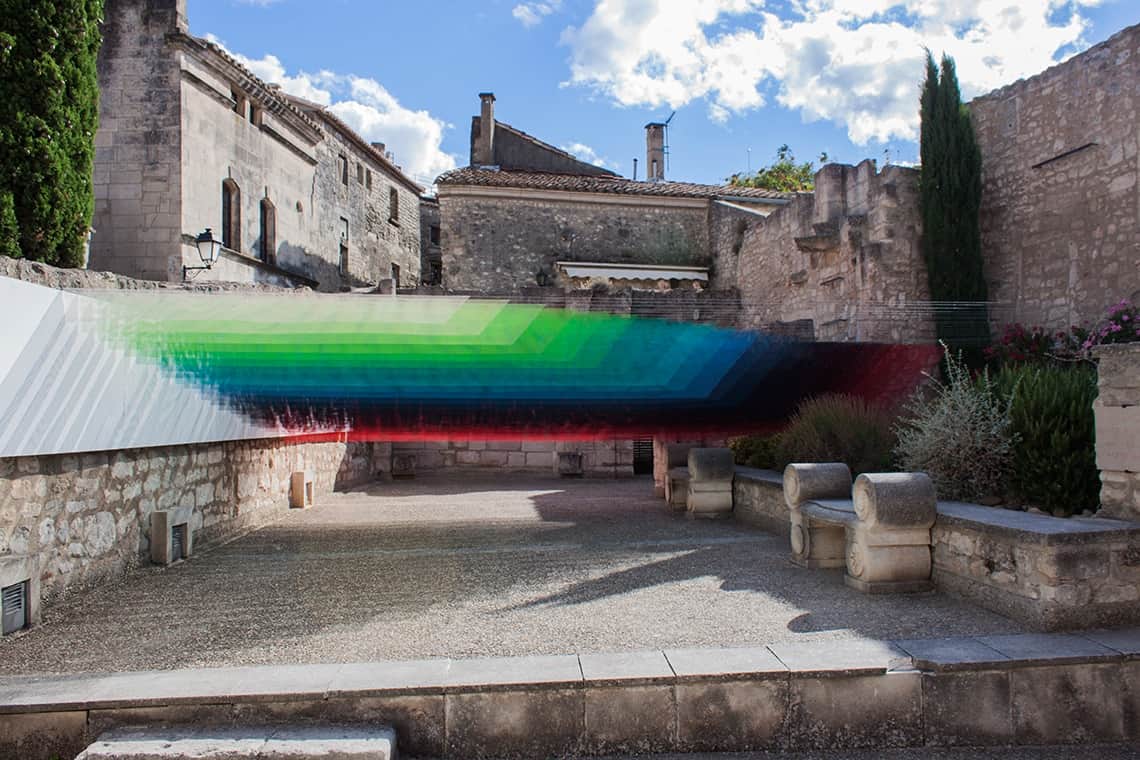
For the Paxos Contemporary Art Project in Greece, realized in 2018, Quintessenz transformed a 400-year-old ruin into a layered chromatic environment using mesh panels spray-painted in more than 120 tones. Suspended in sequences that expand as one moves through the structure, these elements create an illusion of depth reminiscent of enlarged digital pixels. The installation relies on simple materials — fabric, paint, and wire — but achieves a complex spatial rhythm where color gradients appear to dissolve into one another, forming a shifting visual field embedded within the stone shell of the building.
A key aspect of the work lies in its responsiveness to natural conditions. Wind animates the suspended layers, while sunlight intensifies or softens the chromatic transitions, producing a constantly changing visual experience. This interaction generates a tension between permanence and ephemerality: the ruin suggests historical continuity, while the moving color fields introduce instability and transformation. The result is a perceptual ambiguity in which solid architectural boundaries seem to fluctuate, echoing the logic of digital imagery translated into physical space.
Rather than replicating digital aesthetics, Quintessenz reinterprets them through material processes, constructing environments where perception depends on movement, light, and distance. Their installations function as spatial experiments that question how contemporary visual culture — dominated by screens and pixel-based imagery — can be reimagined without technological mediation. By embedding these visual systems within remote or historically layered sites, the duo creates a dialogue between temporalities, where color becomes both medium and subject, and space itself is redefined through layered abstraction.
More info: Instagram.


 in Bahia.