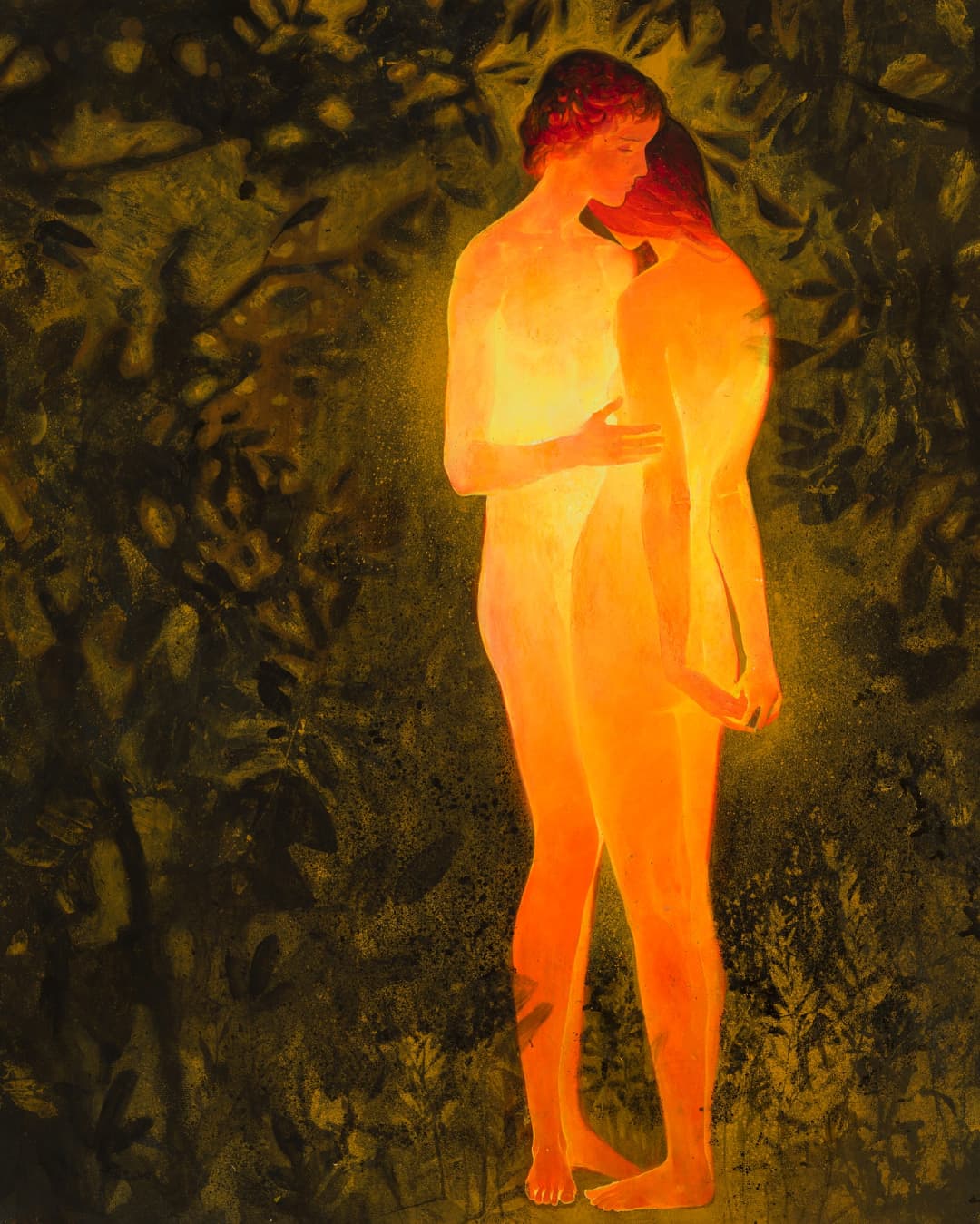
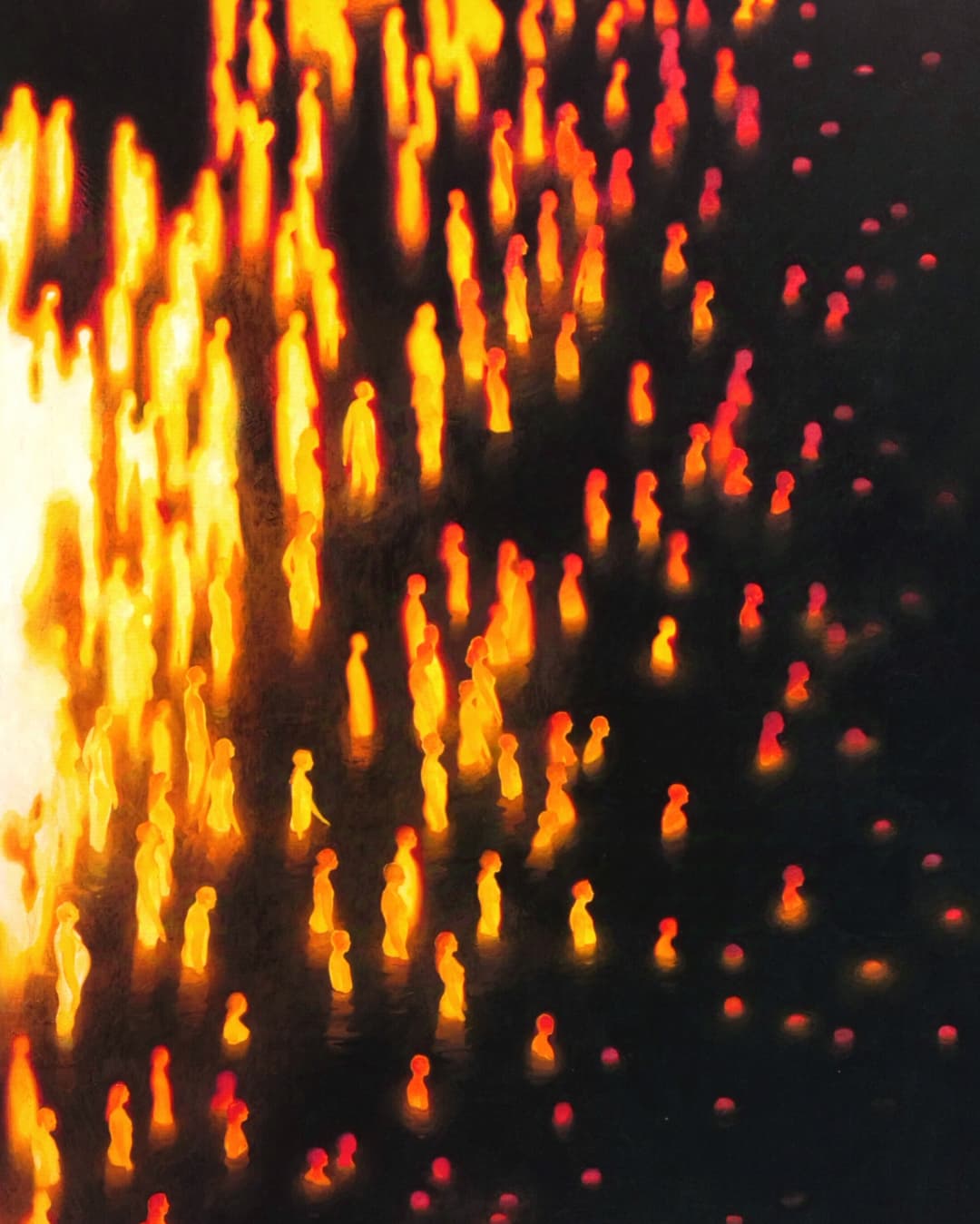
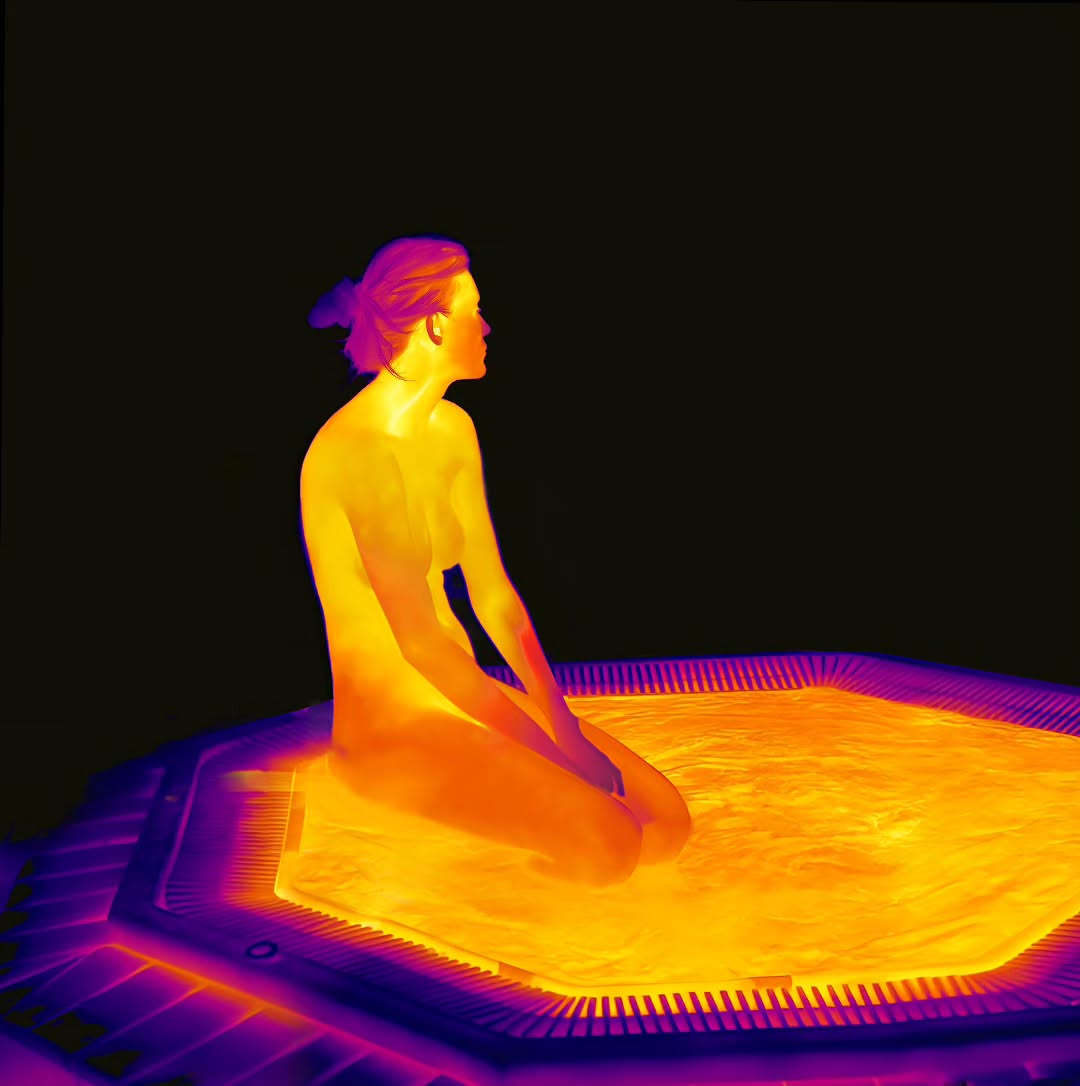
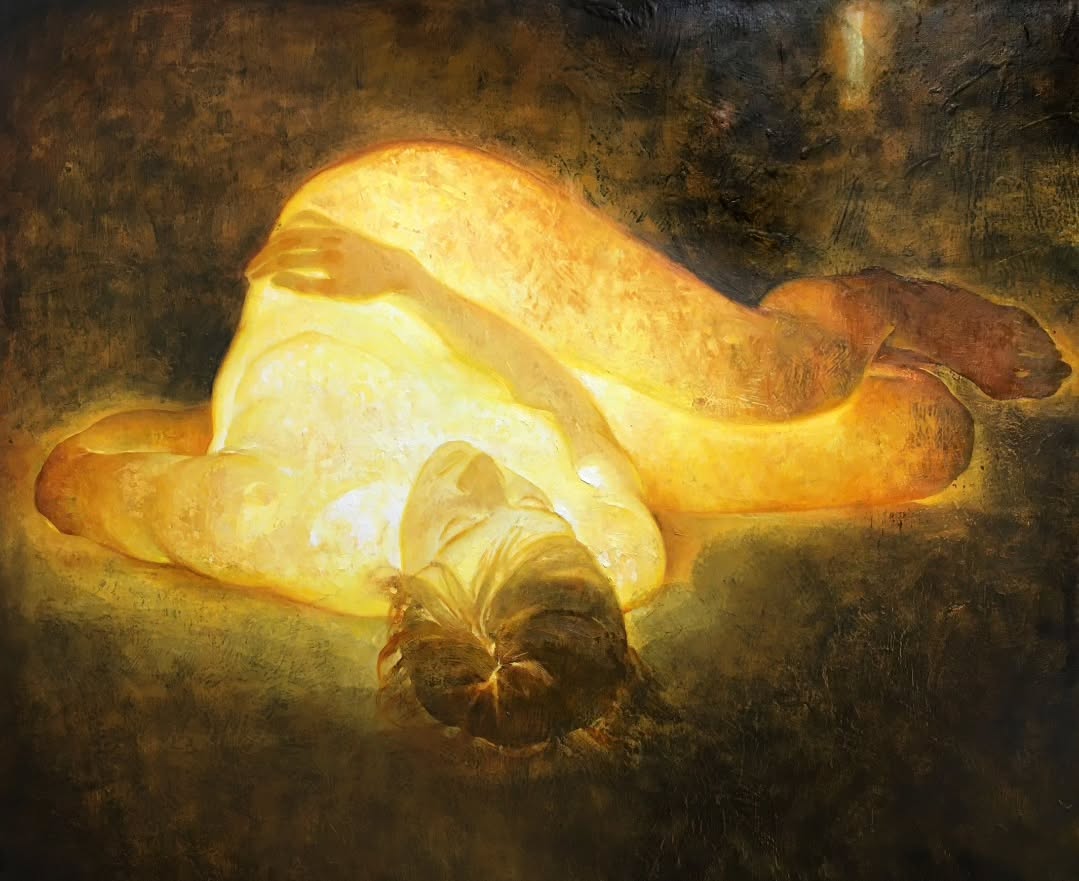
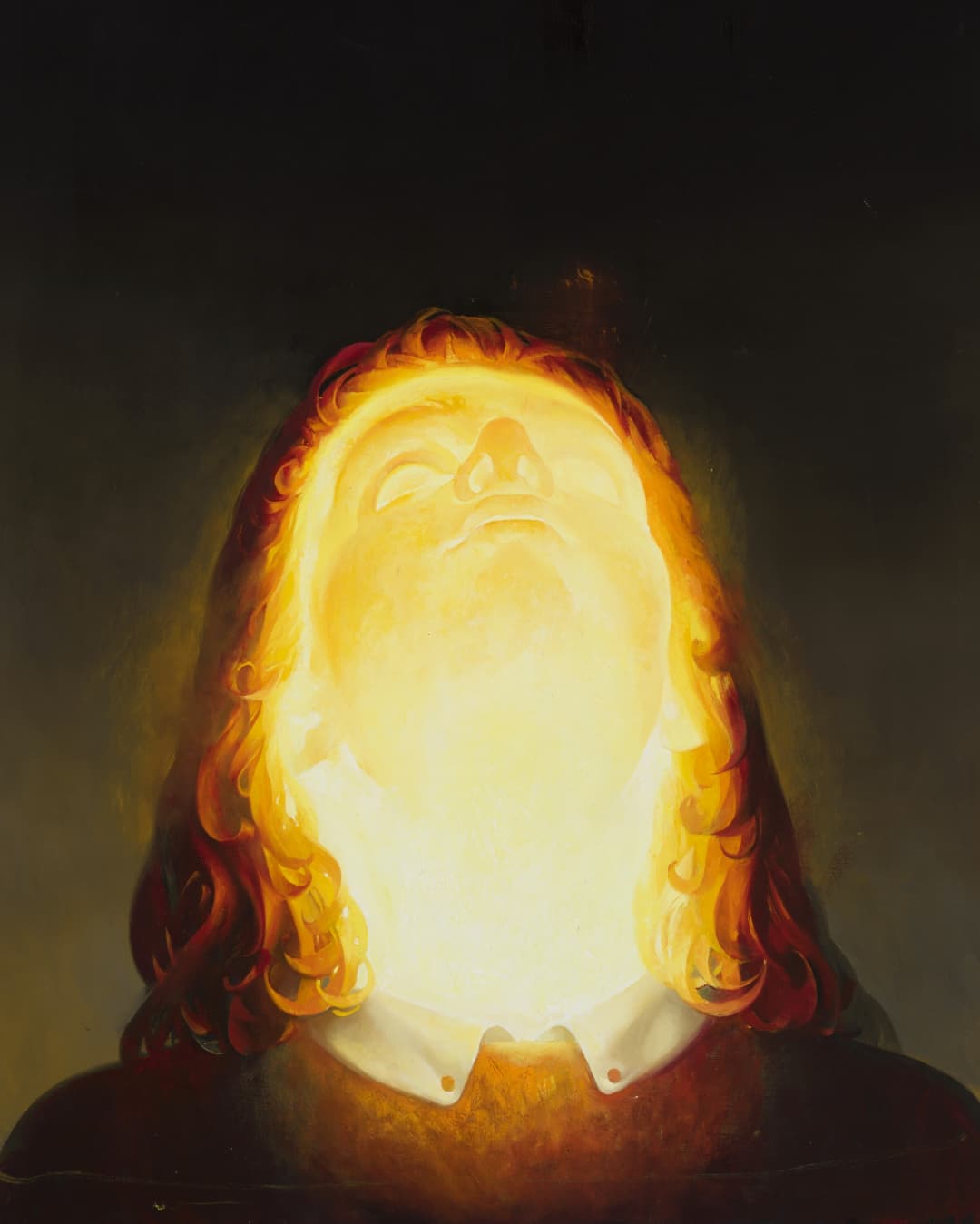
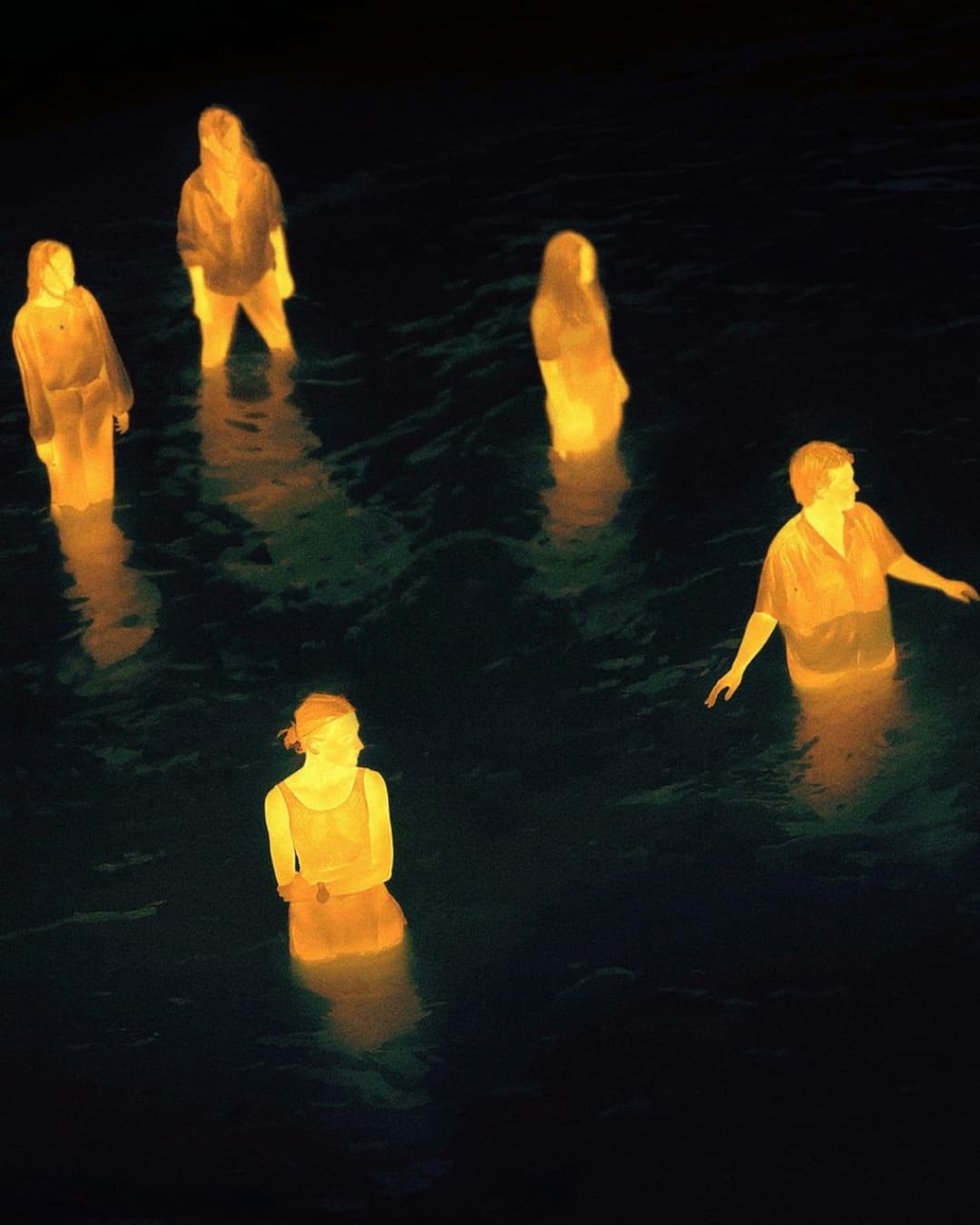
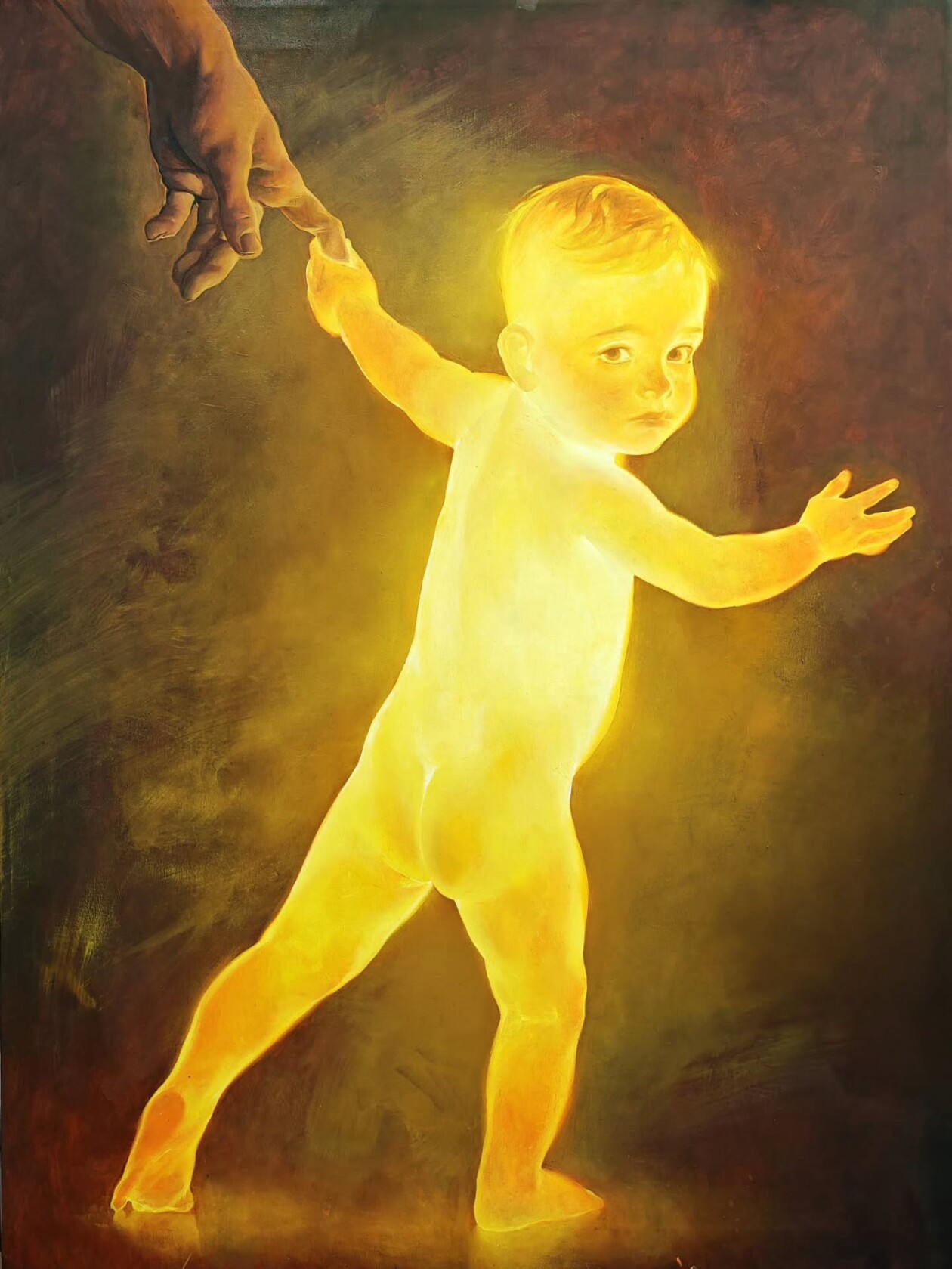
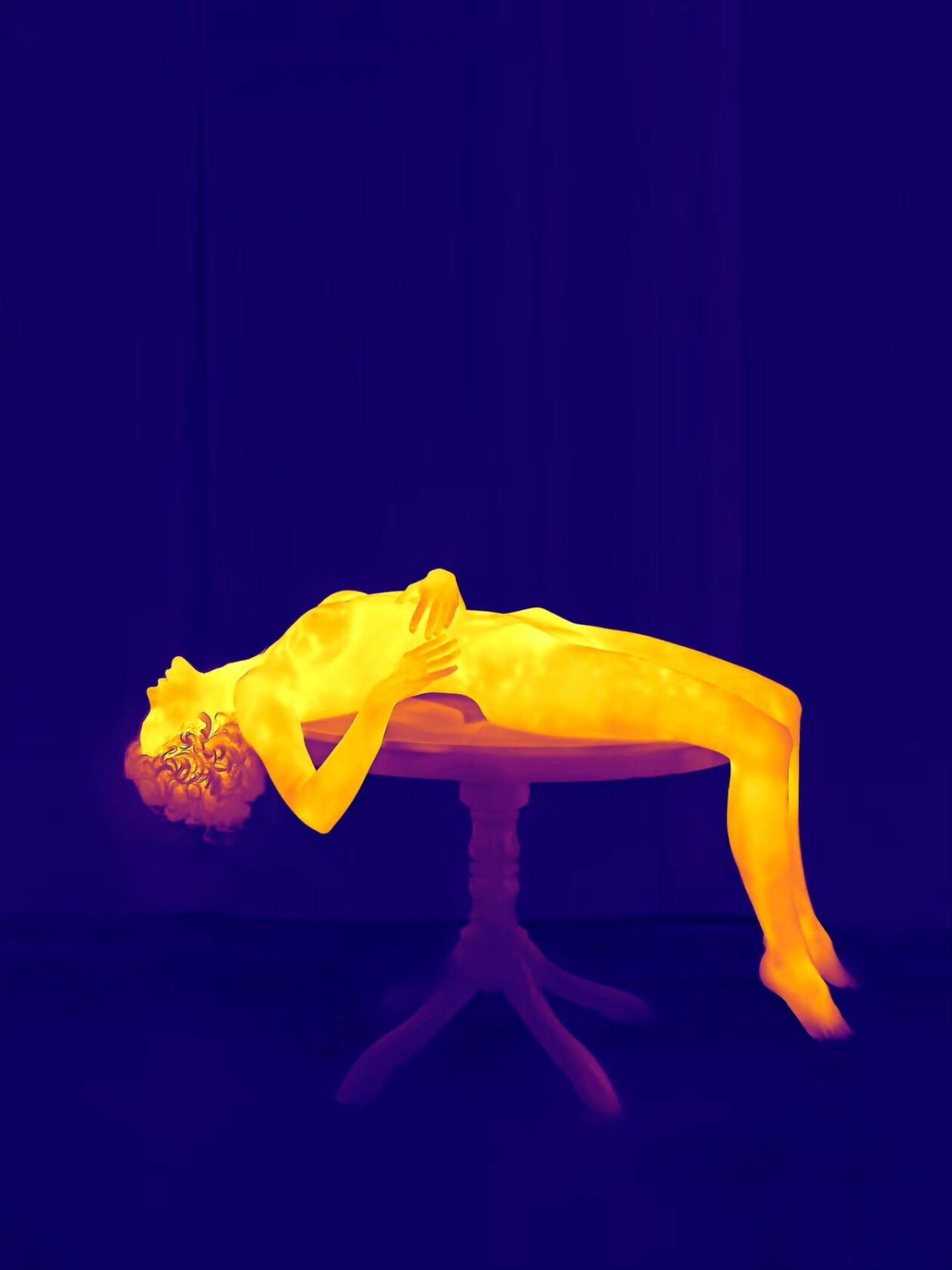
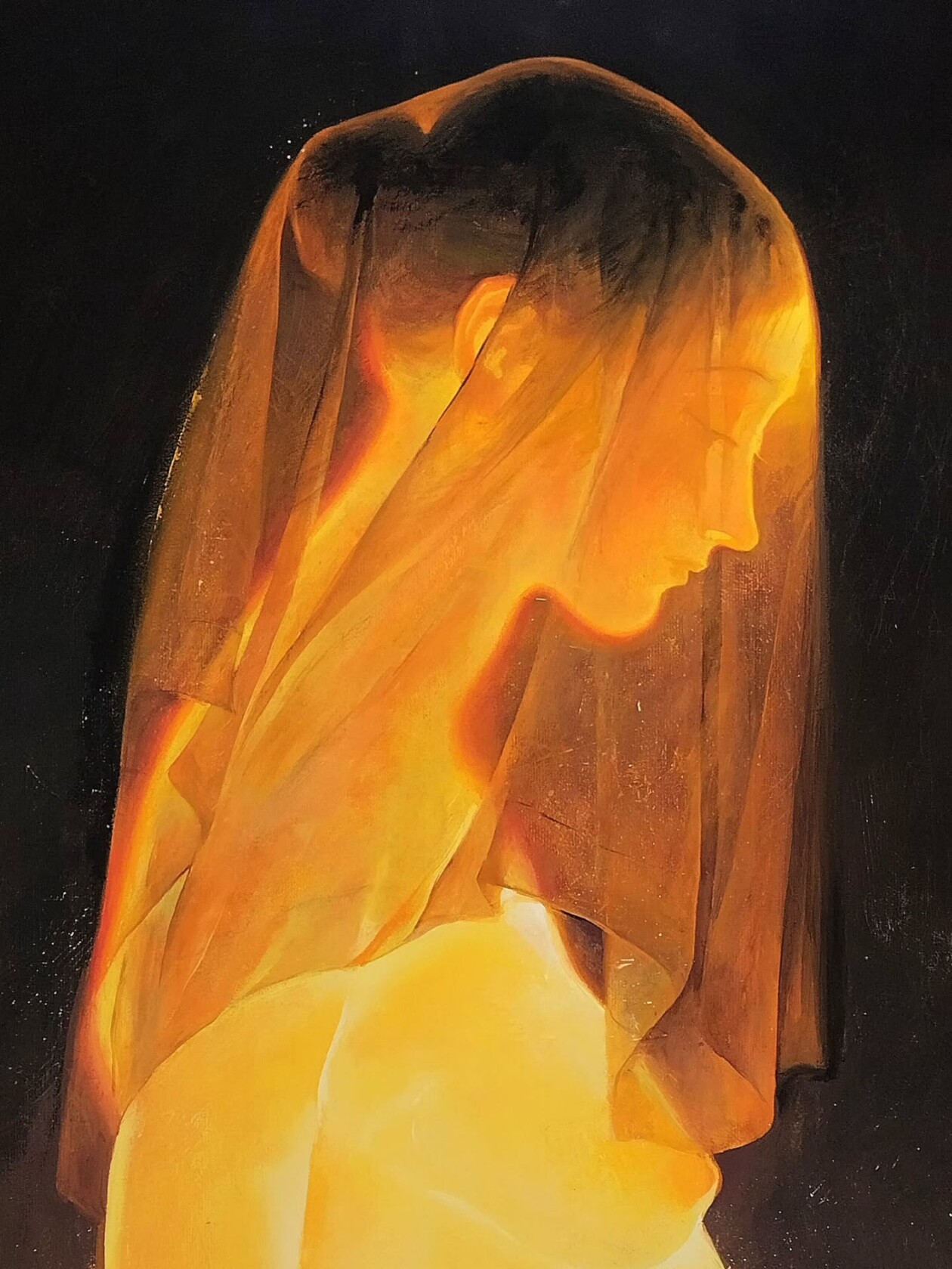
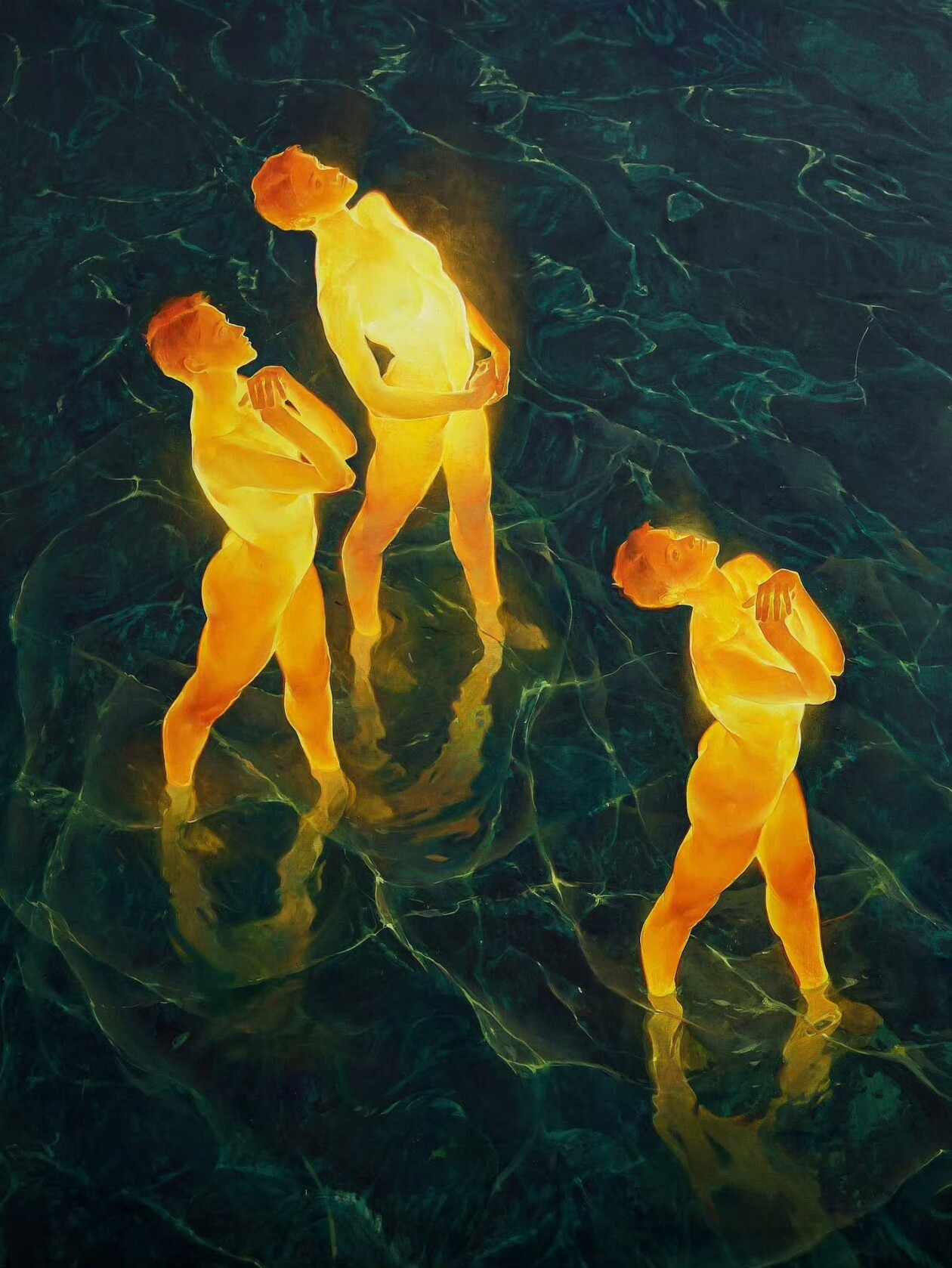
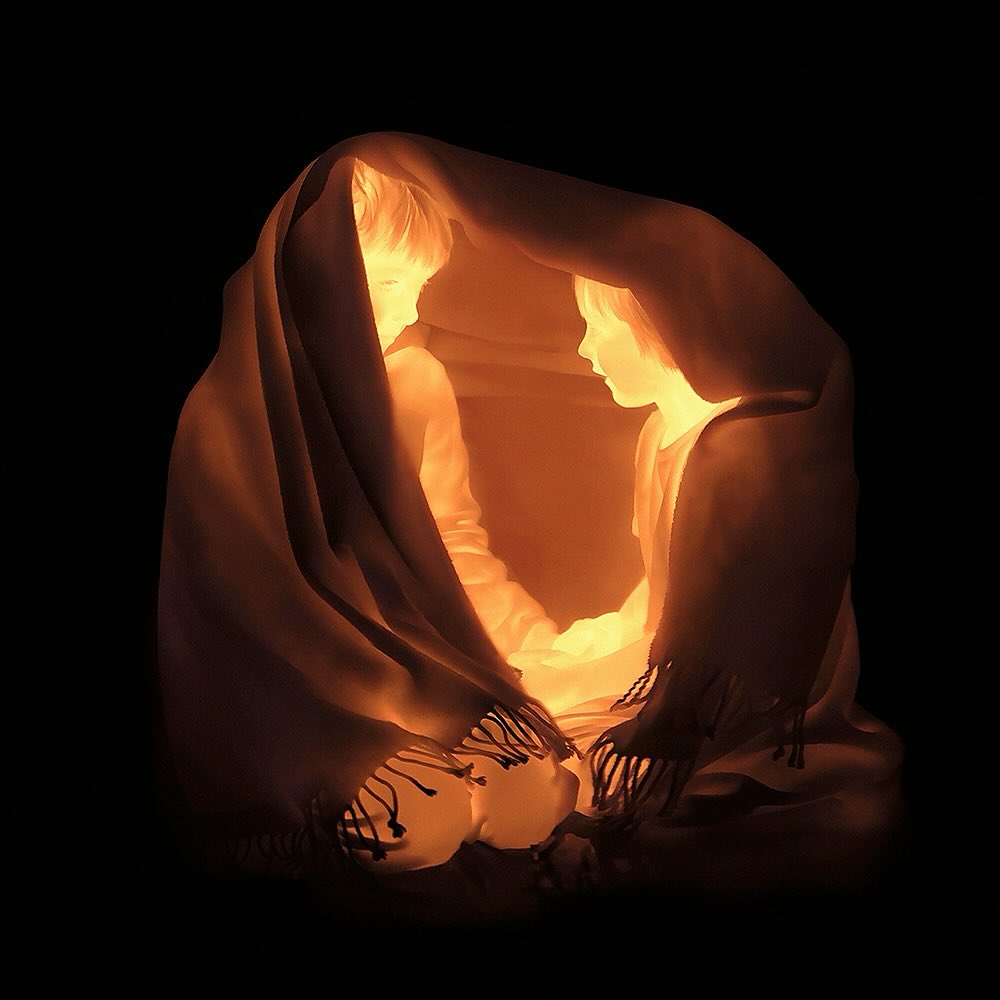
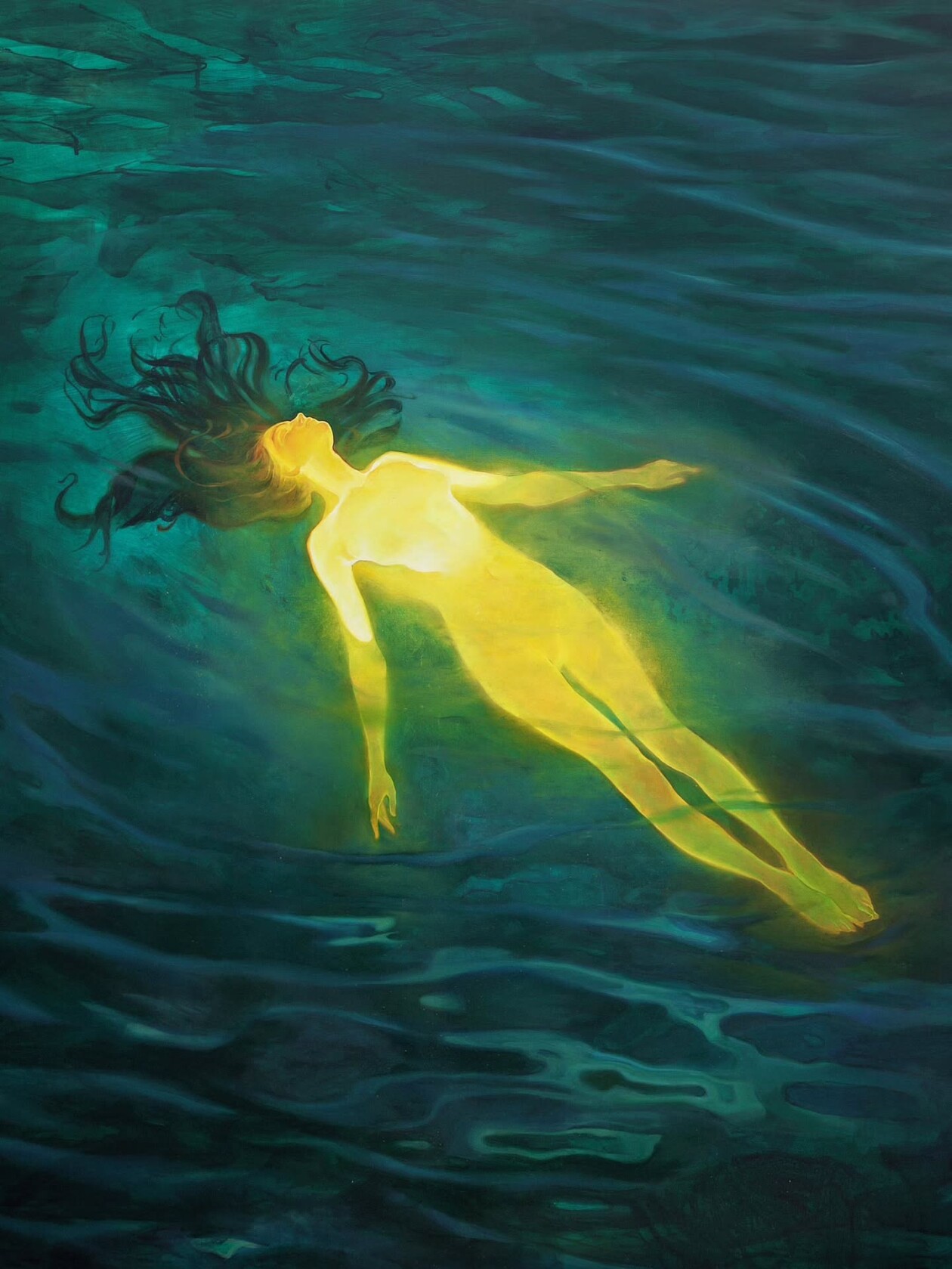
Ivan Pokidyshev’s artistic practice is based on thermography, a process used for creating images of infrared radiation captured with a thermal camera, where any object with a temperature above absolute zero emits infrared radiation. The warmer the object, the more vivid and bright its radiation, causing its thermal image to appear incandescent. Working in oil on canvas, his Light and Warmth Project was first exhibited in 2018, with the focus being heat exchange as a form of human communication — with other people and the world around them. Thermography as an art medium was perfect for visualizing this process, transforming invisible forces into vibrant visual poetry where bodies glow in reds, oranges, and yellows against deep black voids. Warm objects look like they glow from the inside — as if they don’t reflect light; as if they are the light.
Initially, the conflict between warmth and cold was central to his work, with light playing an auxiliary role to help visualize heat. In later works, he gradually abandoned the drama of heat and cold, and the main theme became a conflict between light and black emptiness. The warm light that we can see in the thermograms initially performed only a mediating role as it allows us to see the human heat, the vital energy overflowing from one figure to another, expansively splashing out, or, on the contrary, fading under the influence of emptiness and cold. Visually, light viewed this way is related to the tradition of Eastern Orthodox iconography, where light has a special meaning related to hesychasm — a contemplative monastic practice in which participants seek divine quietness through uninterrupted prayer with their body, mind, and soul. His compositions construct dualistic visual narratives where glowing human figures emerge from darkness, rendering emotional states and connections as tangible, radiant phenomena rather than abstract concepts.
Born in 1993 in Saint Petersburg, Russia, Ivan Pokidyshev studied at the prestigious St. Petersburg State Academic Institute of Painting, Sculpture, and Architecture named after I. E. Repin (now Saint Petersburg Repin Academy of Arts), graduating in 2017. During his studies, Ivan, in addition to oil painting, studied various monumental techniques, such as fresco, mosaic, sgraffito, and made projects for stained glass and tapestries. Although he’s still under 30, Ivan has had more than a dozen exhibitions, two solo shows, and his artwork “The Way” is in the Russian State Hermitage Museum Collection. His exhibitions include solo presentations at Sistema Gallery (2023), the Hermitage-Vyborg Exhibition Center (2021), and participation in group shows at The State Tretyakov Gallery (2020), establishing him as a significant voice in contemporary Russian painting.
More info: Instagram.