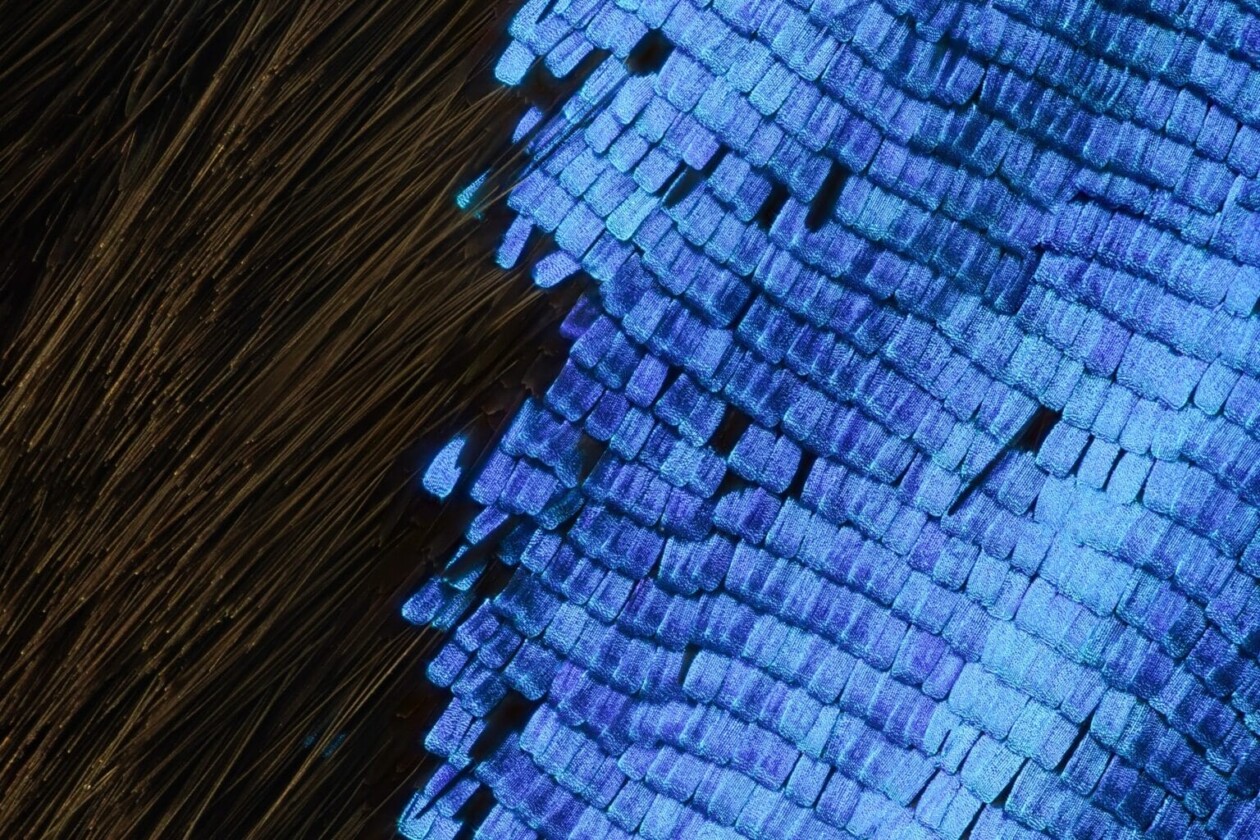
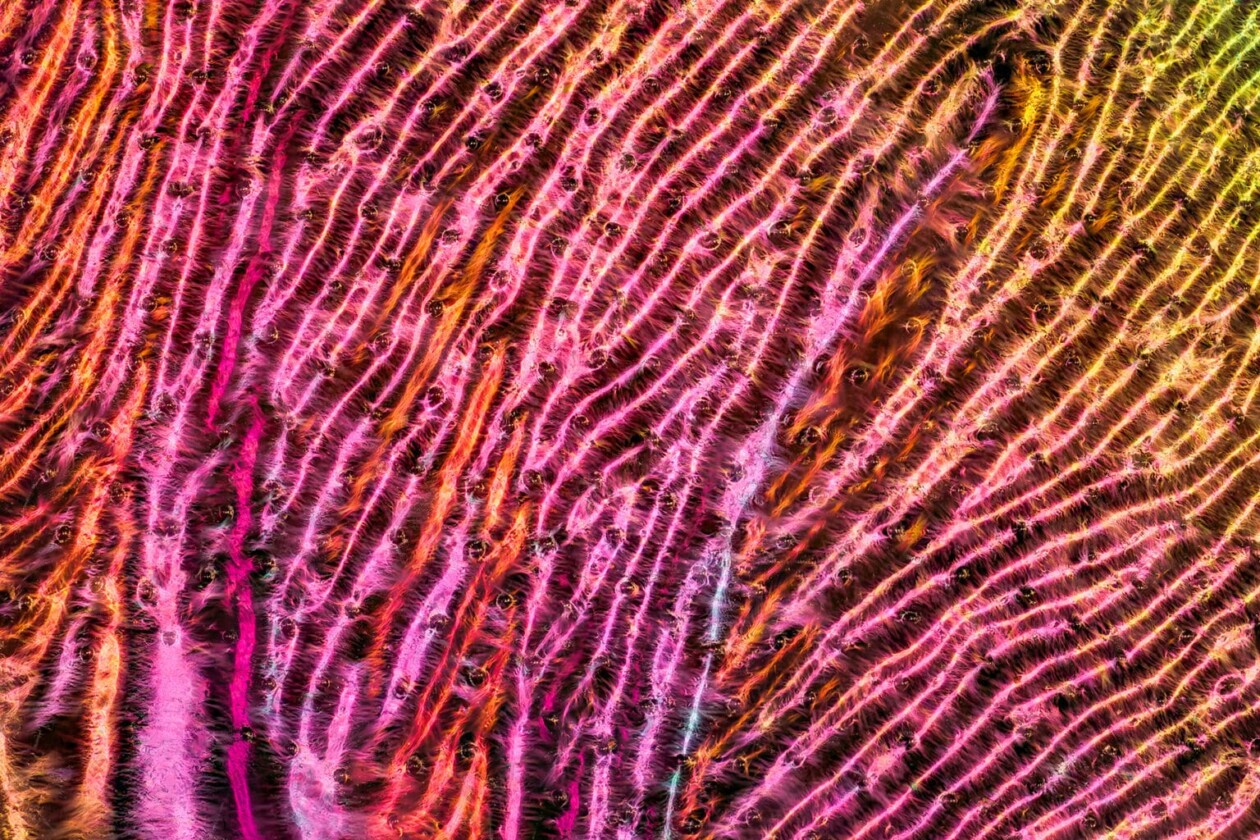
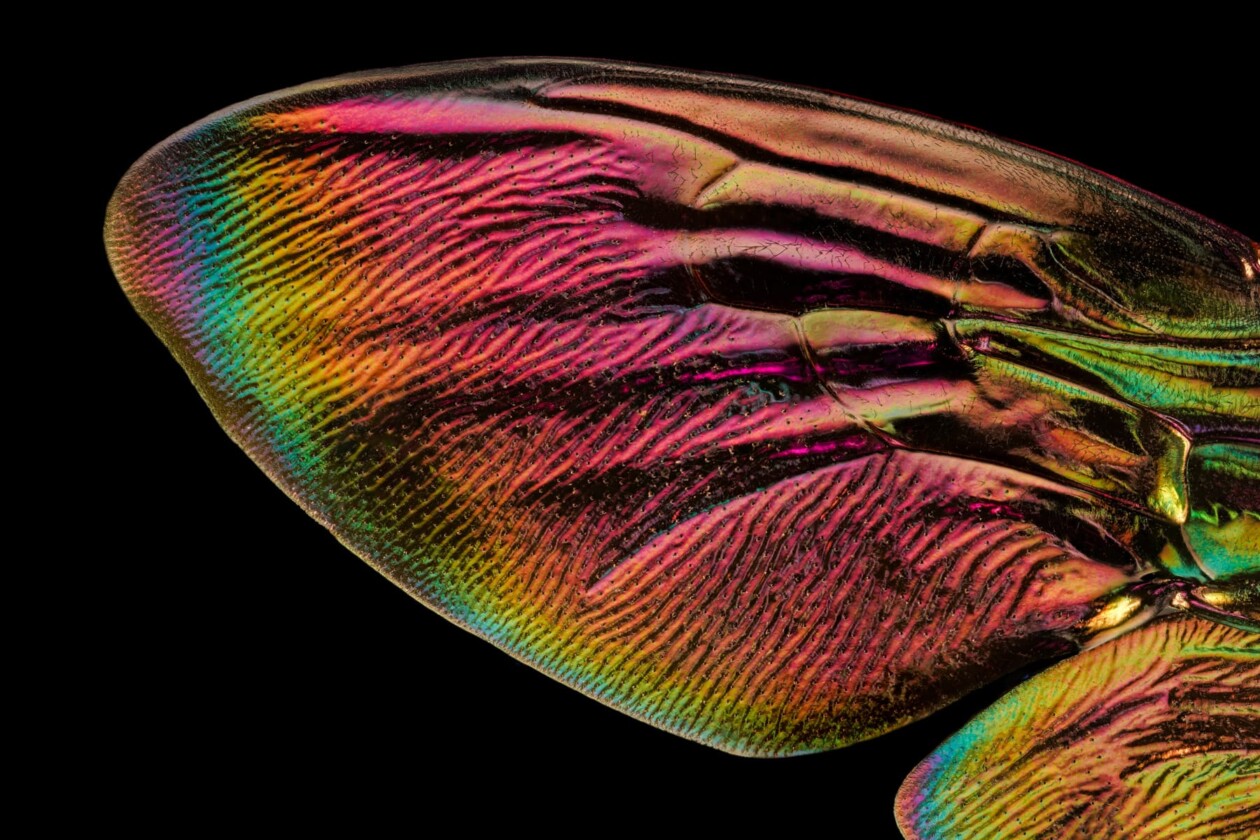
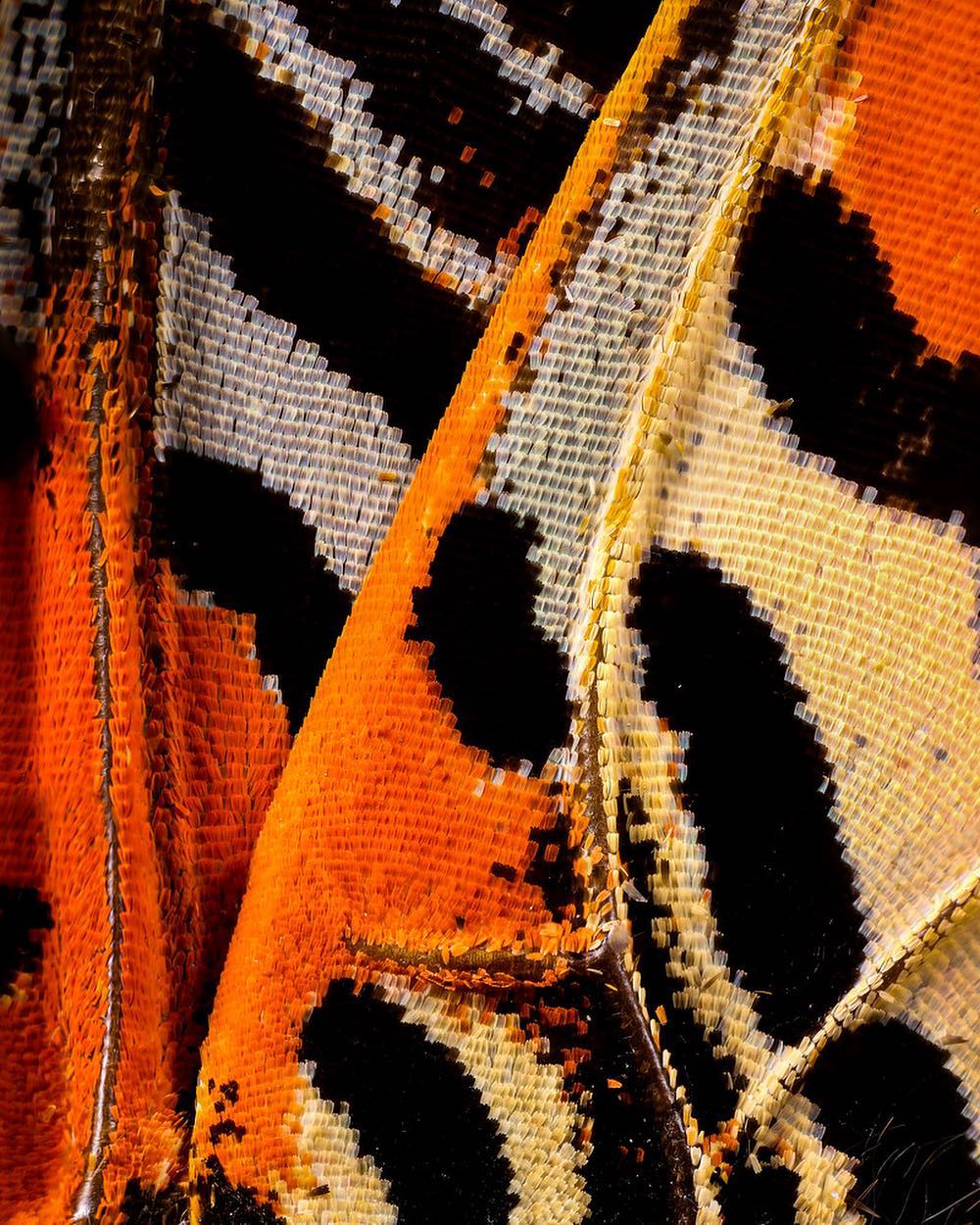
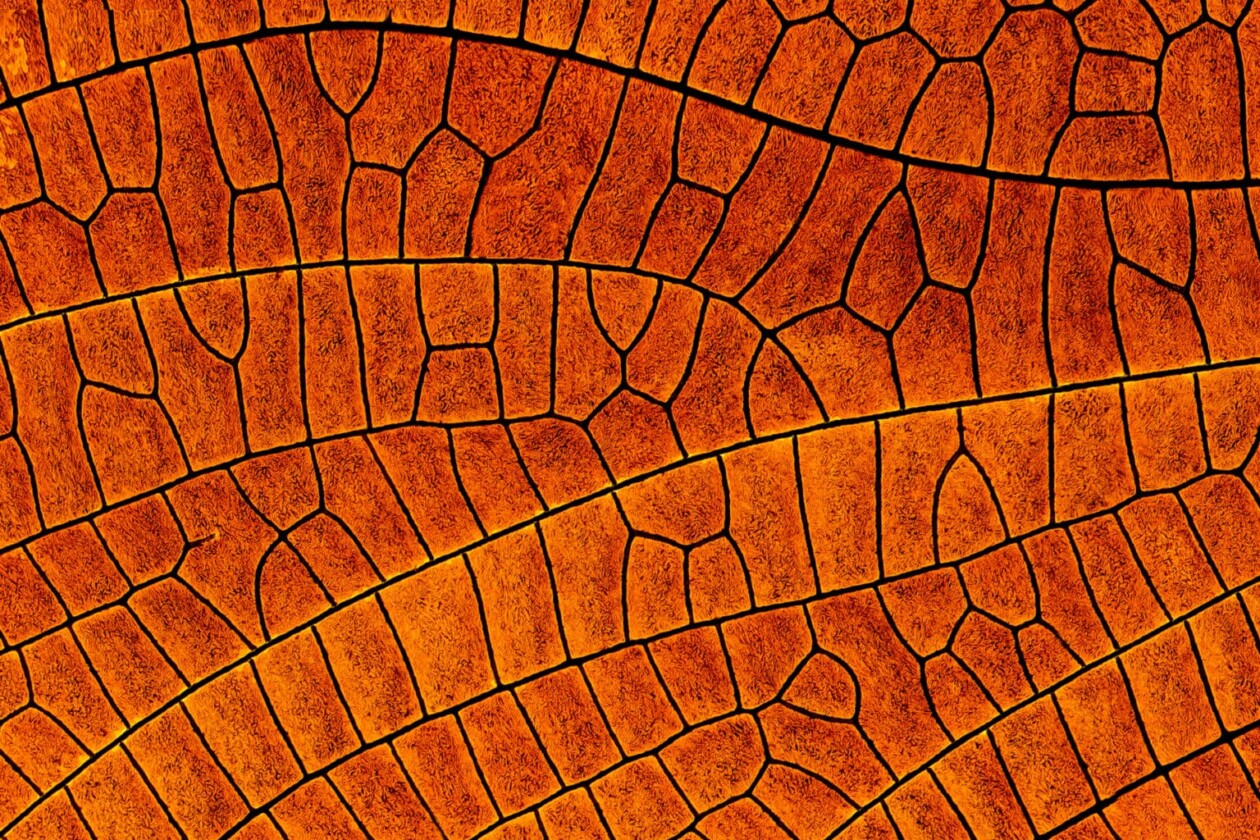
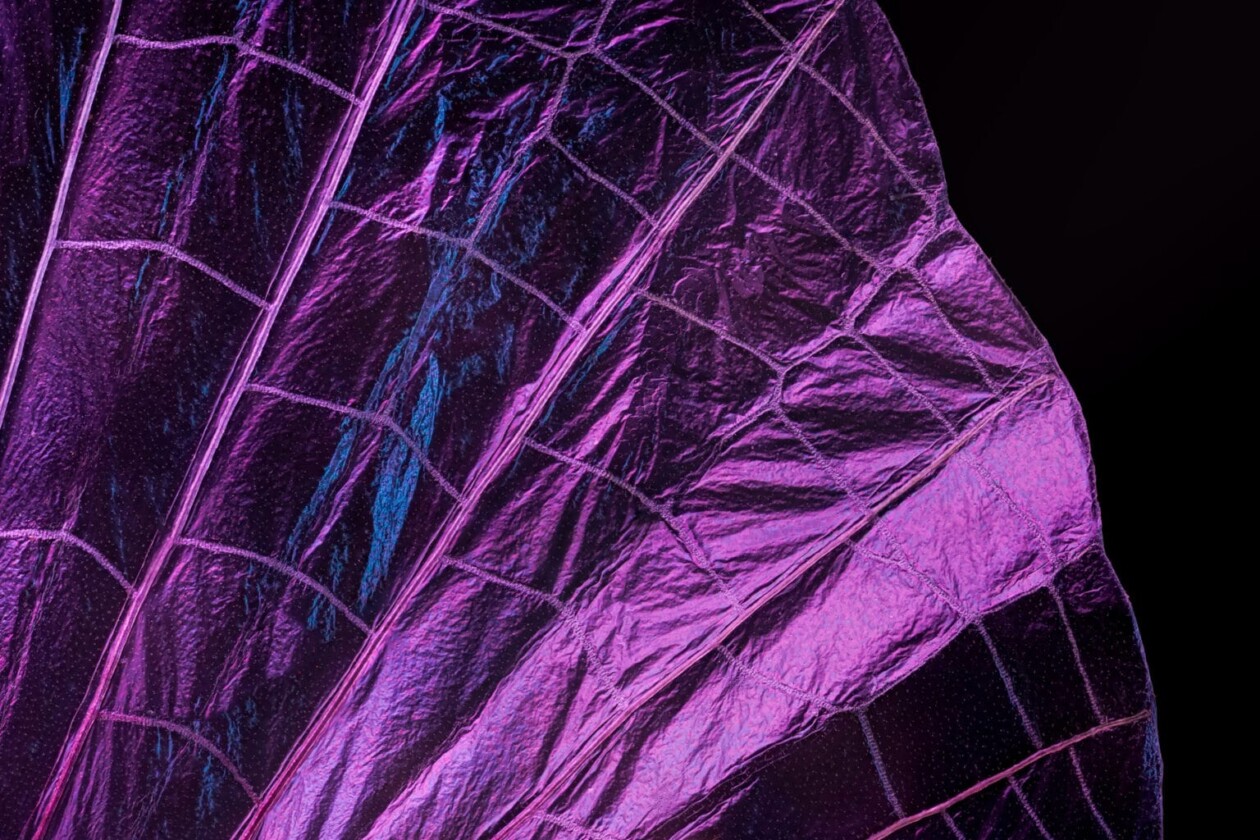
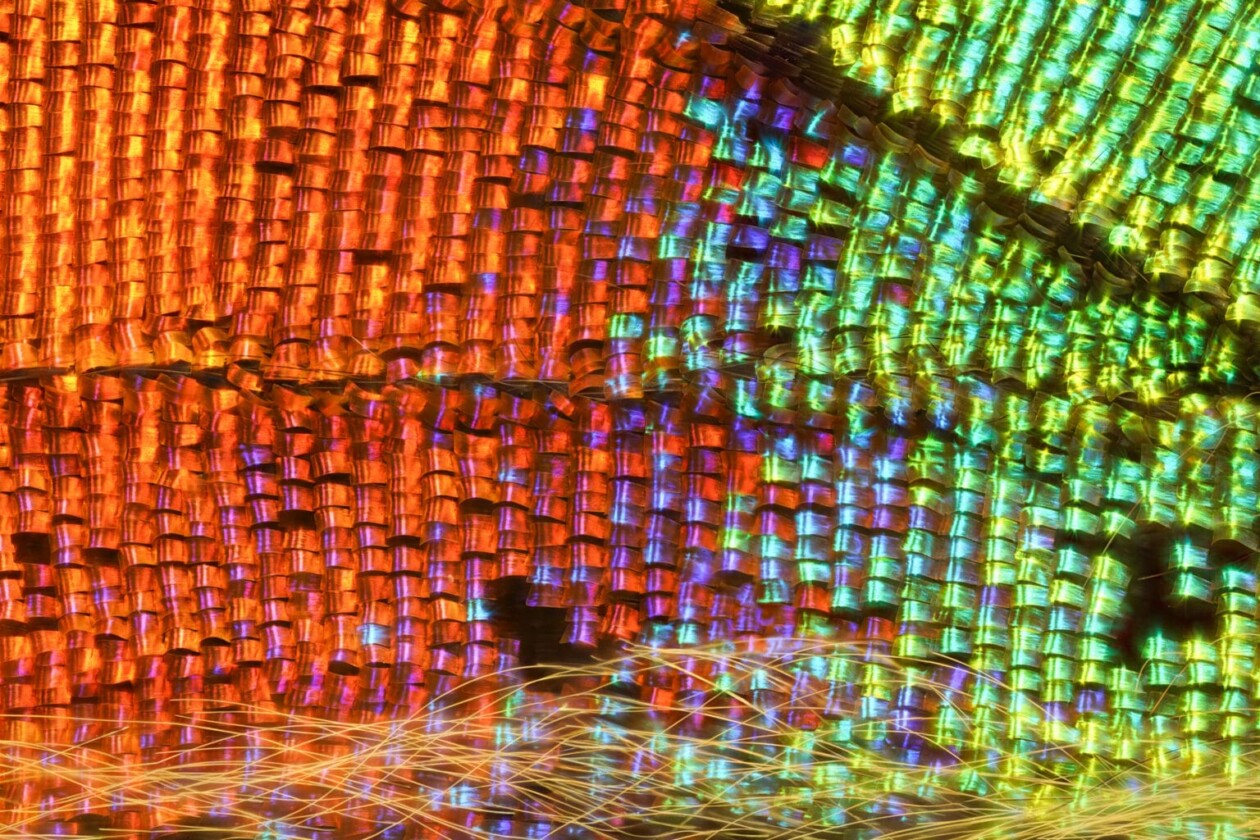
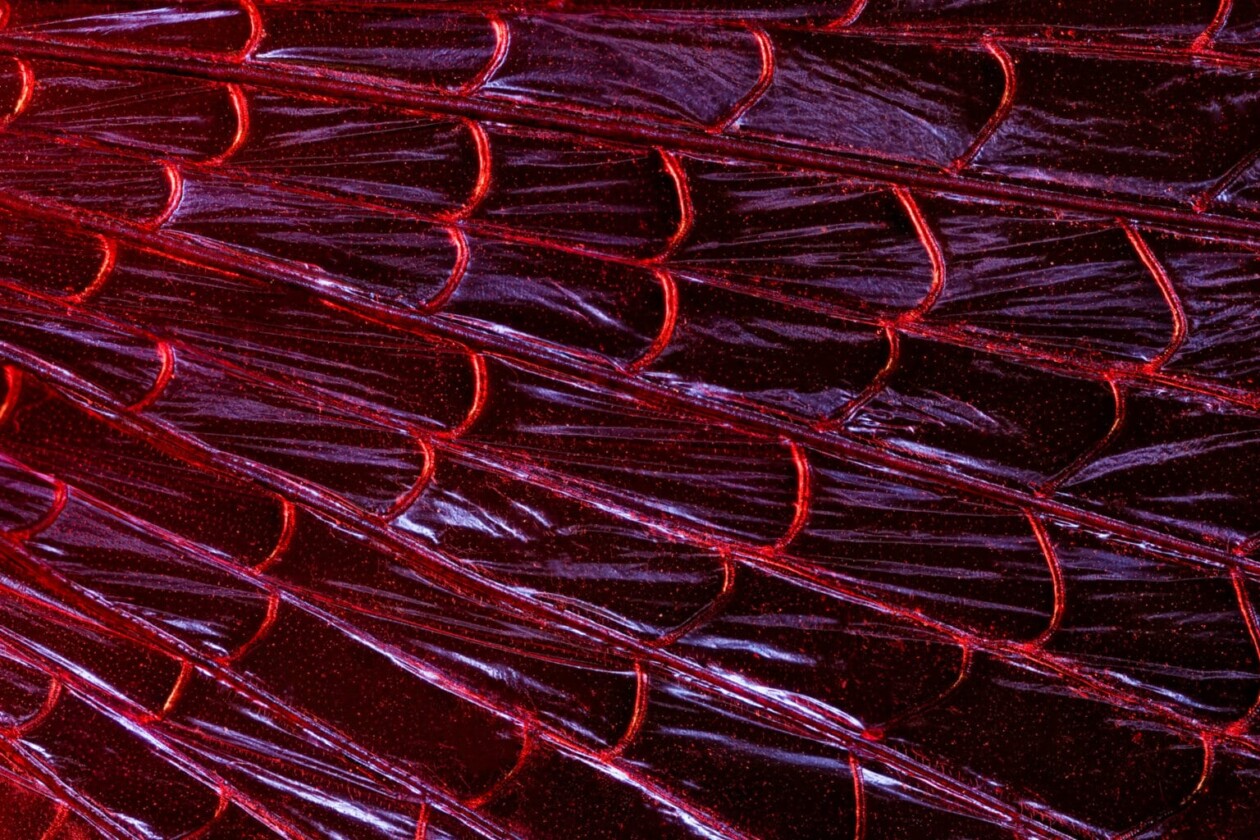
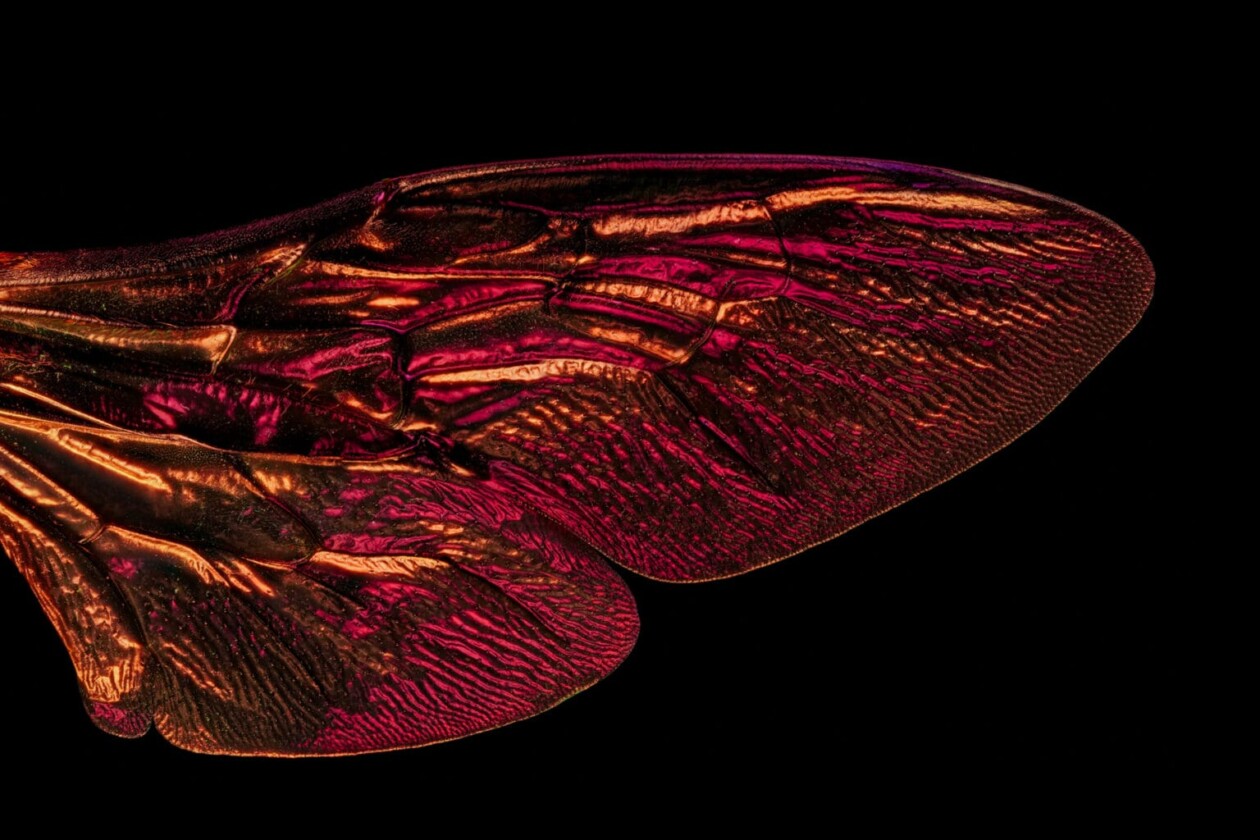
Chris Perani has mastered the art of revealing what remains invisible to the human eye through his extreme macro photography. His ongoing series, Wings, focuses on the prismatic effect of insects’ anatomy in what he describes as “extreme macro”, transforming tiny biological structures into expansive visual landscapes. Using a 10x microscope objective attached to a 200mm lens, Perani captures microscopic details found on butterflies’ wings, such as multi-colored hairs and iridescent scales. Each high-resolution image is captured at 10-micron intervals — a distance shorter than the width of a human hair — so precision is paramount. The lens must be moved no more than 3 microns per photo to achieve focus across the height of the subject, which can be up to 8 millimeters, yielding 350 exposures that must be composited together in Helicon Focus, a stacking software. This painstaking approach requires repeating the process six times for different sections of each wing, ultimately assembling approximately 2,100 separate exposures into a single coherent photograph.
The technical precision demanded by Perani’s methodology extends far beyond standard photography practices. He learned through a number of simple mistakes that could result in a blurry photo, such as a shaky table, using standard LED lights, specks of dust, a slight movement of the specimen, and walking in the studio. He incorporates a rail system and specialized equipment to achieve the accuracy required for extreme close-ups, ensuring that each incremental shift maintains absolute stability throughout the capture sequence. The images reveal details we’d otherwise only be able to see clearly beneath a microscope, illuminating undulating, scaled surfaces that resemble chromatic pixels, stained glass, or even beadwork. The organic architecture of bees’ wings, plus those of wasps, damselflies, beetles, and butterflies, illustrates the precision of their anatomy and the way a prism of hues is produced by both pigmentation and structural color, like iridescence. This phenomenon of thin-film interference creates remarkable transformations depending on lighting angles, turning what first appears dark into a delicate fabric of light and structure.
More info: Website, Instagram.