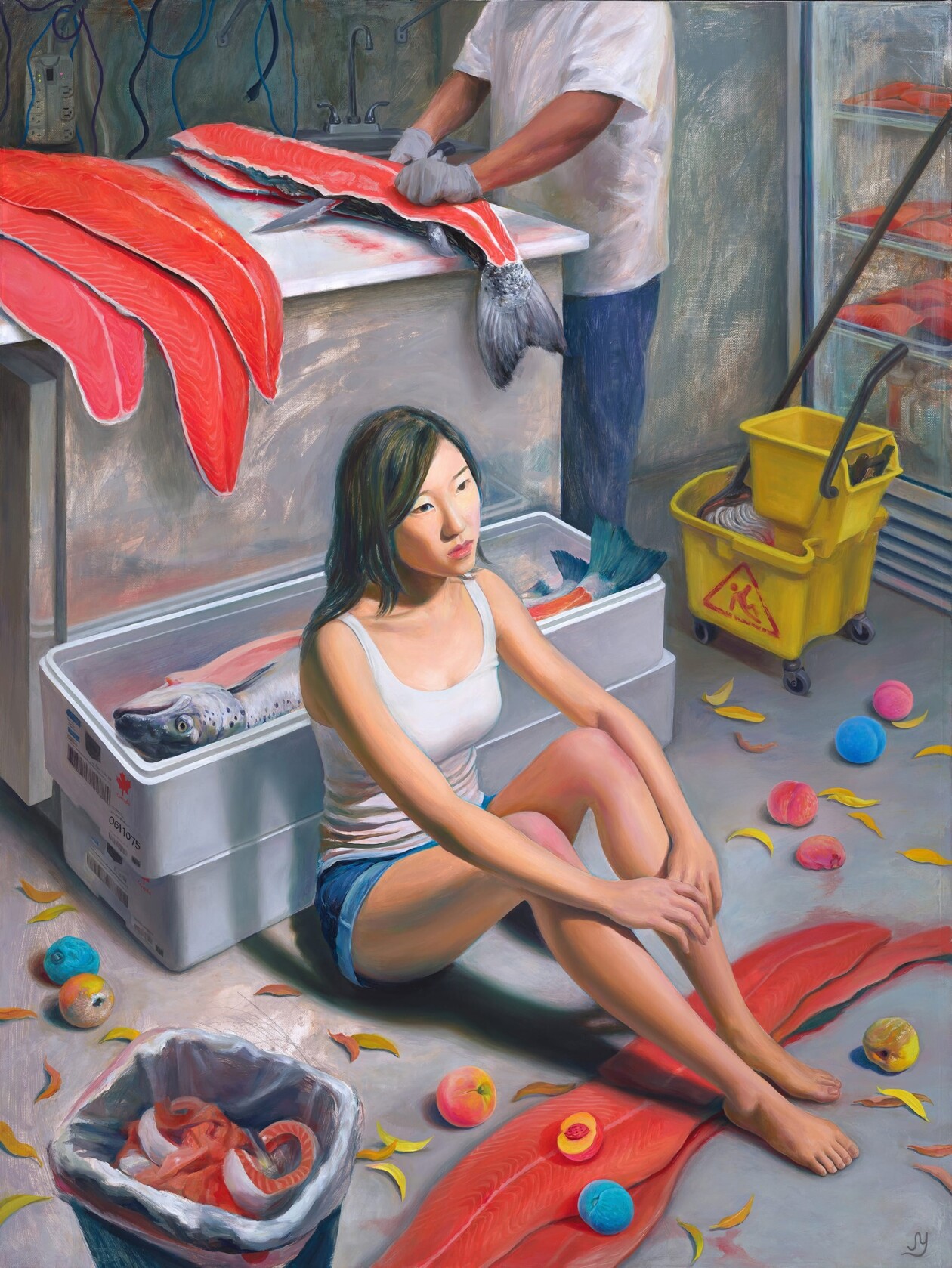
Janice Yang’s paintings are inseparable from the story of her family’s migration. At fourteen, she left South Korea with her parents in the aftermath of a financial crisis that dismantled the stability they had known, arriving in the United States to rebuild from very little. That rupture set the terms for the next two decades of her life, as the family’s relative security gave way to a precarious, debt-burdened existence in a new country.
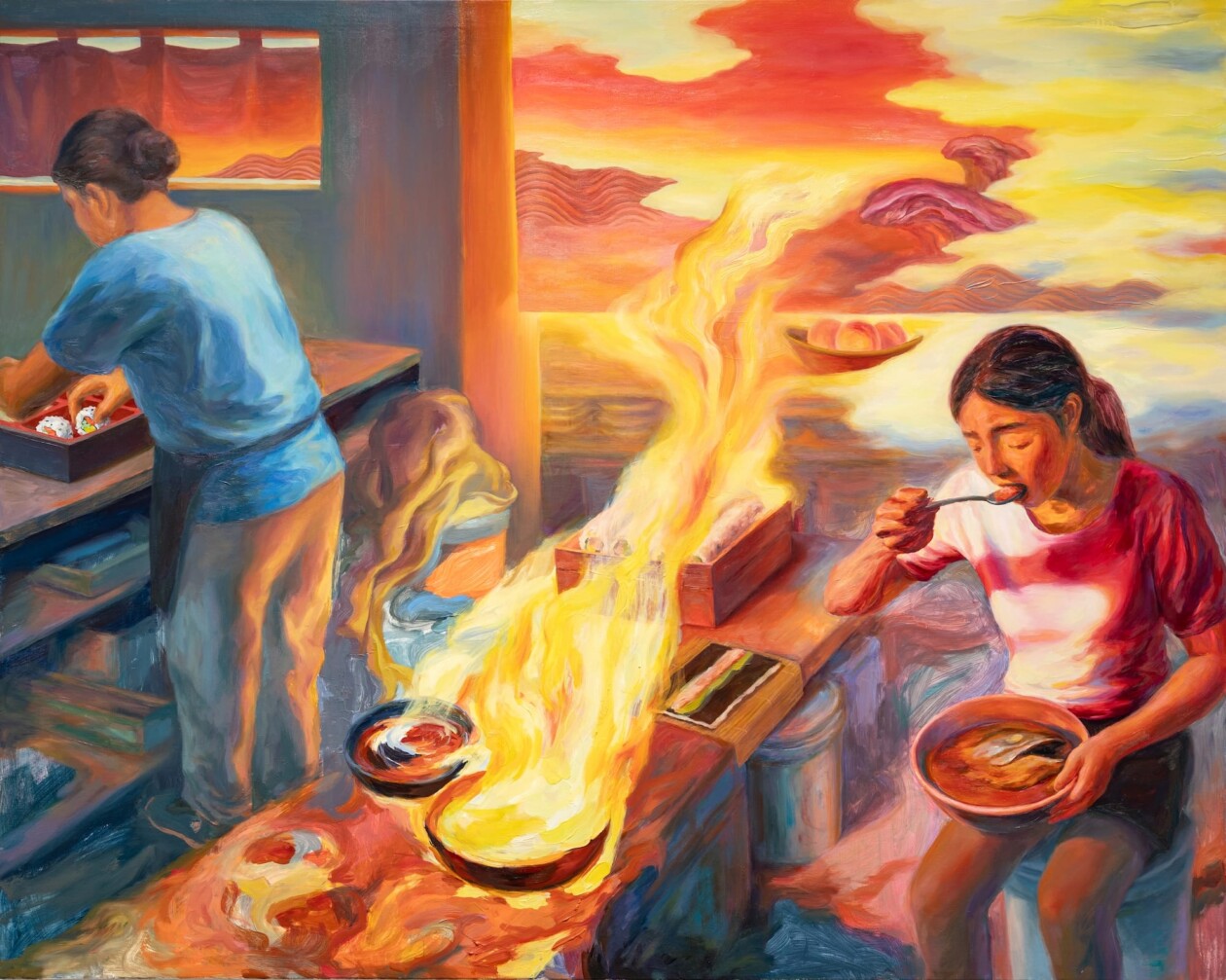
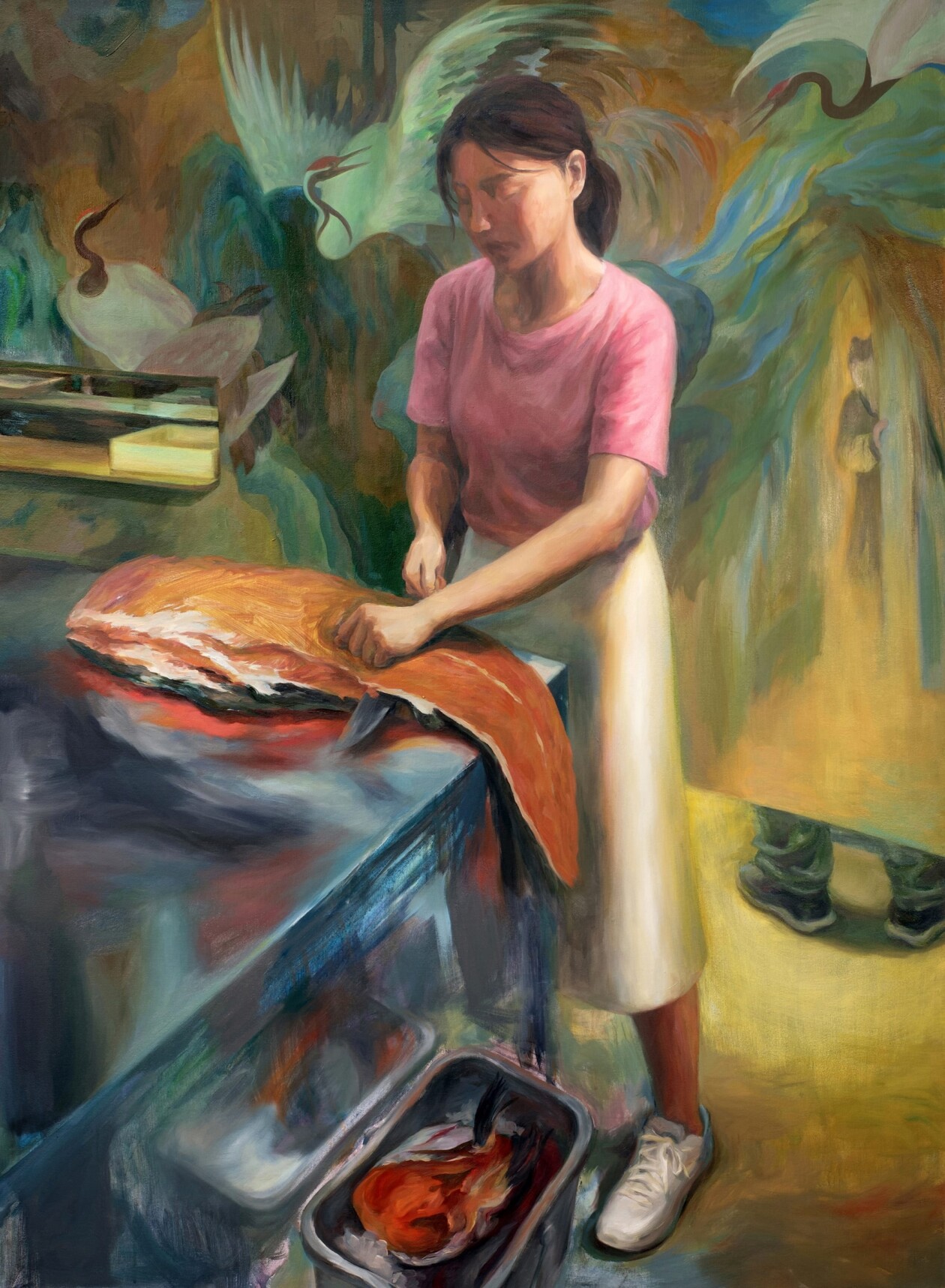
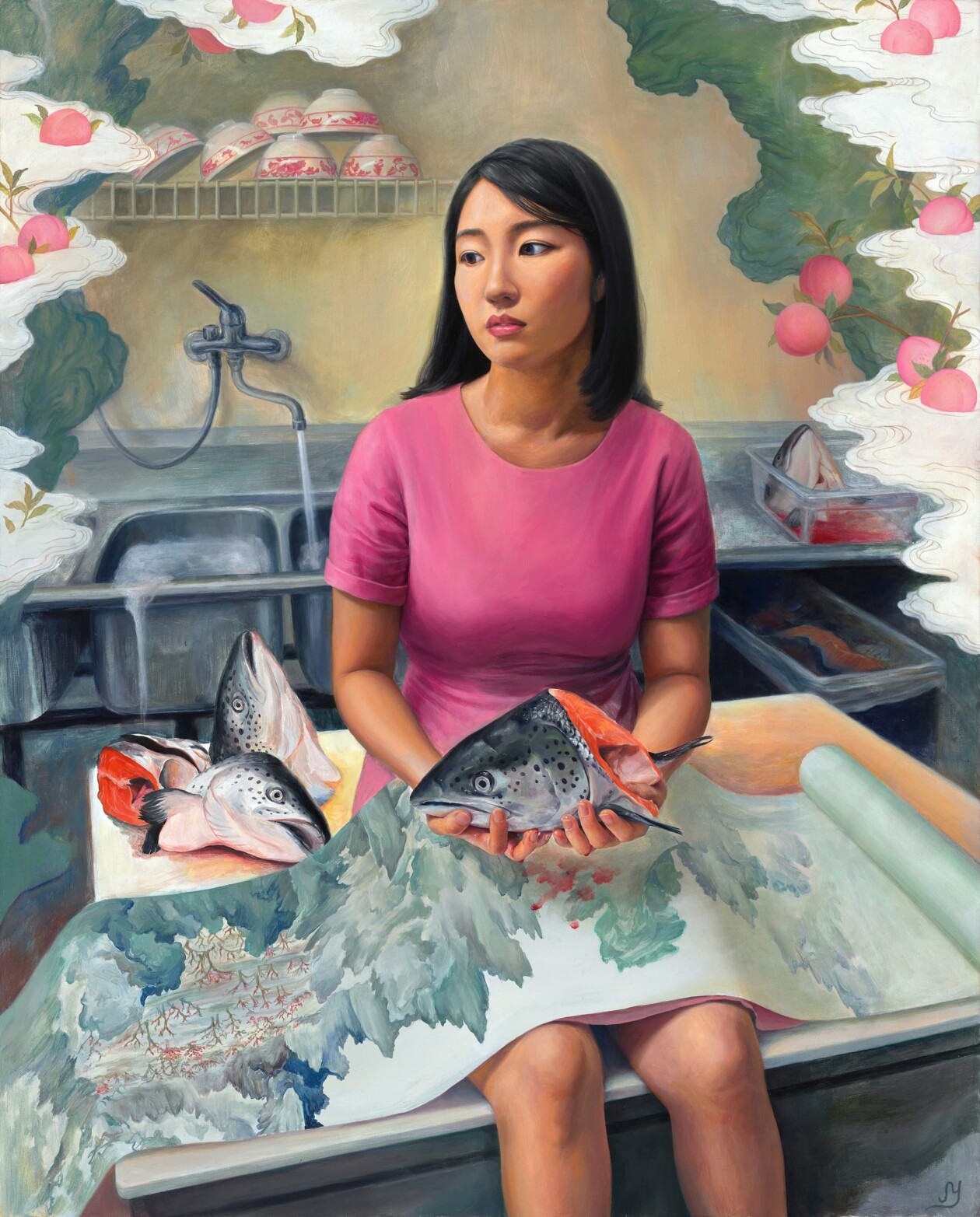
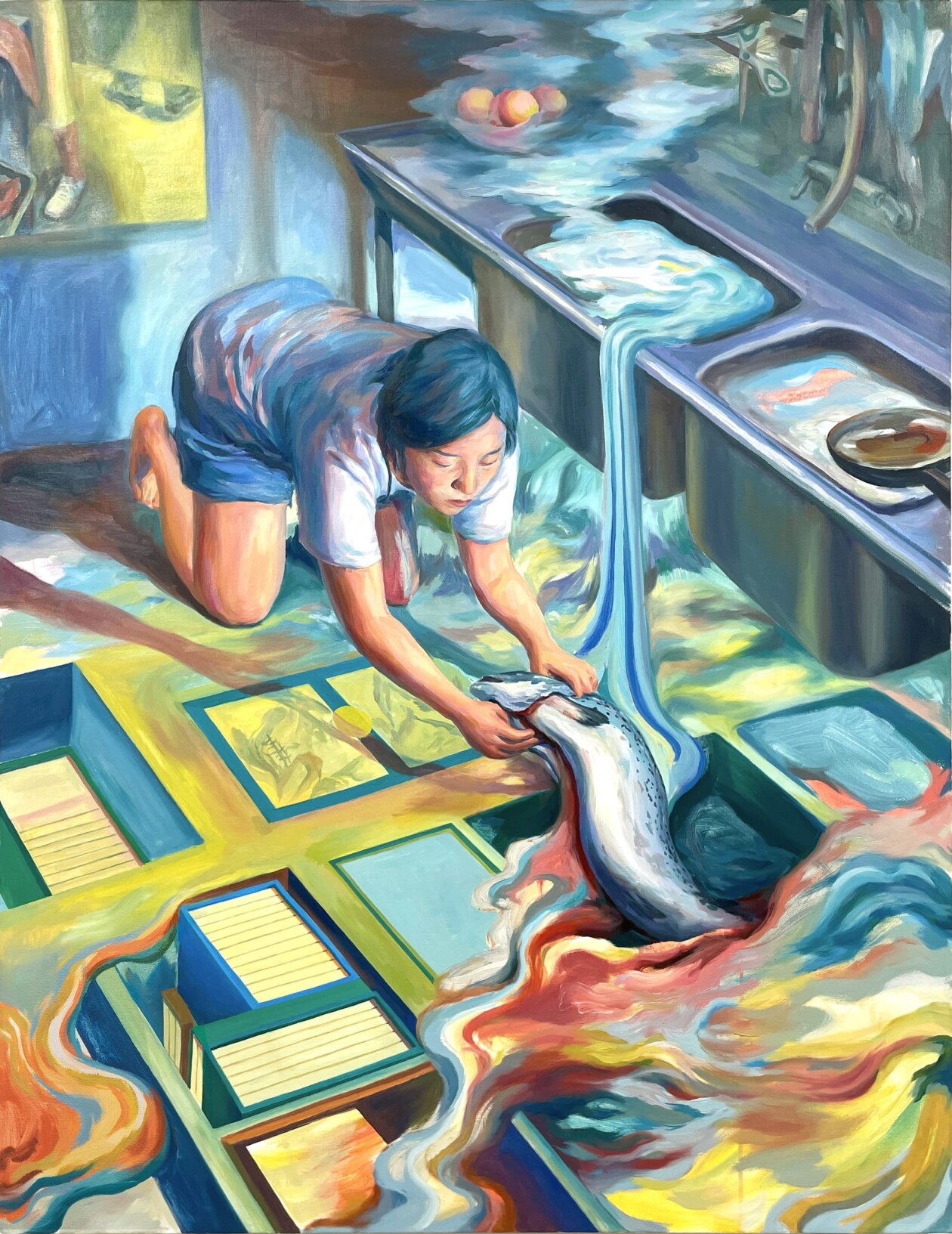
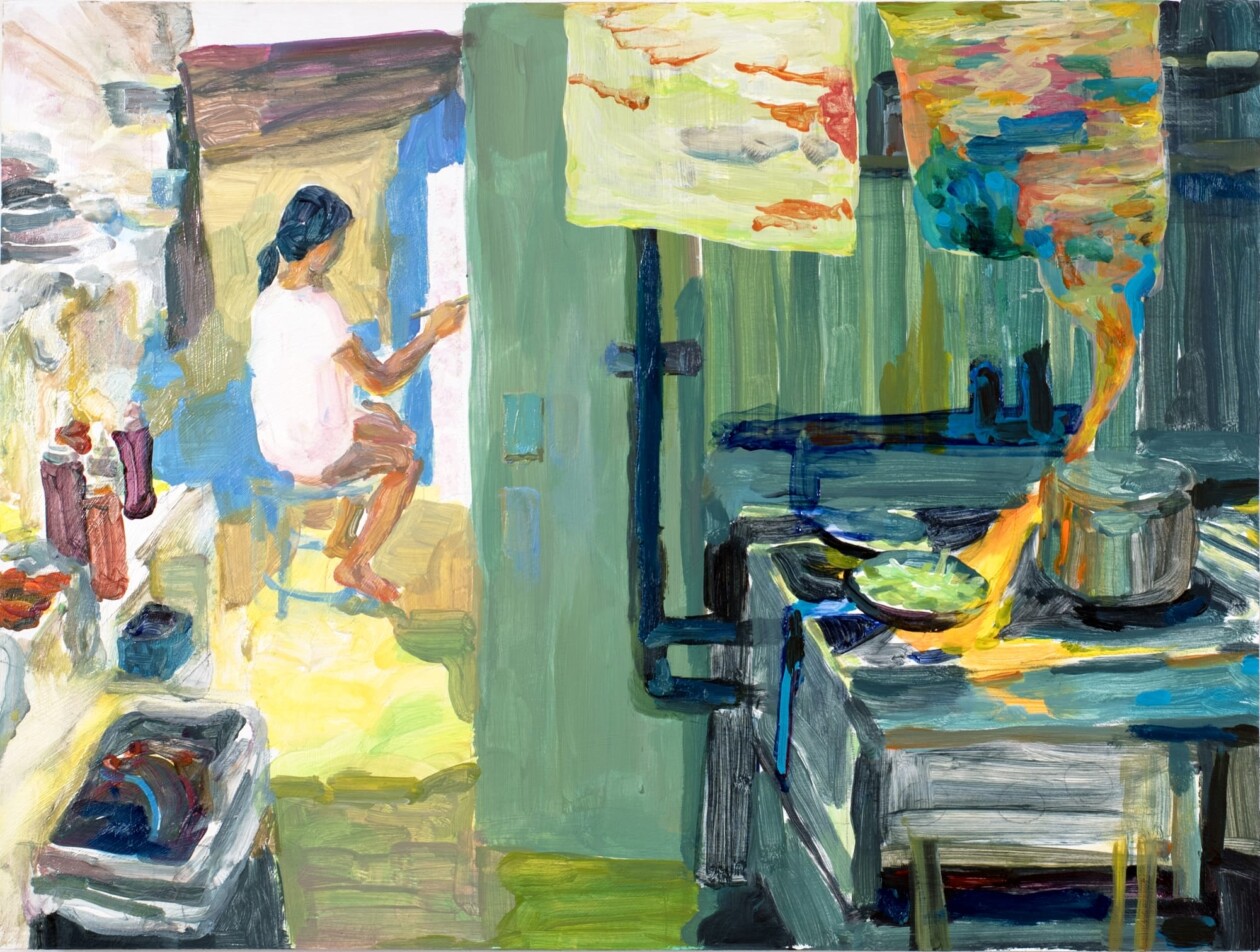
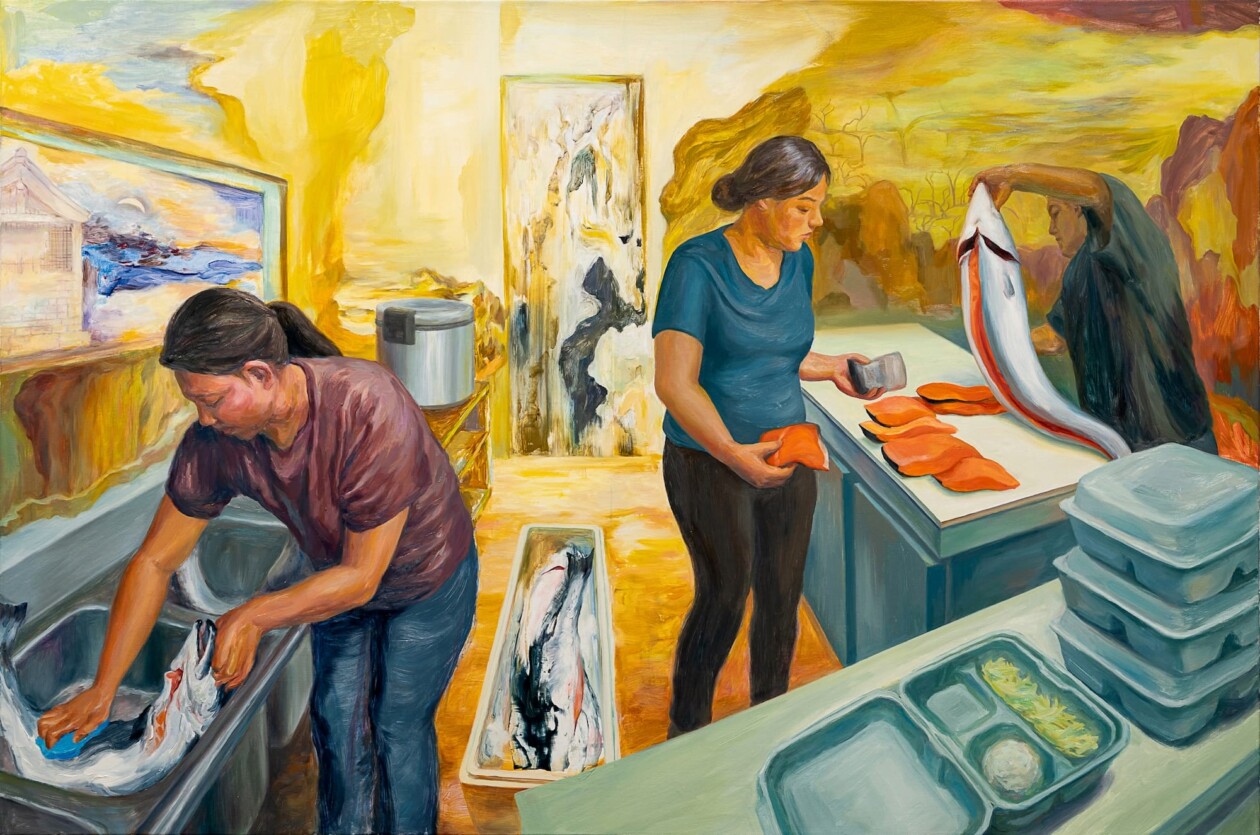
For twenty years, Yang worked without pay in her family’s small sushi restaurant, a role that delayed her path toward formal art training while she helped keep the household afloat. She has described those years of labor as central to shaping both her sense of identity as a first-generation immigrant and the visual language she would eventually develop as a painter. That extended apprenticeship in the restaurant, rather than in a studio, left a lasting imprint: her canvases return again and again to kitchens, staged with the same close attention to detail that years behind a prep counter would instill.
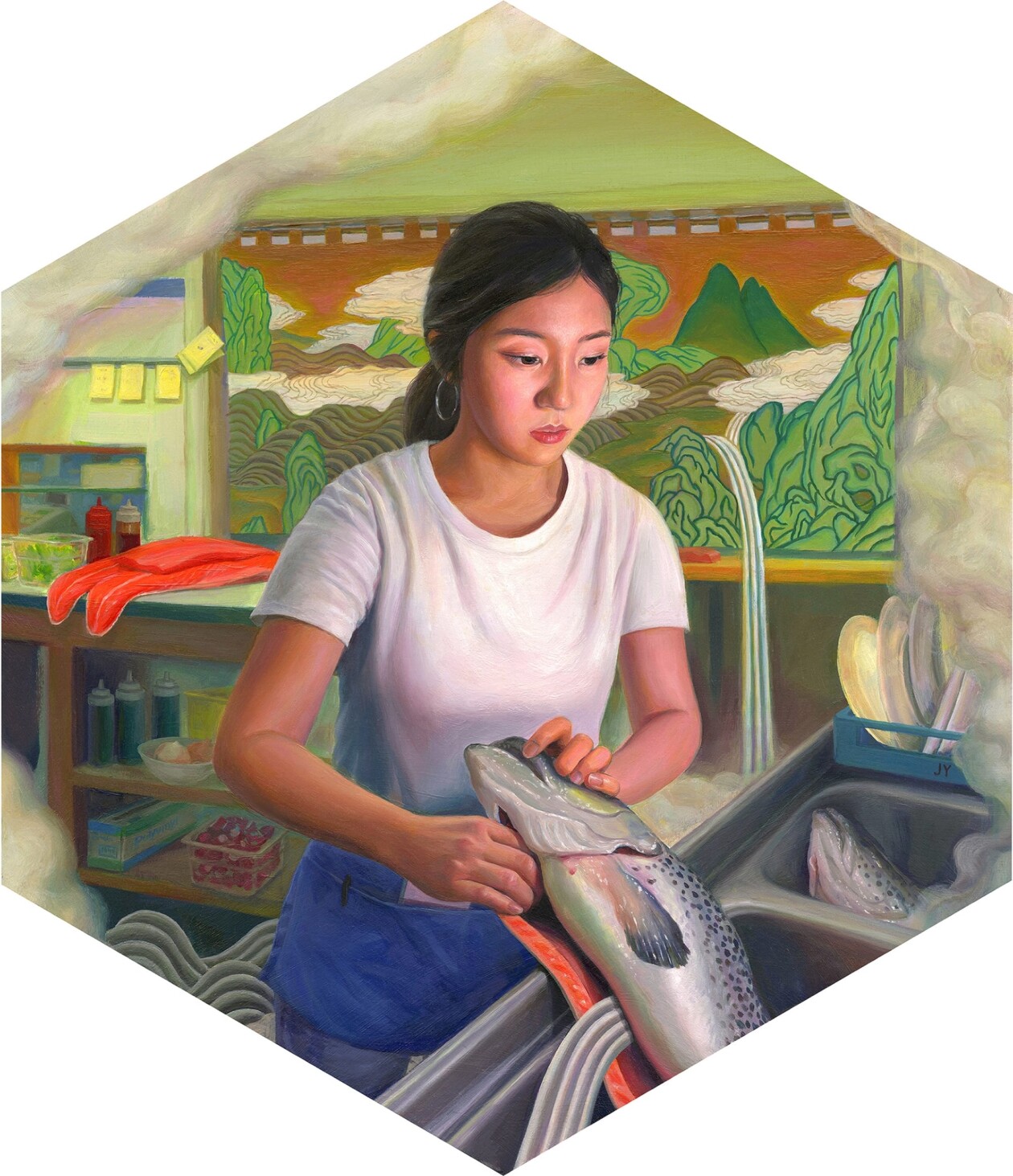
Salmon became one of the restaurant’s daily fixtures and, later, one of the defining symbols in her paintings. Watching the fish prepared and stored day after day, Yang began to project her own unmet ambitions onto them, drawing a parallel between their yearly migration upstream and her own long wait to become an artist. That personal history also shapes her formal choices: she sometimes mixes salmon ash directly into her oil and acrylic pigments, and she incorporates Korean visual traditions, including a scroll composition tied to a 15th-century Joseon-era court painter, alongside Western techniques like one-point perspective.
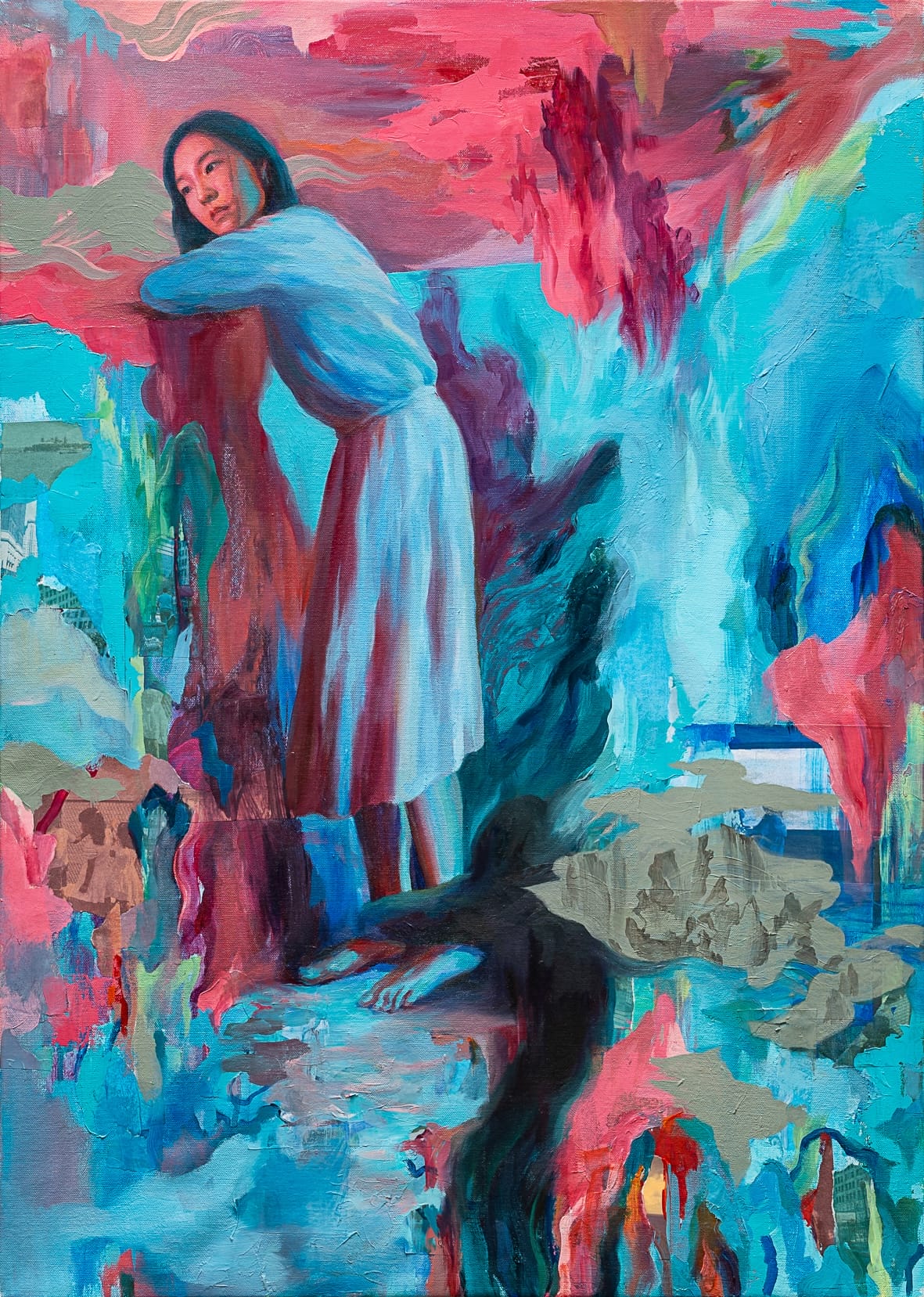
That biographical foundation now extends into a new phase of her career, with an artist residency and exhibition beginning next month at a gallery in Johannesburg, followed by a nine-month residency in Chicago that includes a teaching post at a well-known painting and drawing department. Even as her practice grows more visible, the paintings remain anchored in the same personal terrain: a family’s displacement, years of unrecognized labor, and a recurring search for a place to call home.
More info: Website, Instagram.