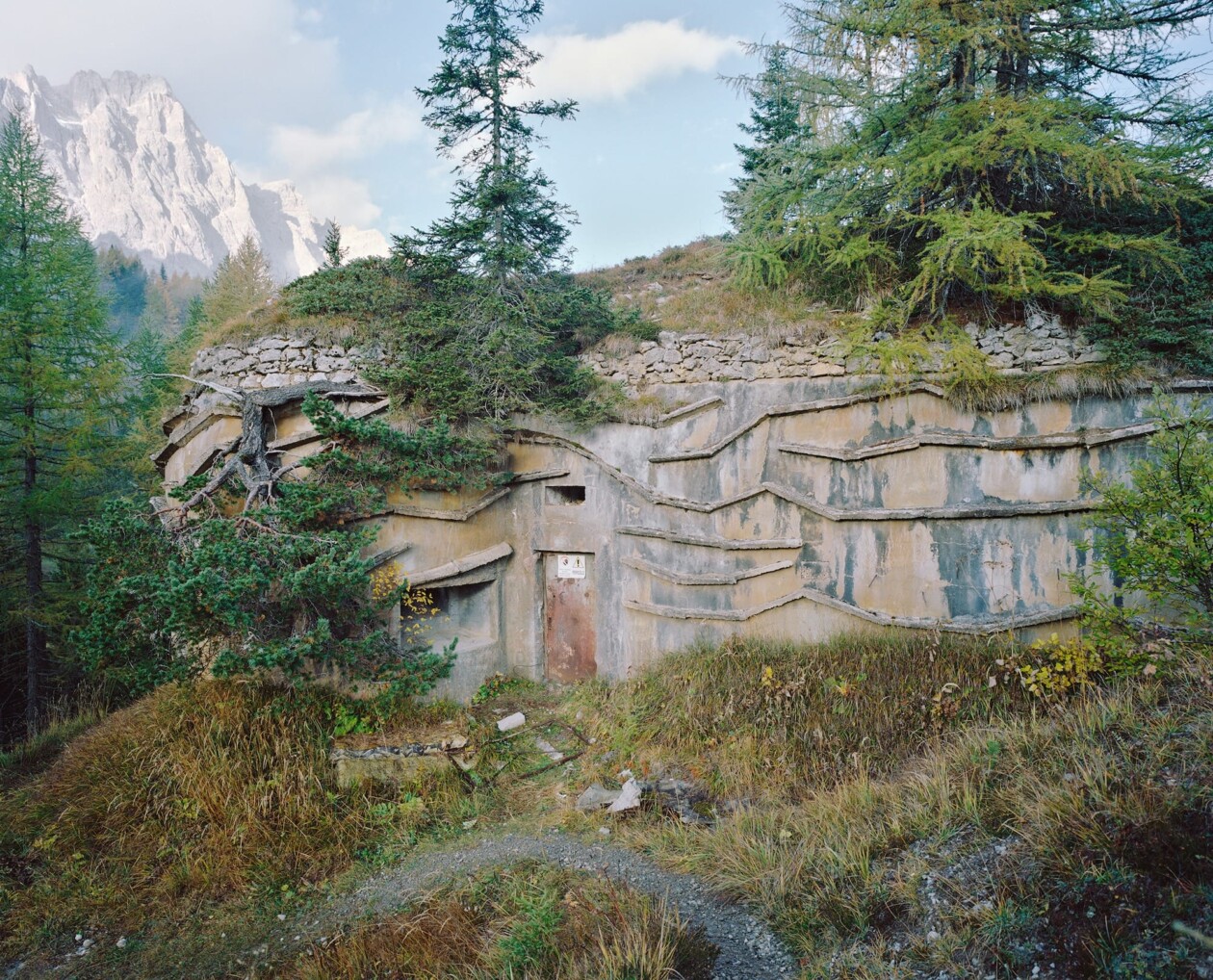
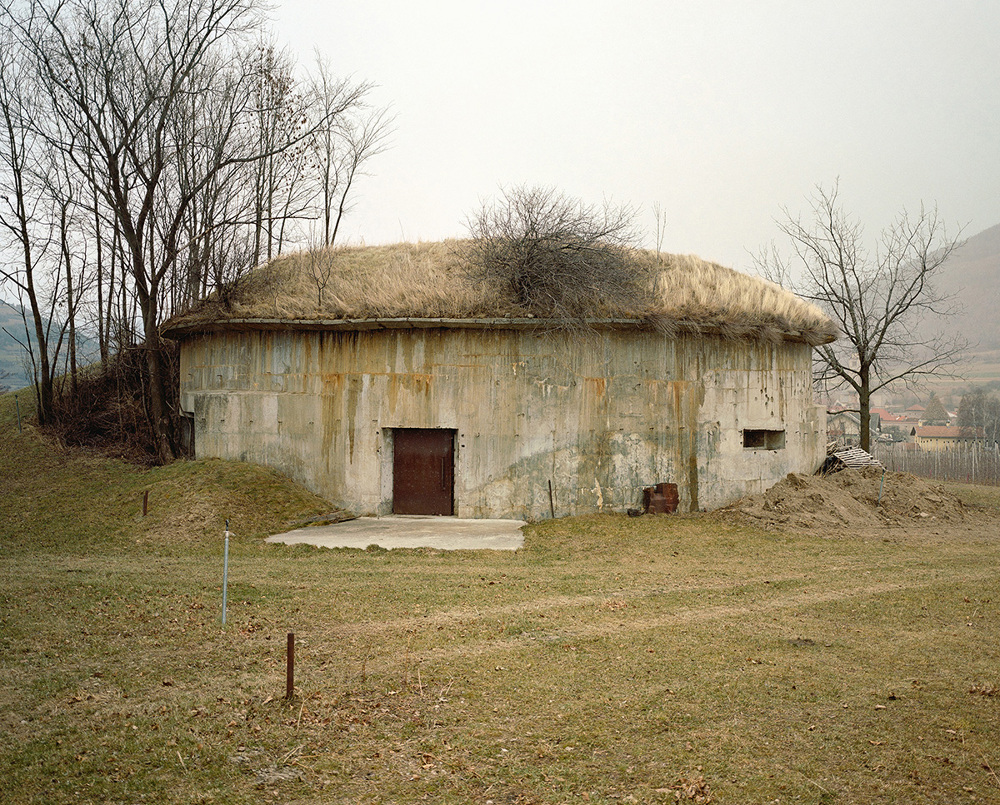
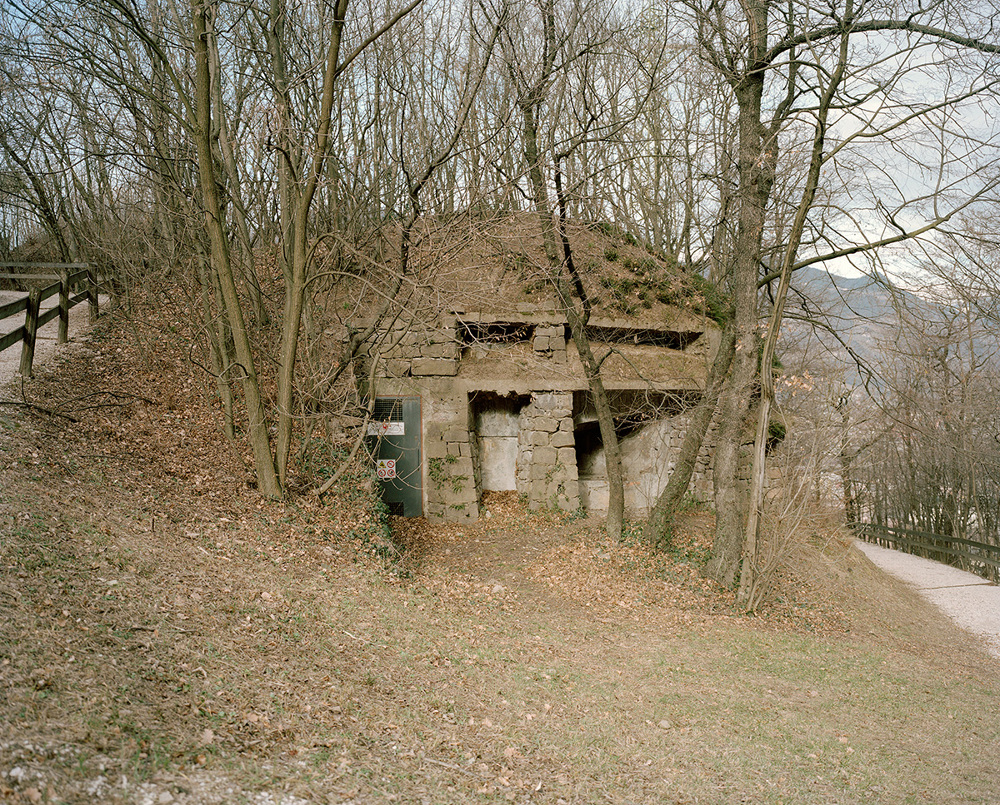
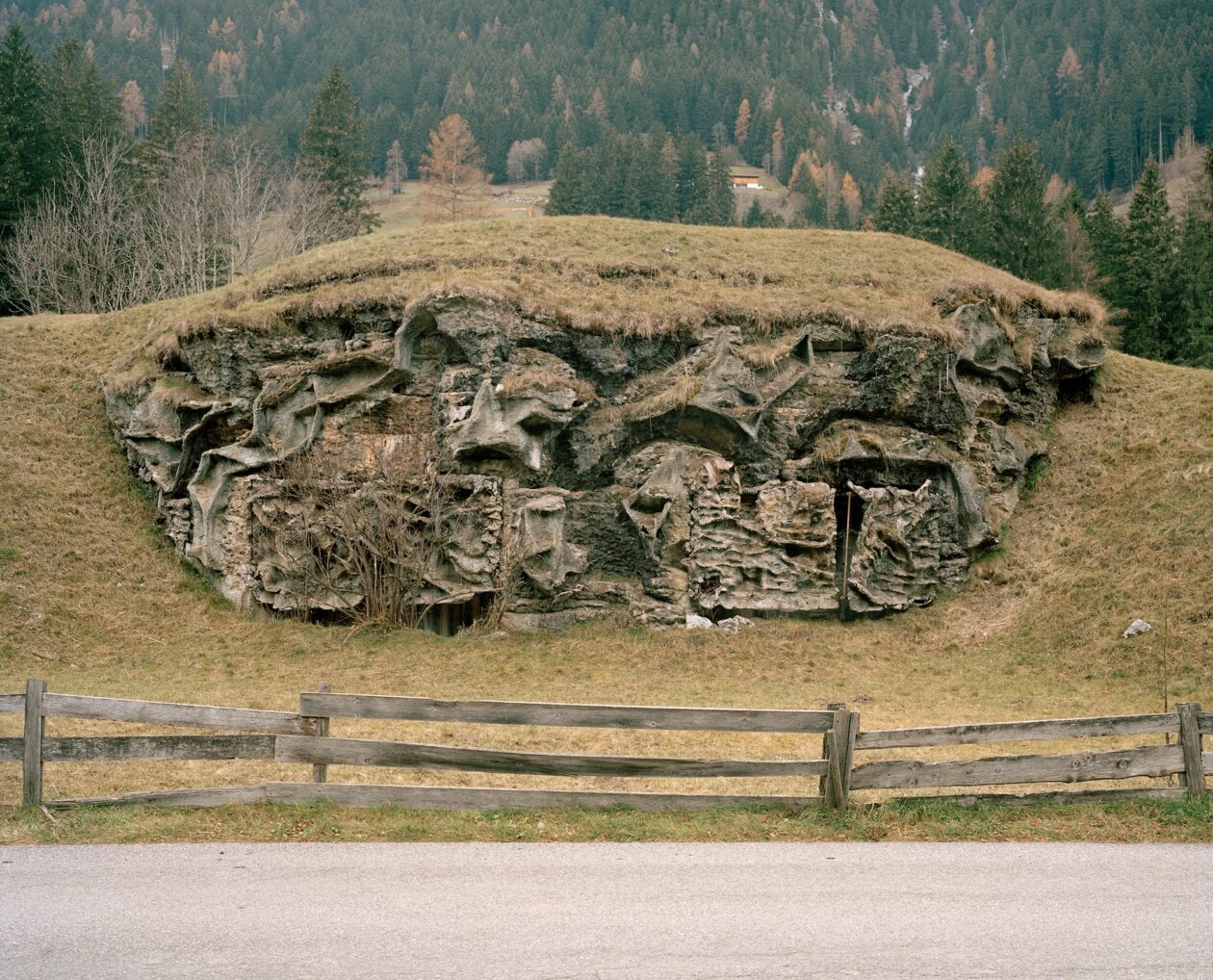
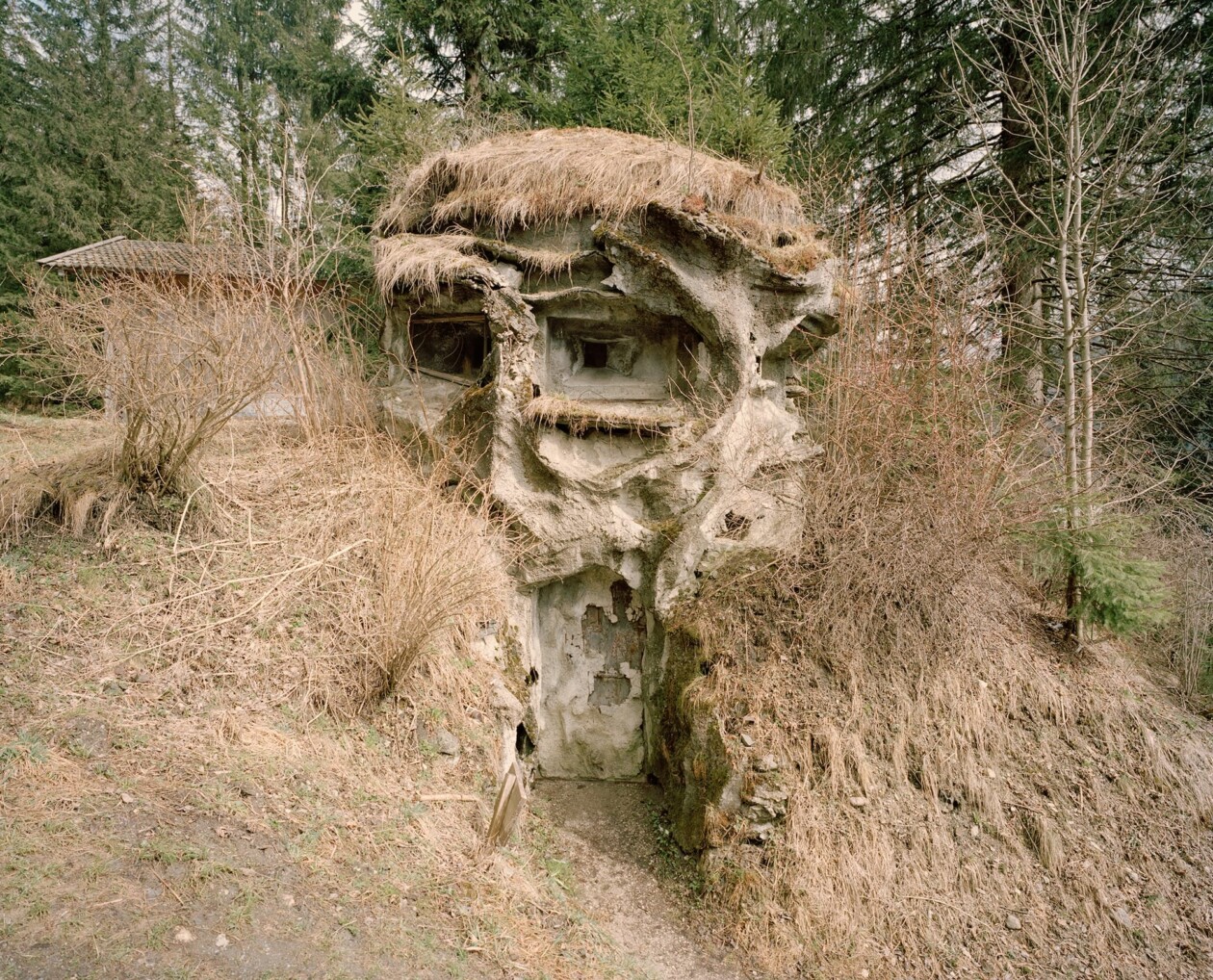
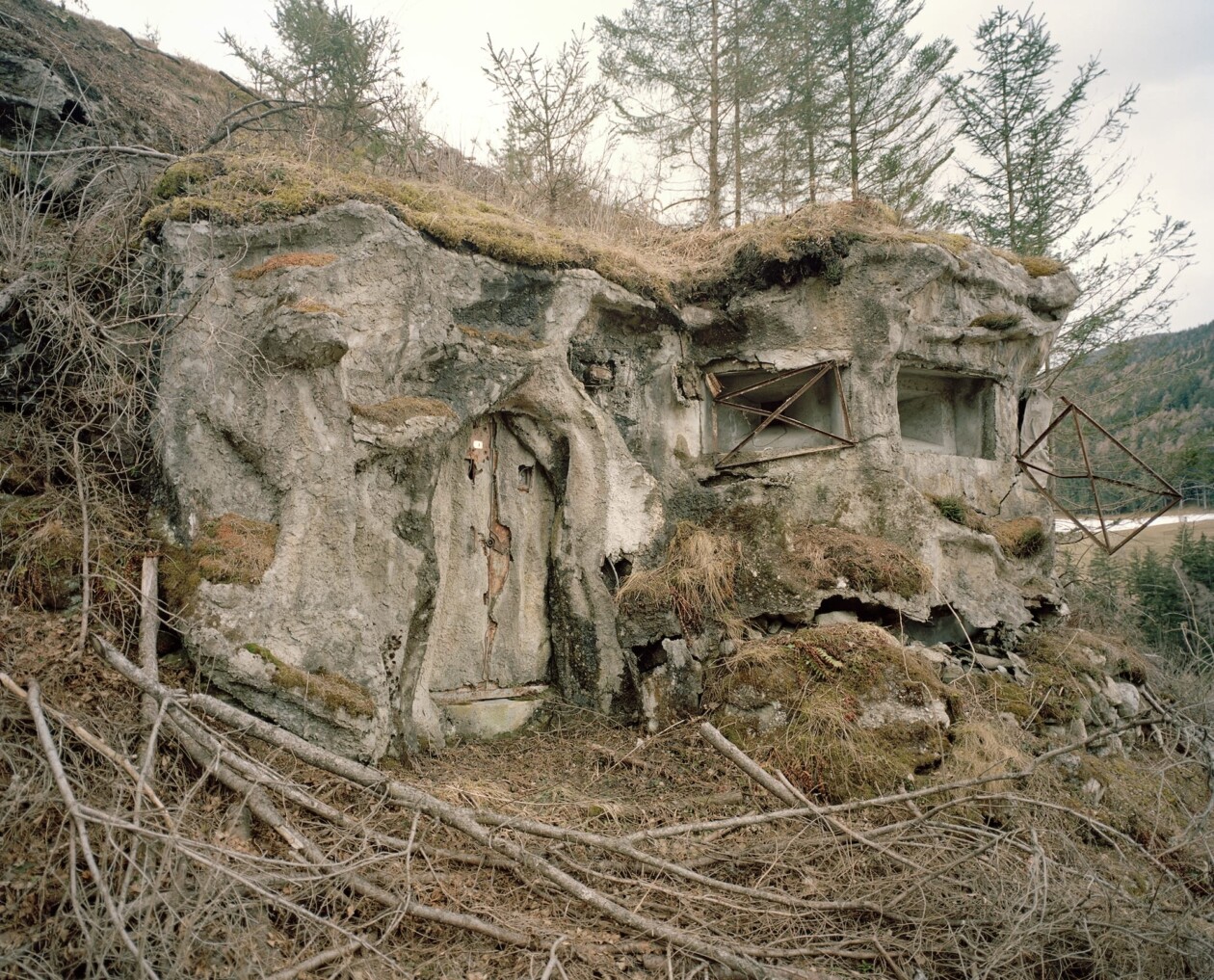
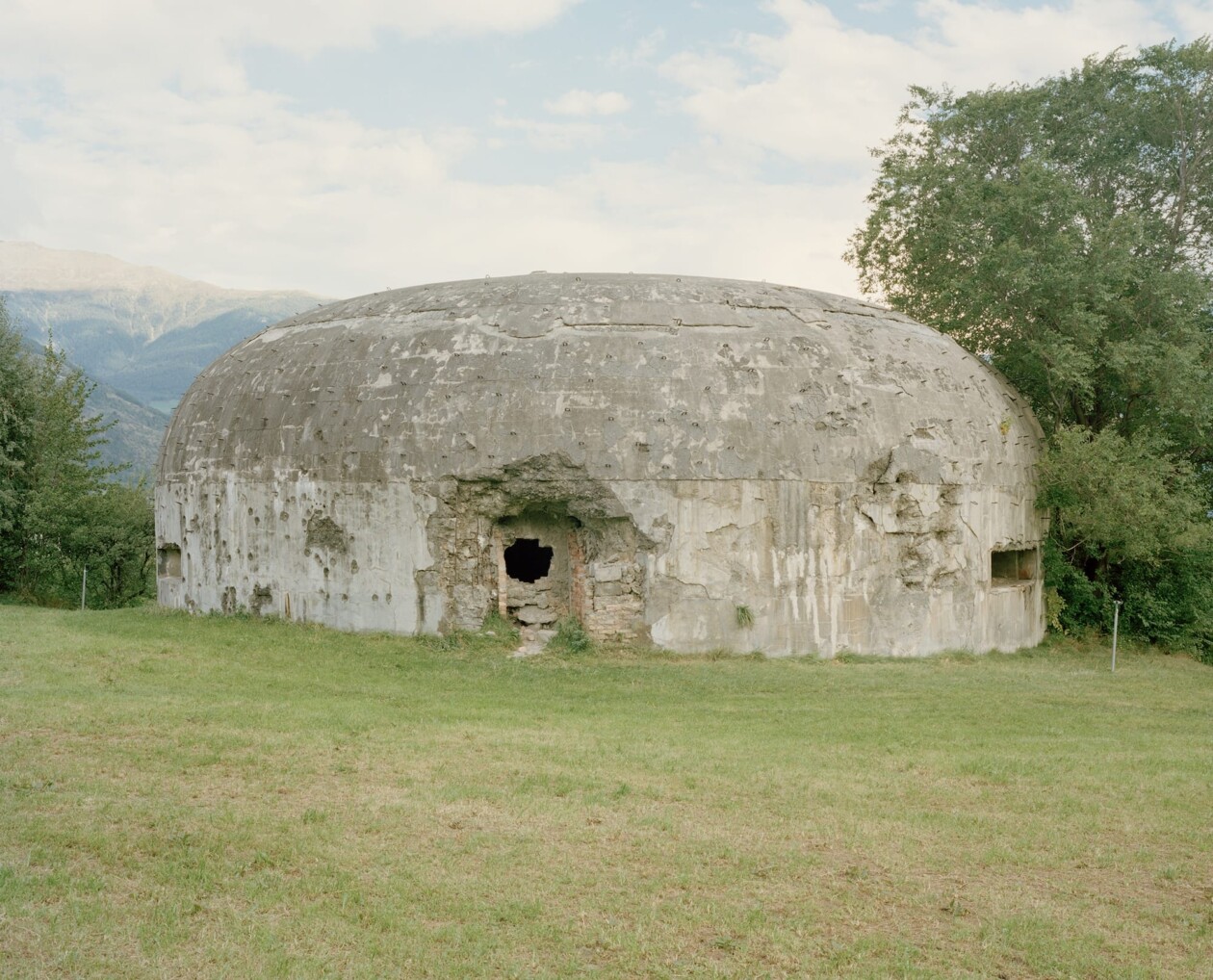
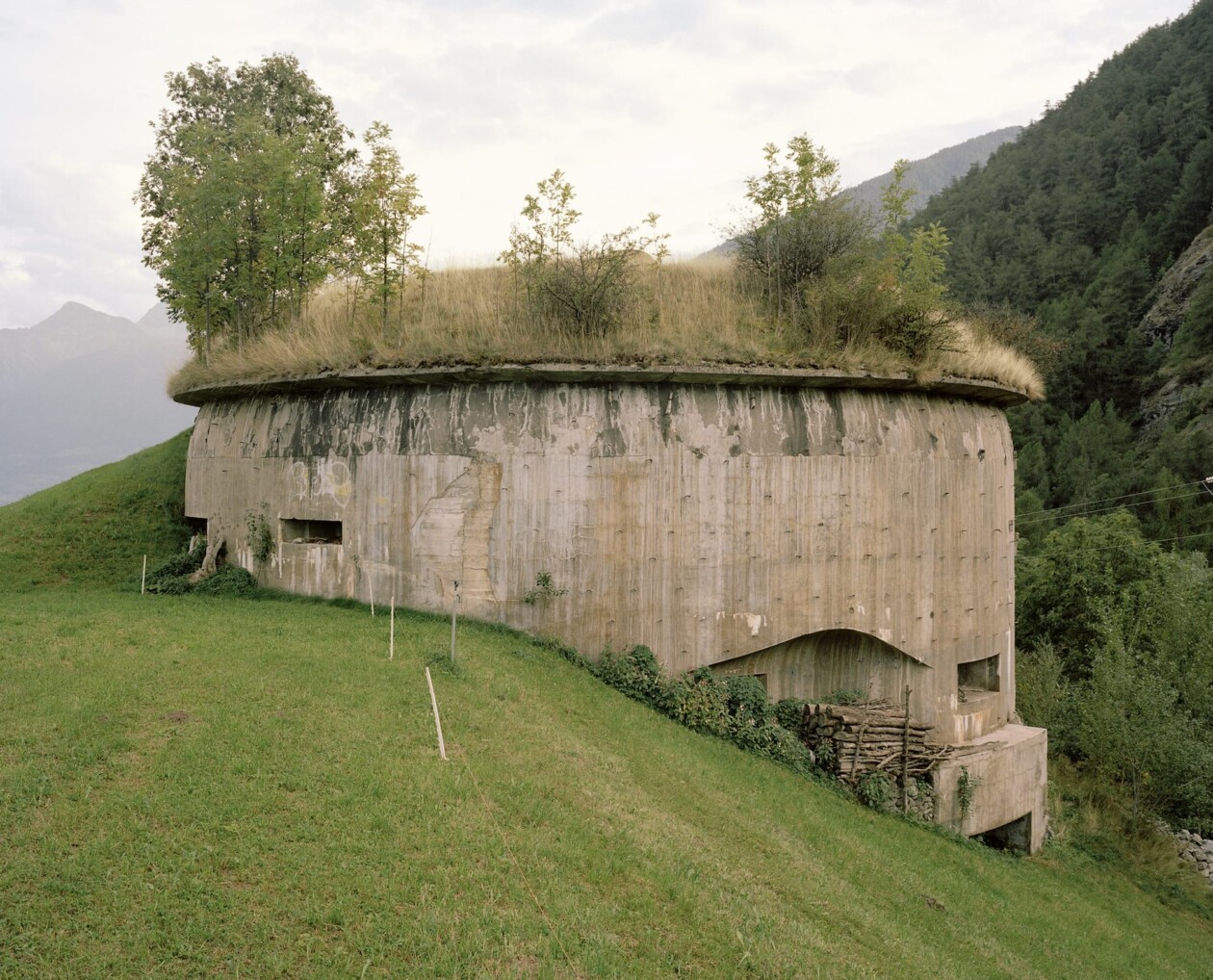
Vincenzo Pagliuca’s Bunker is the result of five years of photographic research across South Tyrol, following remnants of the Alpine Wall through mountain passes, valleys, and remote stretches of the northern Italian border. Developed between 2018 and 2023, the project focuses on fortifications commissioned under Fascist Italy and constructed along the frontier during the years surrounding World War II. Rather than treating these structures solely as historical artifacts, Pagliuca photographs them as part of a landscape where architecture, military strategy, geology, and the passage of time remain closely intertwined.
The history embedded in these concrete structures is particularly significant in South Tyrol, a border region annexed by Italy in 1919 after centuries under Habsburg rule. In the late 1930s, Mussolini’s regime began developing the Alpine Wall as an extensive defensive system along Italy’s northern frontier, with bunkers, artillery positions, tunnels, and command structures incorporated into the terrain. Construction in South Tyrol continued during the early years of World War II but was never fully completed, and the military retained control of the structures for decades afterward.
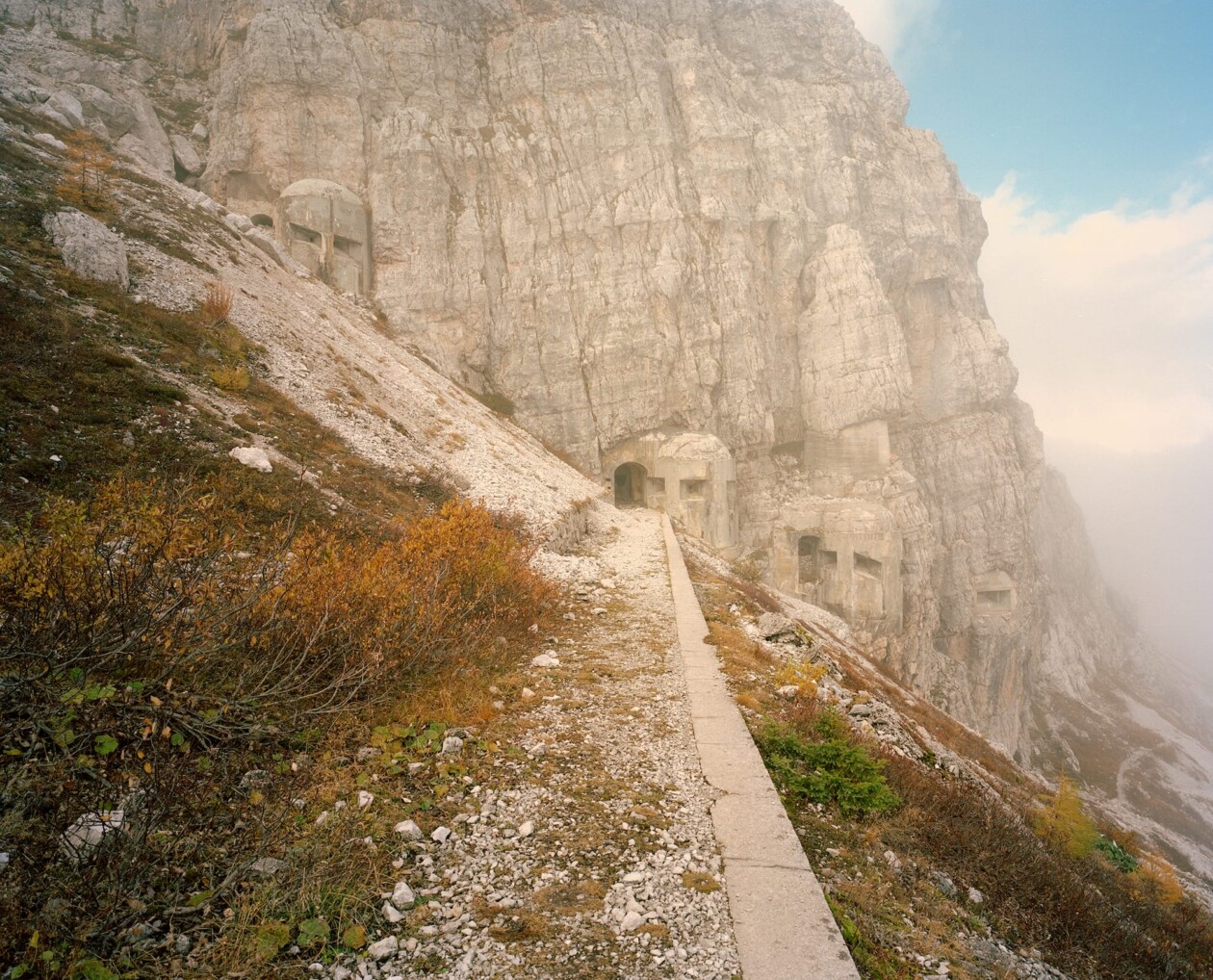
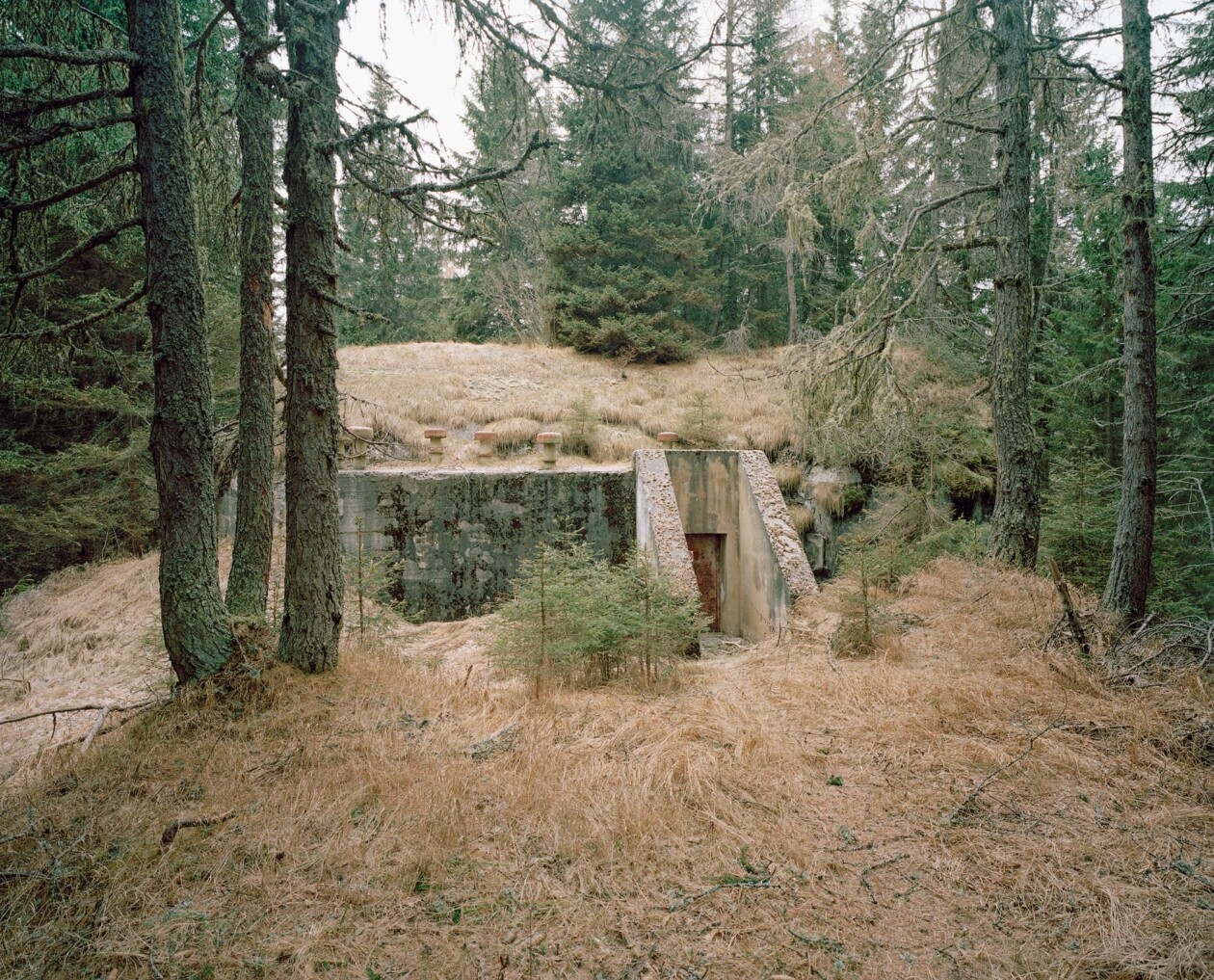
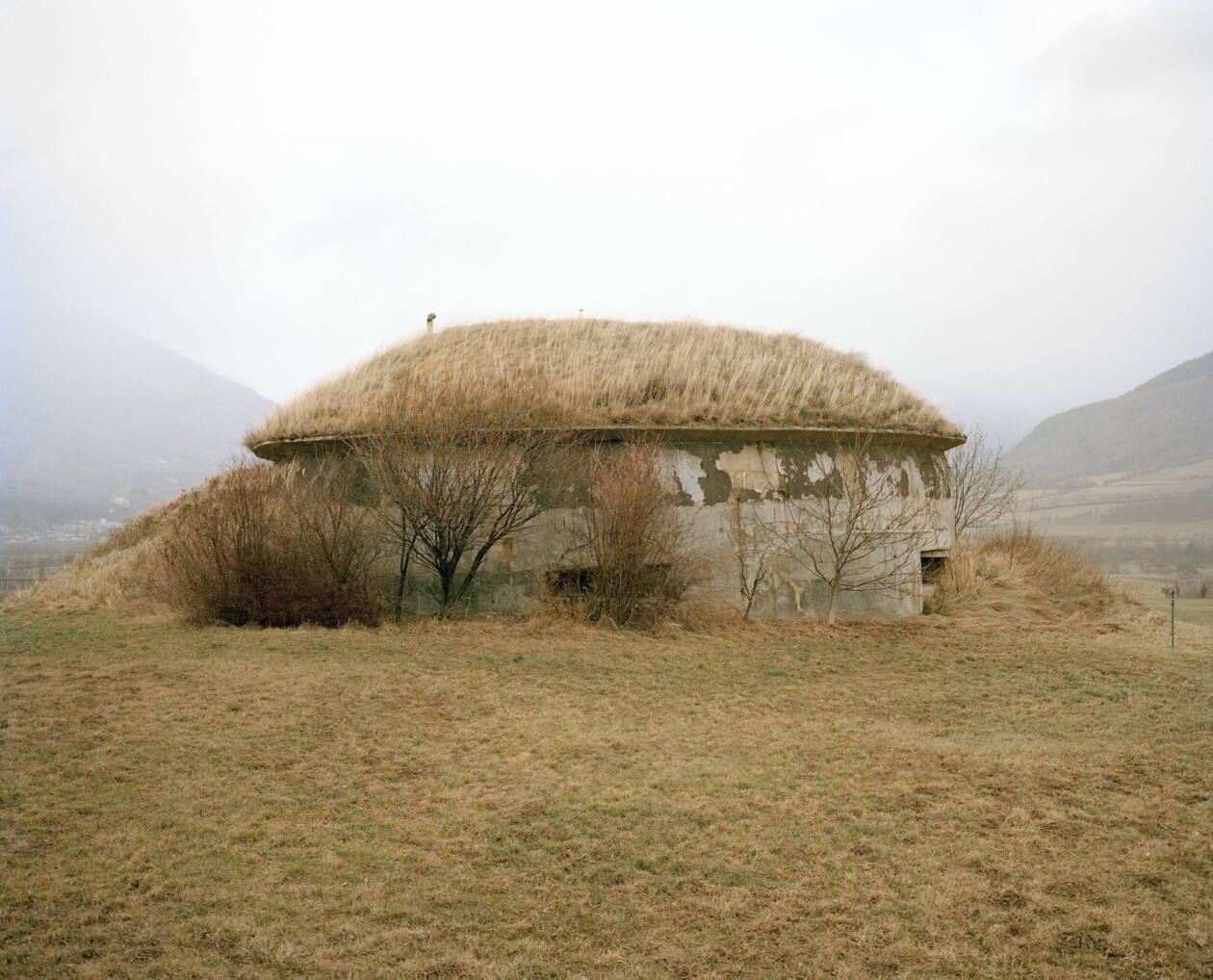
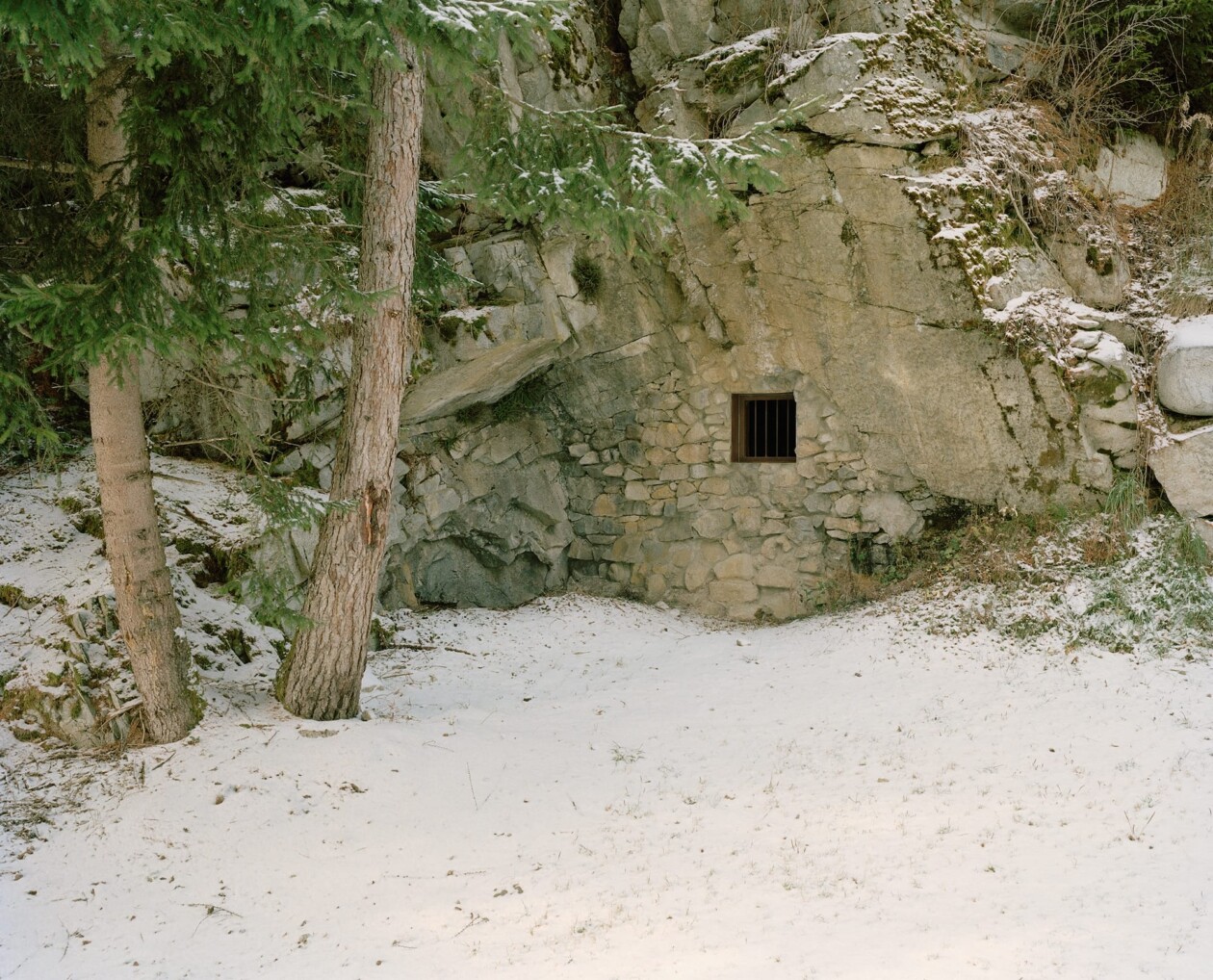
Pagliuca’s photographs emphasize the peculiar physical presence produced by this history. Some fortifications emerge as heavy concrete volumes with rounded roofs and thick protective walls, while others are embedded into existing rock or extend directly from mountainsides. Their original attempts at concealment have acquired an unexpected visual character as vegetation has spread over surfaces and around entrances. Against meadows, steep slopes, and snow-covered peaks, the bunkers can appear almost geological, yet their precise geometry continually reveals their human origin.
By removing people from these compositions, Pagliuca places greater emphasis on the enduring physical evidence of a political and military past. The photographs do not simply reconstruct the circumstances in which the bunkers were built; they examine what happens when an infrastructure designed for conflict remains after the urgency that produced it has disappeared. Grass, stone, weather, and changing light now coexist with concrete defensive forms, creating a visual record of how the landscape gradually incorporates structures intended to control it. In this sense, Bunker connects the material remains of nationalism with a present-day Alpine environment that has continued to change around them.
More info: Website, Instagram.